The room went silent.
Not because anyone had won.
Not because anyone had lost.
But because, for the first time in more than fifty years, the truth was standing face to face with the lie.
Edward Sterling looked at the frail woman in the wheelchair.
The woman who had carried him.
The woman who had searched for him in her dreams.
The woman who had never stopped wondering whether he was cold, hungry, scared, or loved.
And all she said was:
“I don’t want your money.”
Her voice trembled.
“I don’t want your company.”
A tear slid down her cheek.
“I don’t want your house.”
Edward shifted uncomfortably.
For the first time since entering the room, his confidence cracked.
My mother reached into her purse.
Slowly.
Carefully.
And pulled out something folded and worn.
A small yellow piece of paper.
She held it toward him.
“This is yours.”
Edward frowned.
“What is it?”
“The only thing they let me keep.”
Brenda unfolded it.
A tiny hospital bracelet.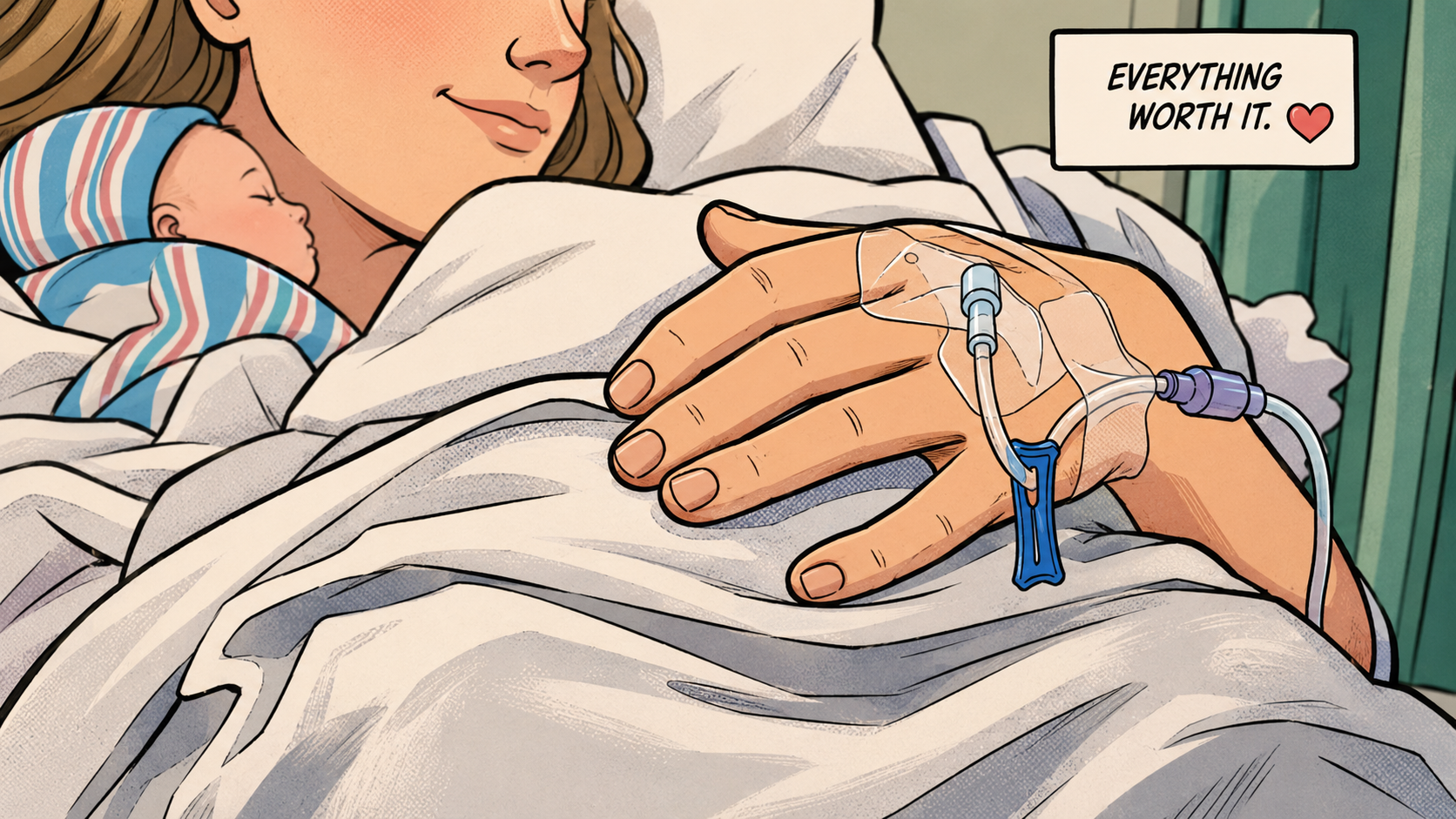
Faded.
Nearly unreadable.
But still intact.
Baby Boy Hernandez.
Edward stared at it.
His hands remained at his sides.
He didn’t take it.
Not immediately.
My mother smiled through tears.
“I carried this for fifty-two years.”
The room felt too small.
Too heavy.
Too full of grief.
“I thought maybe one day I’d find you.”
Edward swallowed.
Hard.
Still, he didn’t move.
“I don’t know what you expect from me.”
My mother’s smile weakened.
“Nothing.”
That answer hit harder than anger ever could.
“Nothing?”
“No.”
Her eyes stayed fixed on him.
“You already had a life.”
She took a shaky breath.
“You had birthdays.”
Another breath.
“You had Christmas mornings.”
Another.
“You had schools.”
“You had opportunities.”
“You had things I couldn’t give.”
Tears streamed down her face.
“I just wanted to know you survived.”
Edward looked away.
His jaw tightened.
The District Attorney quietly left the room.
Then another investigator.
Then another.
Eventually only the family remained.
Or whatever was left of it.
My mother.
Me.
Brenda.
Edward.
And decades of silence.
Finally Edward reached forward.
His fingers touched the bracelet.
For one brief second.
That was all.
Yet something changed.
Not much.
Just enough.
The wall cracked.
Not collapsed.
Cracked.
And sometimes that is where healing begins.
PART 17 — THE MAN WHO LOST EVERYTHING
Arthur’s trial started four months later.
By then the Sterling scandal had exploded nationwide.
News stations camped outside courthouses.
Former employees began talking.
Retired nurses came forward.
Doctors made deals.
Records appeared from storage facilities.
Bank transfers surfaced.
Secret accounts.
Destroyed files.
Missing children.
Fake deaths.
Forged birth certificates.
The story grew larger every week.
Bigger than the Sterlings.
Bigger than my mother.
Bigger than Arthur.
The country learned what power looked like when it believed nobody would ever ask questions.
Arthur tried to save himself.
At first.
Then he tried to save Edward.
Then he tried to save the company.
Eventually he simply tried to stay out of prison.
None of it worked.
The prosecution presented thousands of messages.
Emails.
Financial records.
Witness testimony.
One particular text message became famous.
“If Rose dies before the capsule is found, the problem disappears.”
The courtroom heard it.
The jury heard it.
I heard it.
My mother heard it.
Arthur couldn’t even look at us afterward.
During a recess, he approached me.
For the first time in years, he seemed small.
Not powerful.
Not intimidating.
Small.
“Linda.”
I didn’t answer.
“Please.”
Still nothing.
His eyes filled with tears.
Real tears.
Not manipulation.
Not performance.
Real regret.
Or maybe fear.
Sometimes they look alike.
“I did love you.”
I stared at him.
For several seconds.
Then I finally spoke.
“No.”
His face collapsed.
“You loved access.”
He flinched.
“You loved information.”
Another flinch.
“You loved being useful to powerful people.”
His eyes dropped.
“You never loved me.”
Arthur cried.
Actually cried.
But I felt nothing.
Not hatred.
Not satisfaction.
Nothing.
The opposite of love is not hate.
It’s indifference.
And that frightened him more than prison ever could.
PART 18 — FINDING THE LOST CHILDREN
The investigation continued for almost two years.
Names from the list inside the capsule were tracked one by one.
Some people were dead.
Some never wanted to know.
Some already suspected.
Others learned everything through a phone call that changed their lives forever.
Families reunited.
Families broke apart.
Families rebuilt.
One woman discovered her biological sister lived three miles away.
A man learned his adoptive parents had unknowingly participated in a fraudulent adoption.
Another discovered his birth mother had spent forty years searching for him.
The country became obsessed.
Every week another story appeared.
Another reunion.
Another heartbreak.
Another miracle.
My mother followed every single one.
She clipped newspaper articles.
Saved interviews.
Cried through television segments.
And every time another family reunited, she whispered:
“Good.”
Not jealous.
Not bitter.
Just happy.
Because every reunion proved she wasn’t crazy.
She wasn’t mistaken.
She wasn’t a woman chasing ghosts.
The babies had been real.
The theft had been real.
The pain had been real.
PART 19 — EDWARD RETURNS
Nearly a year passed before Edward called.
My mother was baking cookies.
The phone rang.
I answered.
The voice froze me instantly.
“It’s Edward.”
I looked at Mom.
She immediately knew.
Mothers always know.
Her hands started shaking.
Flour dusted the front of her sweater.
“Put him on speaker.”
I did.
Silence filled the kitchen.
Then Edward spoke.
“Hi.”
My mother cried immediately.
Not loudly.
Quietly.
The way people cry when they’re afraid happiness might disappear if they make too much noise.
“Hello.”
More silence.
Then Edward said something neither of us expected.
“I found the letters.”
“What letters?”
“The letters you wrote.”
My mother gasped.
The nurse.
The dying nurse.
Before passing away, she had secretly kept copies of everything.
Including letters my mother wrote for the son she believed she would never find.
Edward’s voice broke.
“I read all of them.”
My mother covered her mouth.
“Oh.”
There were dozens.
Birthday letters.
Christmas letters.
Letters for graduations she never witnessed.
Letters for first loves.
First jobs.
Heartbreaks.
Weddings.
Children.
Entire conversations written to a son who wasn’t there.
Edward inhaled sharply.
“You wrote every year.”
“Yes.”
“Even after forty years.”
“Yes.”
Silence.
Long silence.
Then finally:
“Why?”
My mother’s answer came immediately.
“Because you were mine.”
Edward cried.
The first time I ever heard it.
The first time he allowed himself to.
And maybe the first time since childhood.
PART 20 — THE HOUSE ON MAPLE STREET
Two years later.
The trials were over.
The appeals were mostly finished.
Arthur was gone from our lives.
The Sterling empire had been shattered.
Executives resigned.
Assets sold.
Investigations continued.
But our story had moved somewhere else.
Toward healing.
Toward ordinary things.
Toward life.
Edward began visiting.
Awkwardly at first.
One hour.
Then two.
Then entire afternoons.
He learned Mom’s favorite flowers.
Her favorite music.
The way she overcooked vegetables.
The stories she repeated.
The laugh he inherited.
The eyes he inherited.
The stubbornness he inherited.
One afternoon he arrived carrying groceries.
Mom nearly fainted.
“What’s all this?”
“Dinner.”
“You don’t cook.”
“I learned.”
She laughed.
“No, you didn’t.”
“I did.”
“You absolutely did not.”
And for the first time in his life, Edward laughed like a son.
Not a CEO.
Not an executive.
Not a Sterling.
A son.
Just a son.
PART 21 — THE FINAL TRUTH
Several months before her eighty-first birthday, my mother asked me and Edward to sit beside her.
She seemed thoughtful.
Peaceful.
Tired.
But happy.
“I need to tell you both something.”
We listened.
She smiled.
“For years, I thought the worst thing that happened to me was losing my son.”
Edward squeezed her hand.
She squeezed back.
“But I was wrong.”
We waited.
“The worst thing would’ve been dying before finding him.”
Nobody spoke.
The afternoon sunlight poured through the windows.
The same windows where she once sat alone wondering whether he existed.
The same windows where she cried after every dead lead.
The same windows where she believed she’d never know.
Now her son sat beside her.
Holding her hand.
Listening.
Present.
Real.
She smiled again.
A smile full of peace.
“I got my miracle.”
PART 22 — EPILOGUE
Three years later.
The house on Maple Street was louder than ever.
Grandchildren ran through hallways.
Family photographs covered walls.
Holiday dinners stretched for hours.
Arguments happened.
Laughter happened.
Life happened.
And in the center of it all sat Rose.
Not hidden.
Not afraid.
Not silenced.
At Thanksgiving, someone asked Edward what he was most thankful for.
The table grew quiet.
He looked toward my mother.
Older now.
Softer now.
Smiling at him from across the room.
Then he answered.
“I’m thankful that one brave woman refused to forget me.”
My mother began crying immediately.
Everyone else followed.
Including Edward.
Including me.
Because after decades of lies, theft, betrayal, greed, and fear…
The story that survived wasn’t about the Sterlings.
It wasn’t about Arthur.
It wasn’t about the capsule.
It wasn’t about the money.
It wasn’t even about the crime.
It was about a mother.
A mother who spent half a century loving a child she was told no longer existed.
And in the end, that love proved stronger than every lie built to bury it.
PART 23 — THE LETTER FOUND AFTER MIDNIGHT
Everyone thought the story was over.
The courts thought so.
The reporters thought so.
Even Brenda thought so.
For nearly a year, life finally felt normal.
Then the letter arrived.
It came in an ordinary white envelope.
No return address.
No stamp.
Someone had slid it beneath my front door.
I found it just after midnight.
At first I assumed it was junk.
Until I saw my mother’s name.
Rose Hernandez.
Written in handwriting that looked decades old.
My stomach tightened.
Mom had already gone to bed.
Edward was out of town.
I called Brenda immediately.
Twenty minutes later she was sitting at my kitchen table.
Neither of us opened it right away.
The envelope looked ancient.
Yellowed.
Fragile.
Like it had spent years hidden somewhere.
Finally Brenda slipped on gloves.
She carefully unfolded the paper.
Then she froze.
“What?”
She didn’t answer.
She simply handed it to me.
The signature at the bottom nearly stopped my heart.
Ethan Sterling.
Edward’s biological father.
The man who had started everything.
The man who had died years ago.
The man my mother once loved.
The letter was dated forty-nine years earlier.
Dear Rose,
If you are reading this, then I failed.
I failed you.
I failed our son.
And I failed myself.
I was weak when strength mattered.
My family threatened everything.
They threatened to destroy you.
They threatened to destroy the baby.
And I let them win.
I told myself I would fix it later.
I told myself I would find you.
I told myself I would bring him back.
Years passed.
Then decades.
And cowardice became habit.
If there is any justice left in this world, someday the truth will reach you.
I never stopped looking at his photographs.
I never stopped wondering whether you survived.
I never stopped loving you.
Forgive me if you can.
Ethan.
The room became silent.
Brenda slowly sat down.
Neither of us spoke for a long time.
Because for the first time, the villain wasn’t entirely a villain.
And that somehow made everything sadder.
PART 24 — THE SECRET ROOM
The letter led investigators somewhere unexpected.
An abandoned Sterling property in Connecticut.
One of dozens the family once owned.
The estate had been empty for years.
Sold.
Resold.
Forgotten.
A contractor discovered something strange while renovating.
A hidden room.
Behind a library wall.
Inside were boxes.
Hundreds of boxes.
Records.
Photographs.
Videos.
Journals.
And among them—
Ethan Sterling’s personal diaries.
The discovery made national headlines.
The diaries painted a different picture.
Not an innocent man.
Not a hero.
But not a monster either.
A frightened young man raised by powerful people who taught him obedience before morality.
One journal entry made my mother cry harder than anything else.
June 18.
Today Edward took his first steps.
Rose should have been here.
Every day he looks more like her.
I am watching my punishment grow taller.
My mother read that page six times.
Then folded it against her chest.
And whispered:
“You remembered.”
PART 25 — THE FINAL CHRISTMAS
Time continued moving.
As it always does.
Three more years passed.
Mom grew older.
Much older.
The surgery had given her more time.
The reunion had given her purpose.
But age eventually collects every debt.
One winter morning her doctor called us.
Edward and I drove together.
Neither of us spoke much.
We already knew.
The doctor confirmed it gently.
There wasn’t much time left.
Months perhaps.
Maybe less.
The drive home felt endless.
Mom sat quietly in the back seat.
Watching snow fall.
Finally she spoke.
“No hospitals.”
Edward nodded.
“No hospitals.”
“No machines.”
I nodded too.
“No machines.”
She smiled.
“Good.”
Then she looked out the window.
“And I want one last Christmas.”
PART 26 — THE HOUSE FULL OF LIGHT
That Christmas became legendary.
Not because it was perfect.
Because it wasn’t.
The turkey burned.
Children spilled drinks.
Presents got mixed up.
Someone forgot dessert.
Someone else broke an ornament.
It was chaos.
Beautiful chaos.
The house overflowed with people.
Grandchildren.
Friends.
Neighbors.
Relatives.
Even Brenda.
Especially Brenda.
Mom sat in her favorite chair all day.
Watching.
Listening.
Absorbing.
At one point she called Edward over.
Then handed him something.
A wrapped box.
His hands shook while opening it.
Inside was the tiny hospital bracelet.
Baby Boy Hernandez.
The bracelet she had carried for half a century.
The bracelet she once believed she would take to her grave.
Edward broke down immediately.
“I can’t take this.”
“Yes you can.”
“It belongs to you.”
She smiled.
“No.”
She touched his cheek.
“It belongs to the baby I never got to hold.”
Nobody in the room managed to stop crying after that.
PART 27 — HER LAST MORNING
It happened quietly.
Exactly how she wanted.
One spring morning.
Sunlight streamed through her bedroom window.
Birds sang outside.
The world continued as usual.
She woke early.
Asked for coffee.
Asked for toast.
Asked to sit outside.
Edward carried her favorite blanket.
I carried her chair.
Together we helped her settle onto the porch.
The same porch where she had spent years wondering if her son was alive.
The same porch where she had cried.
Prayed.
Waited.
Hoped.
Now both her children sat beside her.
One on each side.
Just as it should have been all along.
She held our hands.
For a long time.
No speeches.
No dramatic revelations.
No grand final words.
Just family.
Just peace.
Just love.
Finally she looked at Edward.
Then me.
And smiled.
“I got both of you.”
A tear rolled down her cheek.
Not sadness.
Gratitude.
Then she closed her eyes.
And never opened them again.
PART 28 — THE LEGACY
Thousands attended her memorial.
Thousands.
Not because she was rich.
Not because she was famous.
Because people knew her story.
And because her story had helped uncover hundreds of others.
Families reunited because she found courage.
Children found parents because she refused silence.
Truth emerged because she refused fear.
At the service, Edward stepped to the podium.
The room became silent.
He unfolded a small piece of paper.
Then stopped.
He looked at the crowd.
And put it away.
Instead he spoke from memory.
“My mother spent most of her life being told she was powerless.”
His voice cracked.
“But powerful people spent fifty years trying to silence her.”
He smiled through tears.
“And that tells you everything you need to know.”
The room erupted into applause.
Not loud applause.
Emotional applause.
The kind people give when they know they are witnessing truth.
FINAL EPILOGUE — TEN YEARS LATER
Ten years after Rose Hernandez died, a small memorial garden was built in her honor.
Not by a corporation.
Not by politicians.
By families.
Families who had found each other because of her.
At the center stood a simple plaque.
Nothing fancy.
Nothing dramatic.
Just one sentence.
A mother never stopped searching.
Every year, people leave flowers there.
Every year, new families visit.
Every year, someone reads her story.
And every year, another person realizes something important:
Love does not always win quickly.
Sometimes it takes decades.
Sometimes it survives betrayal.
Sometimes it survives power.
Sometimes it survives loss.
But real love—
the kind a mother carries for her child—
can outlive lies,
outlive secrets,
outlive fear,
and even outlive death itself.
And that is why Rose Hernandez was never truly defeated.
Because in the end, she got what she had wanted all along.
Not revenge.
Not money.
Not justice.
Her son.
And sometimes, after a lifetime of waiting,
that is enough………………….