PART 17 – The Key I Gave Away:
The first key I ever gave away after Daniel was not to a man.
It was to Lila.
Not because I needed saving.
Not because I was lonely.
Not because I had forgotten what happened when the wrong person got too close to your door.
I gave it to her because trust, when it returns, does not always look like romance.
Sometimes it looks like a neighbor holding your spare key while you travel for three days.
Sometimes healing is not learning to keep everyone out.
Sometimes healing is learning who has earned the right to be let in.
Before my trip, Lila stood on my porch with the key in her palm and tears in her eyes.
“Elena,” she said softly, “are you sure?”
I smiled.
“Yes.”
She looked down at the small silver key.
After everything she knew about me, she understood what it meant.
“This is not small,” she whispered.
“No,” I said.
“It isn’t.”
Then Mateo came running across the lawn with Captain the dinosaur tucked under one arm.
“Mom says we are guarding your castle,” he announced.
I laughed.
“Then I expect excellent protection.”
He nodded seriously.
“Captain bites bad guys.”
Lila wiped her cheek and laughed too.
For the first time in years, the word protection did not feel like fear.
It felt like friendship.
When I came home three days later, the house was exactly as I had left it.
The plants were watered.
The mail was stacked neatly on the table.
A drawing from Mateo was taped to the refrigerator.
It showed my house with a giant dinosaur standing beside it.
At the top, in crooked letters, he had written:
“SAFE.”
I stood in the kitchen and stared at that word.
Safe.
Not trapped.
Not watched.
Not controlled.
Safe.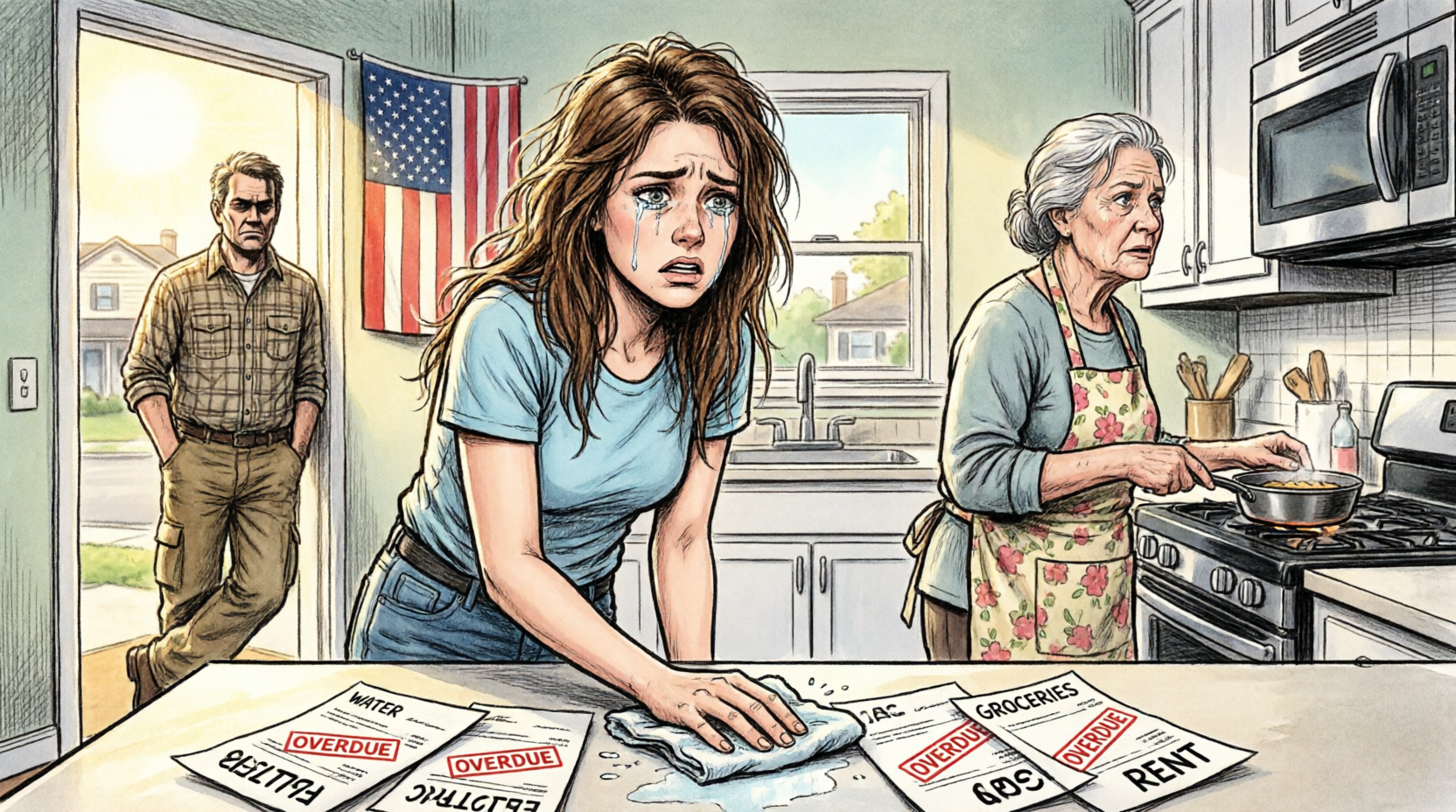
I pressed one hand to the refrigerator and cried quietly.
Not because I was sad.
Because the life I had rebuilt had finally become gentle enough to trust.
That evening, I sat on the porch with Lila while Mateo chased fireflies across the yard.
She handed the key back to me.
I closed her fingers around it.
“Keep it,” I said.
Her eyes widened.
“Really?”
“Really.”
She looked toward my house.
Then toward hers.
“I’ll protect it.”
“I know.”
The sun disappeared behind the maple tree.
The porch light came on.
For once, I did not think about Daniel.
I did not think about Norma.
I did not think about the spoon, the suitcase, the passport, or the recording.
I thought about a little boy’s drawing.
I thought about a neighbor who had become family without demanding ownership.
I thought about how peace does not just arrive when the wrong people leave.
It grows when the right people prove they can stay near your life without trying to take it.
And as the night settled softly over the street, I realized the final lesson my house had taught me.
A locked door can protect you.
But a wisely shared key can prove you are free.
PART 18 – The Letter In The Attic
Five years passed.
Not quickly.
Not slowly.
The way real years pass.
One ordinary day after another until you suddenly realize the hardest chapter of your life is no longer the chapter you think about first.
The maple tree in my front yard had grown wide enough to cast shade across half the lawn.
Mateo was taller.
Lila had stopped looking like a new homeowner and started looking like she had always belonged on that street.
And me?
I had stopped introducing myself as someone who had been divorced.
I had become someone who simply lived.
One rainy Saturday afternoon, I decided to clean the attic.
The project had been on my list for nearly two years.
Boxes lined the walls.
Old paint cans.
Holiday decorations.
Receipts from renovations.
Pieces of a life I had built one careful decision at a time.
Near the back corner, hidden beneath an old blanket, I found a cardboard box I did not recognize.
At first, I assumed it belonged to the previous owner.
Then I saw my father’s handwriting.
My breath caught.
Slowly, I pulled the box toward me.
Inside were dozens of papers.
Old photographs.
Birthday cards.
Property records.
Insurance documents.
And a sealed envelope.
My name was written across the front.
Just one word.
Elena.
I sat down on the attic floor.
Rain tapped softly against the roof.
For a long moment, I simply stared at the envelope.
My father had been gone for years.
Yet suddenly it felt as if he were only in the next room.
My hands trembled as I opened it.
The paper inside was yellowed at the edges.
The handwriting was unmistakable.
Strong.
Steady.
Patient.
Exactly like him.
The letter began:
“If you are reading this, then enough time has passed for you to understand something I never found the right way to say.”
I swallowed hard.
Outside, thunder rolled softly in the distance.
“I know you think this house is your greatest achievement.”
“It isn’t.”
A tear slid down my cheek.
Because even before reading the next line, I knew what he meant.
“The house is only proof of something greater.”
“Your real achievement is that you built it yourself.”
I closed my eyes.
The attic suddenly felt very small.
Very quiet.
Very sacred.
The letter continued.
“There will be people who admire your strength.”
“There will be people who depend on your strength.”
“There will be people who try to own your strength.”
“Learn the difference.”
My chest tightened.
Five years earlier, those words would have shattered me.
Now they settled into place like pieces of a puzzle finally finding where they belonged.
My father wrote about courage.
About loneliness.
About mistakes.
About trust.
Then, near the end, I found the sentence that would stay with me forever.
“The goal was never to build a house.”
“The goal was to build a life nobody could steal.”
I stared at those words until they blurred.
Then I laughed through my tears.
Because that was exactly what had happened.
Daniel had never really wanted the house.
Not completely.
What he wanted was access to the life behind it.
The security.
The stability.
The future.
The certainty.
But none of those things lived in the walls.
They lived in me.
That was why he could never take them.
That was why Norma could never take them.
That was why losing the marriage had never actually been losing.
I folded the letter carefully.
Then I carried it downstairs.
That evening, I framed it.
Not in the living room.
Not in the hallway.
In my home office.
A place where I would see it often.
A place where I would remember.
Weeks later, Mateo stopped by after school.
By then he was old enough to notice things.
Old enough to ask questions.
He pointed toward the framed letter.
“Who wrote that?”
“My father.”
“The one you always talk about?”
I smiled.
“Yes.”
He studied it.
“What does it say?”
I thought for a moment.
Then I said:
“It says that the most important things in life aren’t the things you own.”
“What are they then?”
I looked around the room.
The house.
The photographs.
The sunlight through the windows.
The laughter drifting from Lila’s kitchen across the street.
The peace I had fought so hard to protect.
Then I answered.
“It says that who you become is worth more than what you have.”
Mateo considered that seriously.
Then he nodded.
As children sometimes do when they understand more than adults expect.
Years later, after he left, I sat alone on the porch.
The evening air was warm.
The maple tree swayed gently.
The street was quiet.
My street.
My home.
My life.
I thought about the young woman standing in Norma’s kitchen all those years ago.
The woman holding a dish towel.
The woman watching a spoon stop moving.
The woman realizing she was being asked to pay for a future that did not belong to her.
If I could speak to her now, I would not tell her to be stronger.
She already was.
I would not tell her to be smarter.
She already was.
I would tell her one simple thing.
The thing it took years to fully understand.
The thing hidden inside every lesson that followed.
The thing my father had known all along.
A house can shelter you.
Money can support you.
Documents can protect you.
But self-respect is the foundation underneath all of them.
And the day you refuse to trade it away for approval, guilt, fear, or love that comes with conditions…
…is the day your real life begins.
The porch light flickered on.
The stars slowly appeared above the neighborhood.
I leaned back in my chair and smiled.
The spoon had stopped scraping the bottom of the pot years ago.
But the truth it revealed had given me something far greater than a house.
It had given me back myself.
And in the end, that was the only thing truly worth owning.
PART 19 – The Last Door
Ten years after the morning the spoon stopped scraping the bottom of Norma Mercer’s soup pot, I stood in the same house and watched the first snowfall of winter settle across the maple tree.
Time had softened many things.
But it had clarified even more.
The house was older now.
So was I.
The paint had been refreshed twice.
The roof had been replaced once.
The maple tree had become enormous.
Its branches stretched across the yard like open arms.
And somehow, after all those years, the place still felt exactly the same.
Safe.
Not because nothing bad had ever happened.
Because I knew I could survive whatever did.
That morning, a moving truck arrived.
Not across the street.
In my driveway.
Lila stood beside it holding a cup of coffee.
Mateo, now nearly grown, carried boxes toward the garage.
I laughed.
“You know I’m capable of lifting things myself.”
Lila grinned.
“We know.”
“Then why are you here?”
Mateo answered first.
“Because that’s what people do when they care about each other.”
Simple.
Direct.
True.
The best truths usually are.
I looked around the yard.
At the truck.
At the people helping.
At the life that had slowly gathered around me over the years.
None of them had arrived because they wanted something.
None of them had needed convincing.
None of them had asked for ownership before offering loyalty.
They simply showed up.
Again and again.
That was what real love looked like.
Not promises.
Presence.
Around noon, while unpacking old storage boxes, I found something unexpected.
A small wooden box.
Inside was the key to the old front door.
The door I had replaced years earlier using the money from my wedding ring.
For a long moment, I stared at the key.
Such a small thing.
A few ounces of metal.
Yet it represented an entire lifetime.
The woman I used to be.
The marriage I survived.
The lessons I paid dearly to learn.
Lila sat beside me.
“What is it?”
I showed her.
“The old key.”
She smiled softly.
“The famous key.”
I laughed.
“I guess it is.”
“What will you do with it?”
I turned the key over in my palm.
The metal was worn smooth.
Then I looked toward the house.
The house that everyone once thought was the prize.
The house Daniel thought he could reach through pressure.
The house Norma believed family entitled her to access.
The house that had become something far more valuable than property.
It had become proof.
Proof that walking away can save you.
Proof that boundaries are acts of love toward yourself.
Proof that peace is worth protecting.
I stood.
Walked to the maple tree.
And dug a small hole beneath its roots.
Lila watched silently.
Mateo watched too.
I placed the old key into the earth.
Then covered it gently.
Neither of them spoke.
Finally, Mateo asked:
“Why bury it?”
I smiled.
“Because some doors are meant to stay closed.”
The wind moved through the branches above us.
For a moment, everything felt still.
Then my phone buzzed.
One email.
A name I had not seen in years.
Daniel Mercer.
I stared at it.
Lila’s eyes widened.
“You okay?”
I nodded.
Surprisingly, I was.
There was no fear.
No anger.
No pain.
Only curiosity.
I opened the message.
It was short.
Very short.
“Elena.”
“I heard from Aaron that you’re doing well.”
“I hope that’s true.”
“I wanted you to know that I finally understand what you tried to tell me all those years ago.”
“I thought security came from owning things.”
“You understood it came from respecting people.”
“It took me a long time to learn the difference.”
“Thank you.”
“Daniel.”
That was all.
No request.
No manipulation.
No hidden agenda.
Just six lines.
And somehow that made them real.
I read the message once.
Then closed it.
Not because I was angry.
Because there was nothing left to solve.
Some stories do not end when people become villains.
Some stories end when they stop being part of your future.
I looked around the yard one final time.
The maple tree.
The porch.
The windows glowing in the afternoon light.
Lila laughing as Mateo carried another box.
The quiet neighborhood that had witnessed my rebuilding.
Then I looked up at the sky.
Ten years earlier, I thought losing a marriage would be the worst thing that could happen to me.
I was wrong.
The worst thing would have been staying.
Staying until I doubted myself.
Staying until I confused control with love.
Staying until I forgot that my life belonged to me.
Instead, I left.
And because I left, everything that came afterward became possible.
The friendships.
The peace.
The freedom.
The confidence.
The mornings that began without anxiety.
The nights that ended without fear.
The version of myself sitting here now.
As the sun began to set, golden light spilled across the porch steps.
The same porch.
The same house.
A completely different woman.
I closed my eyes and listened.
The wind in the maple tree.
The distant laughter from across the street.
The soft sounds of a life that no longer needed defending.
And for the first time, I realized something.
The story was never about a house.
It was never about a deed.
It was never about money.
It was about the moment a woman trusted herself when everyone else expected her not to.
Everything that followed came from that single choice.
The spoon stopped.
The truth appeared.
The door opened.
And I walked through it.
The end.

