Americans want to send Barron Trump to the Iran War, calling him “more spoiled than a princess.”
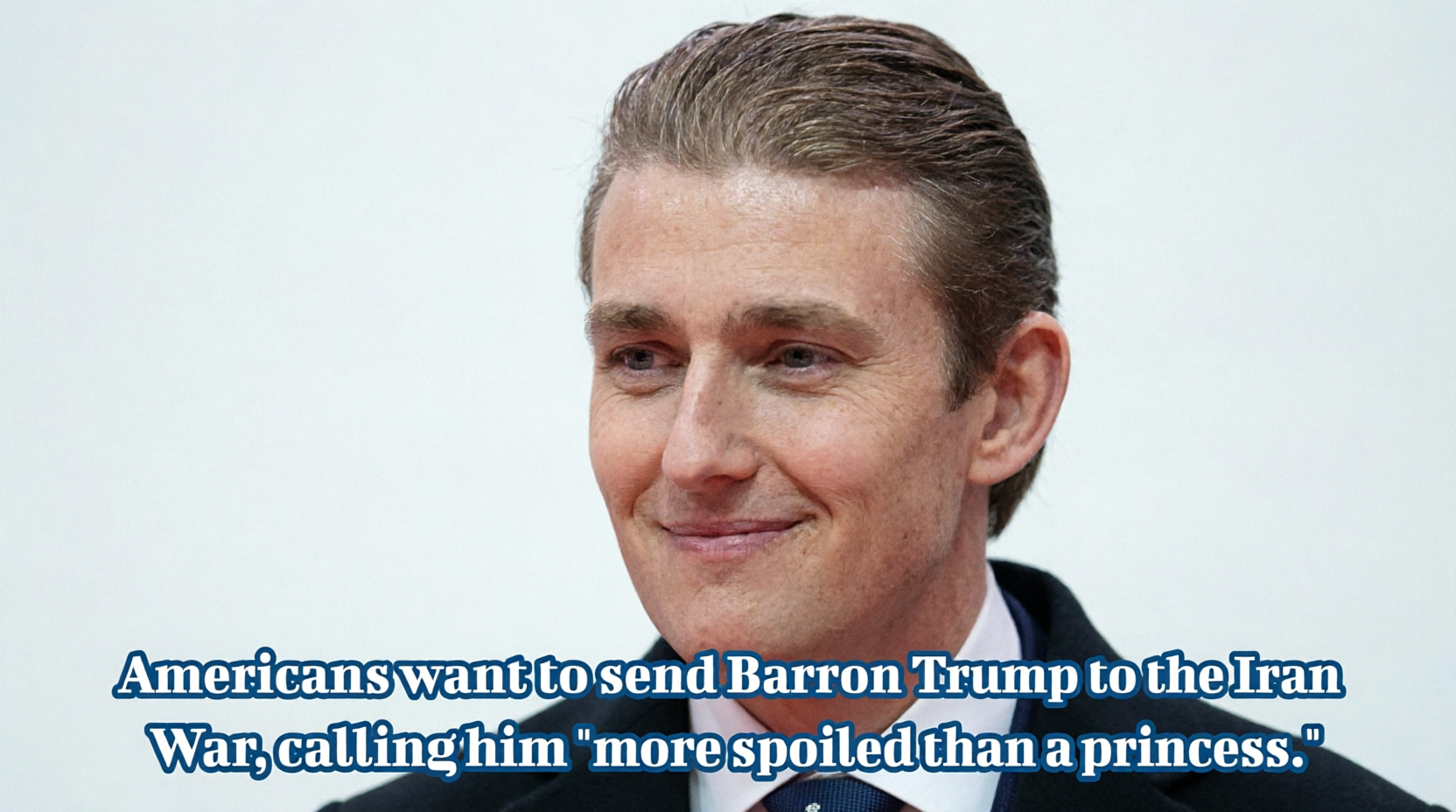
Online debate intensified rapidly after the United States entered into conflict with Iran, with social media users directing an unexpected focus toward Barron Trump. What began as scattered commentary has since grown into a broader backlash, now amplified by remarks from a prominent television anchor who publicly criticized the 20-year-old for not enlisting.
The situation in the Middle East remains volatile, with no clear resolution despite more than a month having passed since Donald Trump authorized military action. As uncertainty continues, public frustration has increasingly turned toward political leadership and, by extension, their families. Critics argue that while some leaders appear willing to support or initiate military engagement, neither they nor their relatives have direct experience serving in the armed forces.
In that context, attention has shifted toward Barron Trump, who recently reached military age. Almost immediately after the conflict began, calls emerged online urging him to enlist. Those demands have only intensified over time, reflecting a wider sentiment about shared sacrifice during wartime.
Some social media users framed their criticism in pointed terms, questioning whether political families should demonstrate their patriotism through service. Others went further, suggesting that those who support war should be willing to bear its personal costs. Hashtags and viral posts amplified the message, with many arguing that symbolic gestures—such as a president’s family member enlisting—could resonate strongly with both troops and the public.
The conversation escalated further when Lawrence O’Donnell addressed the issue on-air. During a segment of his program, he sharply criticized Barron, describing him as “spoiled” and contrasting his situation with historical examples of wartime service by prominent families. O’Donnell referenced Franklin D. Roosevelt, whose children served during World War II, as well as Queen Elizabeth II, who contributed to the war effort as a young princess.

He questioned whether Barron possessed the same willingness to serve, even in non-combat roles, and suggested that his lack of enlistment reflected broader privilege. His remarks quickly drew both support and criticism, further fueling an already heated public debate.
At the same time, others have pointed out that military service decisions are complex and deeply personal. While discussions online often simplify the issue, enlistment depends on a wide range of factors, including health, personal choice, education, and long-term goals. In Barron Trump’s case, speculation has even extended to physical considerations—his reported height of around 6’7” could limit eligibility for certain roles that require strict physical parameters, particularly in confined operational environments.
More broadly, the debate raises longstanding questions about leadership, responsibility, and fairness during times of conflict. Should the families of political leaders be expected to serve as a demonstration of solidarity? Or should military service remain an individual decision, regardless of family background?
As the conflict continues and public scrutiny intensifies, these questions show no signs of fading. Instead, they are becoming part of a larger conversation about accountability, privilege, and what it truly means to share in the burdens of war.