My mother-in-law slapped me while I lay in a hospital bed.exclaimed, “You’ve brought nothing but shame to this family,” in front of my own parents.
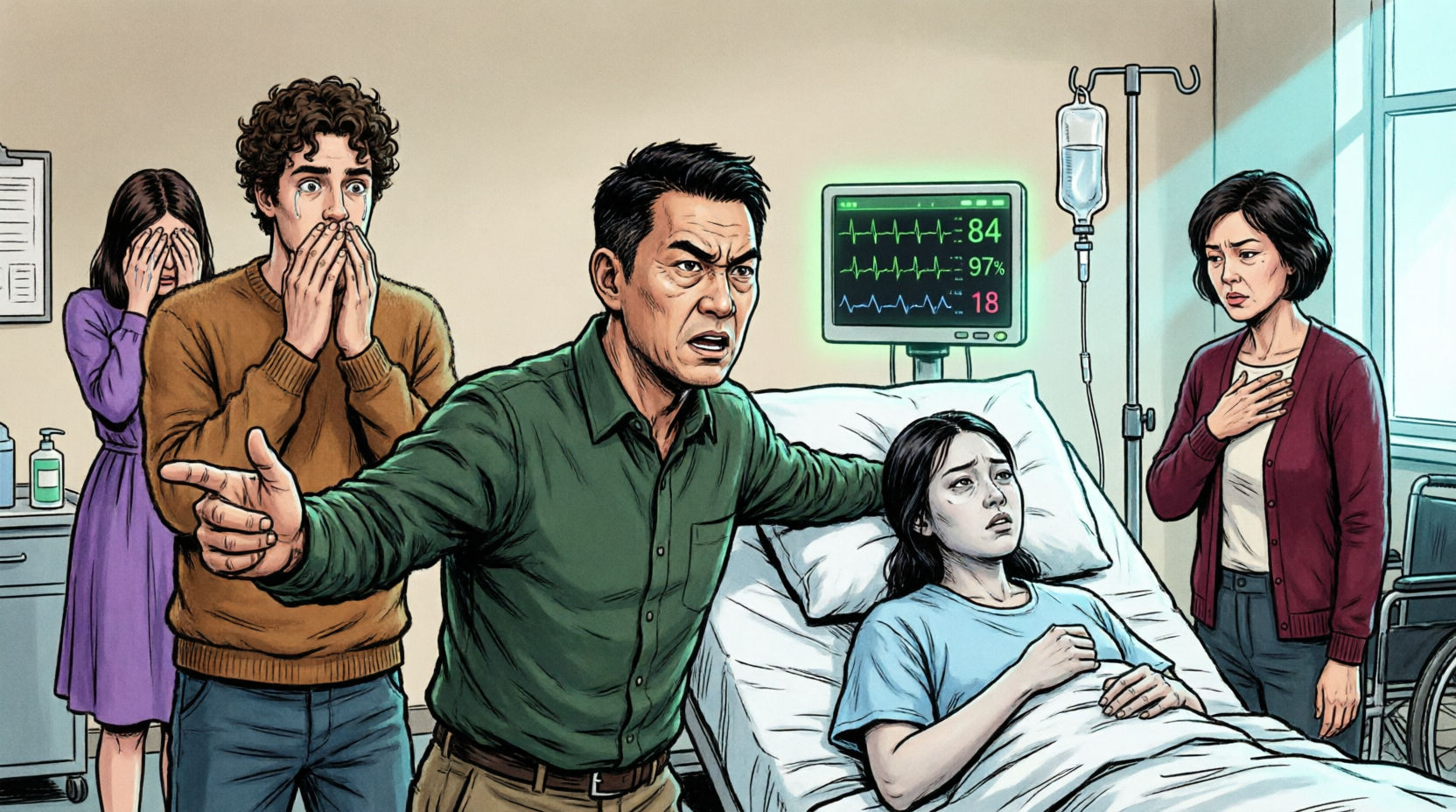
I was lying in a hospital bed when my mother-in-law struck me.
Not in private.
Not in a moment that could be twisted or denied.
In front of my parents.
Under fluorescent lights.
With a heart monitor recording every second of it.
And I couldn’t even lift my hand to stop her.
“You’ve brought nothing but shame to this family!” she shouted as her palm cracked across my face.
For a second, everything went silent—except for the frantic beeping of the machine beside me.
My mother froze.
My husband hesitated.
But my father stepped forward.
And in a voice so controlled it cut deeper than any scream, he said:
“You touched my daughter once. Now you answer to me.”
What happened after that changed everything.
The room smelled like antiseptic and burnt coffee, the kind that had been sitting too long on a warming plate. The lights were harsh, flattening every expression—except hers.
Diane Mercer didn’t need bad lighting to look cold.
She walked in like she owned the room. Cream coat. Perfect posture. That same thin, disapproving expression she had worn since the day I married her son.
Ryan stood near the window, hands buried in his pockets like he could disappear into them. My mother sat beside me, gently rubbing my arm, careful of the IV line taped to my skin. My father stood near the door, quiet, watching everything the way he always did—taking it in before deciding if it mattered.
I had been admitted the night before after complications from surgery—severe abdominal pain, dehydration, exhaustion so deep it felt like I was sinking into the mattress. Sitting up took effort. Speaking clearly took more.
Ryan had told her not to come.
She came anyway.
Diane didn’t ask how I was.
Didn’t glance at the monitors. Didn’t acknowledge the fact that I could barely move without wincing.
She looked straight at me and said, “So this is what you do now? Lie in bed and make everyone cater to you?”
My mother stiffened. “She just had surgery,” she said carefully.
Diane flicked her hand like she was brushing away dust. “I’m not speaking to you.”
I swallowed, forcing steadiness into a voice that didn’t feel like mine. “Please leave. I’m not doing this today.”
That should have ended it.
Instead, it escalated.
“Oh, now you have boundaries?” she snapped. “You didn’t have boundaries when you pulled Ryan away from his family, spent his money, and turned him into someone I barely recognize.”
“Mom, stop,” Ryan muttered.
It wasn’t a defense.
It was a reflex.
And somehow that made it worse.
Diane stepped closer to the bed. Too close. Close enough that I could smell her perfume cutting through the sterile air.
“Do you know what this family thinks of you, Emily?” she said. “They think you are dramatic. Manipulative. Lazy.”
The monitor beside me began to spike—sharp, rapid beeps that filled the room. My chest tightened, breath catching halfway in.
My mother stood, halfway to the call button.
My father didn’t move—but his jaw locked.
I found just enough strength to say it again.
“Get out.”
Diane leaned in, her voice dropping to something colder.
“You are not the victim here.”
And then—
She hit me.
The sound echoed.
It didn’t feel real at first. Just heat blooming across my cheek, then a sharp sting, then something deeper—humiliation, disbelief, the sudden awareness that I was lying in a hospital bed and still not safe.
My mother screamed.
Ryan lunged forward—but too late, always too late.
And then my father moved.
“You just made the biggest mistake of your life.”
He didn’t raise his voice.
He didn’t need to.
Everything in the room shifted around him.
My father—Daniel Brooks—had never been a loud man. He built things for a living. Houses. Decks. Fences that stood straight and didn’t collapse under pressure. He believed in work, in consistency, in showing up.
People underestimated him because of that.
Diane certainly had.
She let out a short, brittle laugh. “Don’t you dare threaten me.”
“I don’t need to,” he replied. “You already gave me everything I need.”
Chaos followed.
My mother slammed the call button, shouting for help. The monitor screamed in sharp, relentless bursts. Ryan kept saying, “Mom, what did you do?” like the moment could still be undone if he said it enough times.
But my father stayed calm.
That was the most frightening part.
When security arrived, followed by a nurse and a doctor, everything became official.
Visible.
Real.
The nurse saw the mark on my face and immediately began documenting. The doctor asked if I wanted to report it as an assault.
Diane tried to interrupt. “This is a family misunderstanding.”
My father didn’t even look at her when he answered.
“No,” he said. “It’s not.”
Then, finally, he turned to Ryan.
And I watched something in my husband break under that gaze.
“You brought my daughter into this,” my father said. “You watched this happen. Don’t stand there pretending you’re shocked. You’ve been excusing this behavior for years.”
Ryan opened his mouth.
Nothing came out.
“Call it what it is,” my father continued. “You chose comfort over courage. And she paid the price.”
Security escorted Diane out when she refused to leave.
She kept shouting—about respect, about family, about how we were twisting everything.
But her voice sounded smaller the further she got from the room.
Like it had lost its power the moment it was witnessed.
And then it was quiet.
Not peaceful.
But honest.
My father pulled a chair to my bedside and sat down.
“Emily,” he said gently, “you don’t have to go back there. Not for one more night.”
Across the room, Ryan looked at me like he was waiting—for forgiveness, for reassurance, for me to make this easier.
For me to do what I had always done.
Smooth it over.
Minimize it.
Carry it.
I didn’t.
Because for the first time, I wasn’t alone in what had happened.
There were witnesses now.
Records.
Proof.
And a father who refused to let the truth be buried under politeness.
The next two days stripped everything down to reality.
Reports were filed.
Statements were taken.
Photos documented what could no longer be denied.
And my father—who had always stayed out of conflict—became immovable.
He arranged for me to recover at my parents’ house.
He contacted a lawyer.
He sent Ryan one message:
Do not come near my daughter until she decides.
Ryan called.
Again and again.
Apologies. Promises. Explanations.
Stress. Pressure. Habit.
He said he would change.
But something had already settled inside me.
Because when a woman is struck in a hospital bed and her husband still needs time to figure out how to respond—
the truth is already there.
I started remembering everything I had once dismissed.
The comments.
The criticisms.
The quiet humiliations disguised as “just how she is.”
And Ryan, every time, choosing ease over confrontation.
I used to call that patience.
Now I call it surrender.
Two weeks later, I filed for separation.
Not because of one slap.
But because of everything that made it possible.
Diane tried to rewrite the story.
She called it dramatic.
A misunderstanding.
An overreaction.
But stories fall apart when there are records.
When there are witnesses.
When the truth is finally spoken out loud.
The strongest moment wasn’t the slap.
It wasn’t even what my father said after.
It was this:
He refused to let anyone rename what happened.
And for the first time in my life—
neither did I.