My mother-in-law slapped me while I lay in a hospital bed.exclaimed, “You’ve brought nothing but shame to this family,” in front of my own parents.
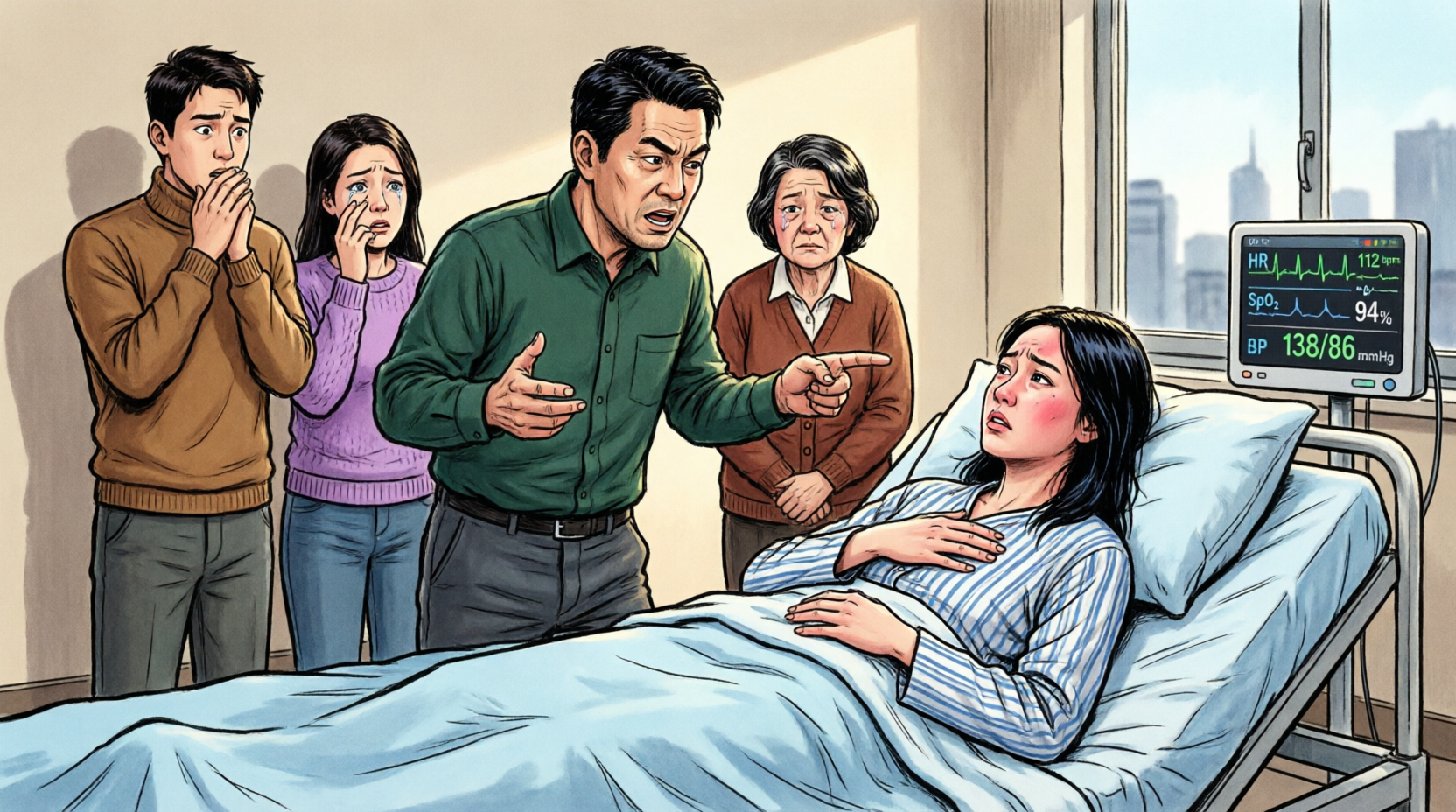
I was lying in a hospital bed when my mother-in-law slapped me—right in front of my own parents—and shouted, “All you’ve ever done is disgrace this family!” My mother froze in shock. I couldn’t even lift my arm to react. But my father stepped forward, his expression darker than I had ever seen, and said quietly, “You’ve laid a hand on my daughter. Now you answer to me.” What happened next left everyone in that room speechless.
I was still hooked up to monitors when it happened.
The room smelled faintly of antiseptic mixed with stale coffee, and the harsh fluorescent lights seemed to exaggerate every tension in the air. Everyone looked worn and strained—except Diane Mercer, my husband’s mother. She didn’t need bad lighting to appear cold. She walked in wearing a tailored cream coat, expensive perfume trailing behind her, and the same sharp, judging expression she always carried when she looked at me.
My husband, Ryan, stood near the window, hands shoved deep into his pockets. My mother sat beside me, gently stroking my arm, trying to soothe me. My father, Daniel Brooks, stayed near the door, quiet, watchful—taking everything in.
I had been admitted the night before after complications from surgery left me with severe pain and dehydration. I was exhausted, weak, and barely able to sit up without help. Ryan had told his mother not to come. She ignored him.
Diane didn’t ask how I was. She didn’t even glance at the medical chart clipped to my bed. She looked straight at me and said, “So this is what you’ve come to? Lying in a hospital bed and making everyone wait on you?”
My mother stiffened. “She just had surgery,” she said carefully.
Diane waved her off like she was nothing. “I’m not talking to you. I’m speaking to my son’s wife.”
I swallowed hard, trying to keep my voice steady. “Please leave. I’m not doing this today.”
That only fueled her.
“Oh, now you have boundaries?” she snapped. “You didn’t have boundaries when you pulled Ryan away from his family, spent his money, and turned him into someone I barely recognize.”
“Mom, stop,” Ryan muttered, but it sounded weak—automatic, like something he’d said a hundred times without meaning it.
Diane stepped closer to my bed. “Do you even know what this family thinks of you? They see you as dramatic, manipulative, and lazy.”
The monitor beside me began to beep faster as my heart rate climbed. My mother stood up, ready to call for help. My father didn’t move—but I saw his jaw tighten.
“Get out,” I said.
Diane leaned in, her voice low and venomous. “You’re not the victim here.”
Before anyone could react, her hand struck my face.
The sound echoed through the room.
My mother screamed. Ryan rushed forward—but too late. Pain exploded across my cheek, sharp and burning, and for a moment I couldn’t breathe. I tasted salt and something metallic.
Then I heard my father.
His voice was low, controlled—and far more frightening than shouting.
He stepped between us, looking directly at Diane. “That,” he said, “was the worst mistake you could have made.”
Part 2
Everything changed the moment my father spoke.
My mother reacted first, slamming the call button over and over, shouting for security. Ryan stood there, repeating, “Mom, what did you do? What did you do?” as if this had all just happened out of nowhere—like it wasn’t the result of years of him excusing her cruelty.
My cheek throbbed. My chest felt tight. The monitor screamed with rapid beeping. But in the middle of it all, my father never raised his voice.
And somehow, that was what unsettled Diane the most.
My father had spent his entire life being underestimated. He wasn’t loud. He didn’t perform anger. He was a man who believed in hard work, early mornings, and speaking only when it mattered. Diane, polished and dramatic, had probably always seen him as simple.
She was wrong.
“You just assaulted my daughter,” he said calmly. “In a hospital bed. In front of witnesses. In front of medical staff. And in front of her husband—who clearly doesn’t understand what that role means.”
Diane let out a short laugh, but it wavered. “Don’t you dare threaten me.”
“I don’t need to,” my father replied. “You’ve already done the damage yourself.”
Within minutes, security arrived, followed by a nurse and a doctor. My mother, shaking, tried to explain what had happened while holding my hand. Ryan kept reaching for me, but I pulled away. For the first time in our marriage, I didn’t soften it with an apology.
The nurse immediately noticed the redness on my face and the spike in my vitals. She began documenting everything. The doctor asked if I wanted to report it as an assault.
Diane cut in, “This is just a family misunderstanding—”
“No,” my father said firmly. “It is not. It’s assault. And that’s exactly how it should be recorded.”
Then he turned to Ryan.
I’ll never forget that look.
It wasn’t anger. It was disappointment—deep and final.
“You brought my daughter into a family where she’s been mistreated for years,” he said. “And you stood there while your mother hit her. Don’t pretend you’re powerless. You chose not to act.”
Ryan looked shattered, but said nothing.
Diane started shouting, accusing us of trying to ruin her reputation. Security told her to leave. When she refused, they escorted her out.
But the hardest moment came after the room went quiet.
My father pulled a chair next to my bed, sat down, and said gently, “You don’t have to go back there. Not tonight. Not ever, if you don’t want to.”
Ryan stood across the room, finally realizing this wasn’t something that could be smoothed over.
For the first time, my silence had been seen.
And my father wasn’t going to let anyone bury it.
Part 3
The next two days exposed everything that had been broken for years.
The hospital filed a report. Security documented the incident. My nurse offered to give a statement. My mother took photos as the swelling on my face became more visible. And my father—who had always avoided drama—became focused in a way I had never seen before.
He contacted a lawyer before I was even discharged.
He arranged for me to recover at my parents’ house.
And he sent Ryan one message:
Do not come near my daughter until she decides what she wants.
Ryan called me over thirty times in a single day.
He cried. He apologized. He blamed stress, family pressure, his mother’s temper—anything he could find. He promised change, therapy, boundaries.
But here’s the truth:
When a woman is hit in a hospital bed and her husband still hesitates to defend her, the relationship has already said everything that matters.
I started replaying the past.
The small moments I had ignored.
Diane criticizing my cooking. Mocking my appearance. Undermining my career. Walking into our home uninvited. Sharing private things about me with Ryan—things he never should have repeated.
Every time, Ryan said, “That’s just how she is.”
And every time, I chose peace over confrontation.
But I understand now:
Peace without respect isn’t peace—it’s surrender.
A week later, Ryan came to my parents’ house to talk.
We sat in the living room. Sunlight stretched across the floor. My mother stayed in the next room, folding laundry just to keep herself from breaking down.
Ryan said, “I know I failed you.”
“Yes,” I answered.
He looked stunned. Maybe he expected comfort. Maybe he thought I would make it easier for him again.
He asked if we could fix things.
I told him the truth.
“The slap was the first time she hit me,” I said. “But it wasn’t the first time you let her hurt me.”
That was the end of illusions.
He cried harder after that—but tears aren’t change. Regret isn’t protection. And love only matters when it shows up at the right time.
Two weeks later, I filed for separation.
Diane tried to reach me through others—relatives, friends, even Ryan’s sister. She called me dramatic. She said my father was controlling. She claimed I was exaggerating “one bad moment.”
But facts don’t bend for opinions.
There were witnesses. Reports. Evidence.
Her version didn’t hold.
In the end, the strongest response wasn’t shouting or revenge.
It was my father refusing to let abuse be disguised as misunderstanding.
And it was me refusing to keep helping them hide it.