My 12-year-old daughter was informed by her in-laws, “You don’t live here anymore,” and she was forced to “pack her things” as my sister-in-law moved into our $473,000 condo.
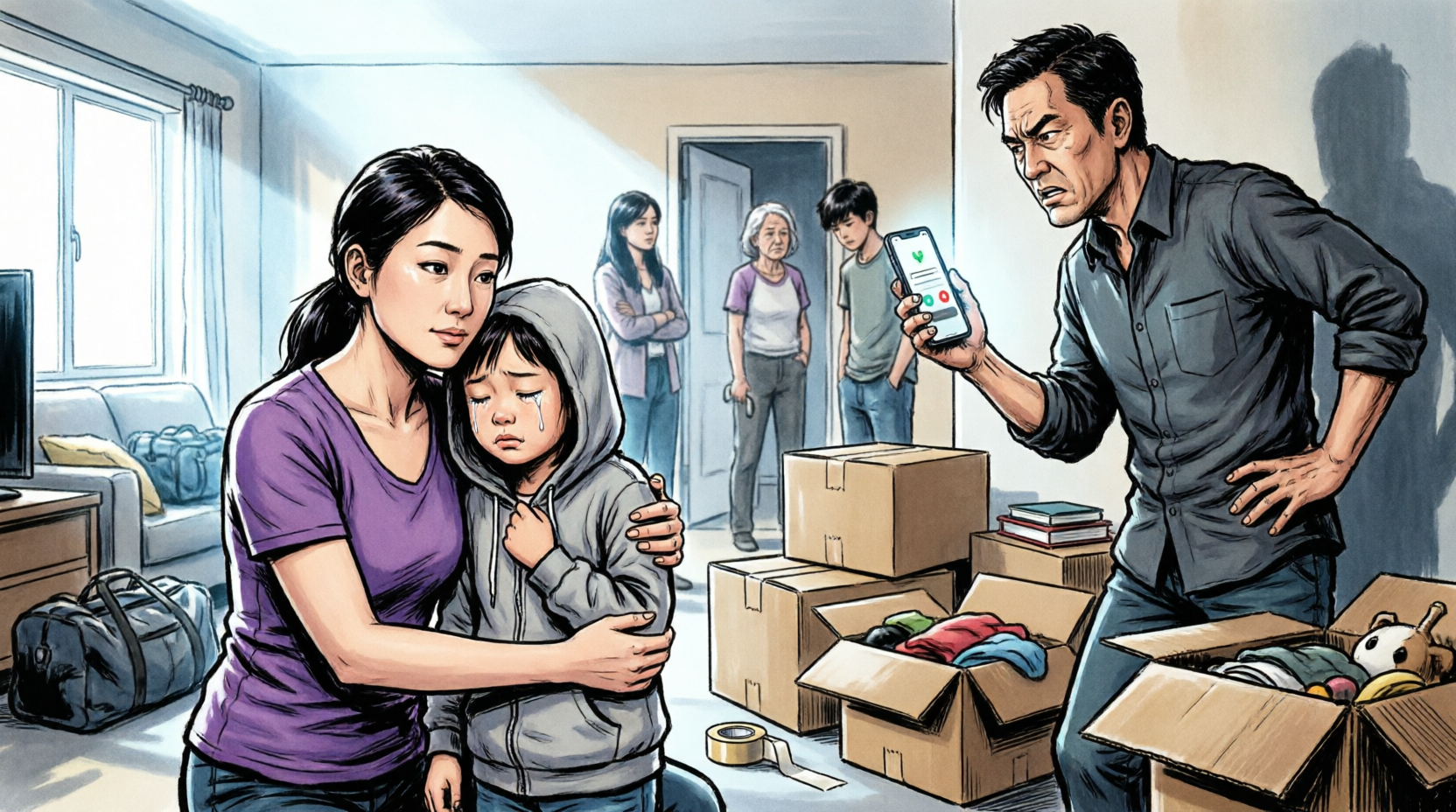
I was standing in the office break room when my twelve-year-old daughter called on her day off from school. Ava never called me at work unless something was wrong. The moment I heard her breathing—thin, uneven, like she was trying not to cry—I knew this wasn’t small.
“Mom,” she whispered, “why are we moving?”
The question didn’t make sense. Not at first. It just hung there, heavy and wrong, like a sentence that had been cut in half.
“What do you mean?” I asked, already moving, already grabbing my keys even though I hadn’t decided to leave yet.
Then she told me.
Helena—my mother-in-law—had come into our condo with Bianca and Victor. They told her to start packing. Not suggested. Not discussed. Told. Bianca was already inside, opening drawers like she had lived there for years. Victor was carrying boxes up from a rented truck. And Helena, in that calm, precise voice she used when she wanted something to sound reasonable, had informed my daughter that she “didn’t live here anymore.”
I didn’t remember leaving the break room. I only remember the sound of my own voice, sharper than I’d ever heard it.
“Ava, stop packing. Put everything down. Go to your room and lock the door if you can. I’m coming.”
She hesitated. “But they said—”
“I don’t care what they said. This is your home. Do you hear me?”
A pause. A breath.
“…okay.”
Then I called Daniel.
I didn’t ease into it. “Your parents are in our condo. Bianca is moving in. They told Ava to pack her things.”
There was a single second of silence on the line. Clean. Sharp. Dangerous.
Then: “I’m leaving now. Get to Ava.”
By the time I reached our building, Daniel’s car was already there, angled across two parking spaces like he hadn’t bothered correcting it. A moving truck idled near the curb. Boxes sat on the sidewalk. A rug I recognized. A lamp that definitely wasn’t ours.
Bianca stood outside, one hand resting on her stomach, directing people like she was orchestrating something inevitable. Not asking. Not hoping. Expecting.
I didn’t speak to her. I ran past her.
Upstairs, the door to our condo was open.
Ava sat on her bedroom floor beside a half-filled duffel bag, folding her clothes with slow, careful movements—the kind children use when they’re trying to be good so something bad doesn’t get worse. That image will stay with me longer than anything that happened afterward.
I dropped to my knees and pulled her into me.
“No one is taking your room,” I said into her hair. “No one is taking anything. I promise you.”
Her body shook once, like she had been holding everything in and finally let a piece of it go.
Then I stood up.
And went back downstairs.
Daniel was already there, standing between our front door and his family. Not shouting. Not pacing. Just… still. Which, for him, was worse.
Helena was speaking, of course. She always filled silence like it was something that needed fixing. Bianca stood nearby, tearful but composed enough to watch reactions. Victor hovered just behind them, arms crossed, waiting for agreement to arrive like it always had before.
“It just makes sense,” Helena was saying. “Bianca has three boys already, and another on the way. You two can manage with less space for a while.”
“For a while,” Victor added. “Families adjust.”
Bianca pressed her lips together. “I didn’t want it to happen like this, but I don’t have a choice.”
Daniel didn’t respond.
Helena continued, softer now, almost kind. “Ava will adjust.”
That was the moment everything shifted.
Daniel reached into his pocket and pulled out his phone.
“Don’t be dramatic,” Helena snapped.
He looked at her. Then at Bianca. Then at the truck.
When he smiled, it wasn’t warmth. It was recognition—the kind you get when something finally makes sense in the worst possible way.
“You can leave,” he said quietly, “or you can explain this to the police.”
Victor scoffed. “You’d call the police on your own family?”
Daniel didn’t even glance at him. “You told my daughter she didn’t live in her own home.”
Helena opened her mouth again, but Daniel cut her off—not louder, just final.
“And before you start talking about rights,” he added, “there’s something you should remember.”
He turned slightly, enough to include me in the space he was holding.
“The condo is in my wife’s name.”
Silence landed hard.
Bianca’s face changed first—shock breaking through the performance. Victor blinked, recalculating. Helena… didn’t look surprised. Just cornered.
That told me everything.
This hadn’t been a misunderstanding. It had been a plan.
“You did this deliberately,” Bianca said to me, her voice sharp now.
“No,” I said. “I made sure we were protected.”
Daniel made the call.
Everything unraveled quickly after that. Helena tried to soften it, to reshape it into something forgivable. Victor muttered about pride and disrespect. Bianca cried—but it wasn’t grief. It was anger at being stopped.
The police arrived within minutes.
We told the truth. Not dramatically. Not emotionally. Just clearly.
They had entered without permission.
They had begun moving belongings inside.
They had told a child she no longer lived in her own home.
Helena called it a misunderstanding.
The officer asked one question: “Were you asked to leave?”
She hesitated.
That was enough.
Boxes went back into the truck. The lamp disappeared. The performance ended because there was no audience left to convince.
When they finally drove away, the quiet felt unreal.
Inside, Ava stepped out slowly, like the air might still shift against her.
Daniel knelt in front of her. “No one is ever doing that to you again.”
And this time, it didn’t sound like reassurance.
It sounded like a boundary.
—
That night, after Ava went to sleep, we sat at the kitchen table and did something harder than calling the police.
We ended it.
Daniel canceled the monthly transfers—six years of automatic support, gone in seconds. He removed Bianca from every safety net she had stretched across our lives. Then he sent a single message to the family group chat:
Do not come to our home again. Do not contact Ava. There will be no more money. No more childcare. This ends now.
We thought that would be the end of it.
It wasn’t.
The next day, Helena rewrote the story.
Online, we became the villains. Cold. Heartless. Cruel. A pregnant woman turned away. A son who called the police on his own family. A daughter-in-law who “valued property over people.”
They left Ava out of it.
Of course they did.
But Daniel didn’t argue.
He documented.
He wrote what happened—plainly, without decoration. A twelve-year-old girl, home alone, told to pack her belongings because adults had decided she no longer lived there. Six years of financial support. A moving truck. Boxes already inside.
And one question:
What would you call telling a child she doesn’t belong in her own home?
That was all it took.
The noise shifted. Then it faded.
Because outrage is easy when details are missing. Truth is quieter—but it stays.
—
We didn’t reconcile.
We didn’t negotiate.
We closed the door.
And something unexpected happened after that.
Life got lighter.
Weekends became ours again. Mornings slowed down. Ava stopped watching adults like they might change the rules without warning. Daniel laughed more. I stopped flinching every time my phone lit up.
A year passed.
The condo is still ours. Not just legally—completely. Fully. Without tension sitting in the corners.
Ava is louder now. Messier. Stronger. She leaves her art supplies everywhere and sings when she thinks no one’s listening.
Bianca had her baby. Helena and Victor help her now, the way they always expected us to.
Funny how responsibility finds its way back to the people who assign it.
I don’t feel guilty.
That ended the moment three adults stood in my home and tried to convince my child she didn’t belong there.
They were wrong.
Because what Ava learned instead will last longer than anything they tried to take:
A home isn’t claimed by pressure.
It isn’t granted by louder voices.
It belongs to the people who protect it—
especially when a child is watching.

