Ten Unknown Facts About Johnny Cash
The Man in Black’s extraordinary existence is described in a new biography.
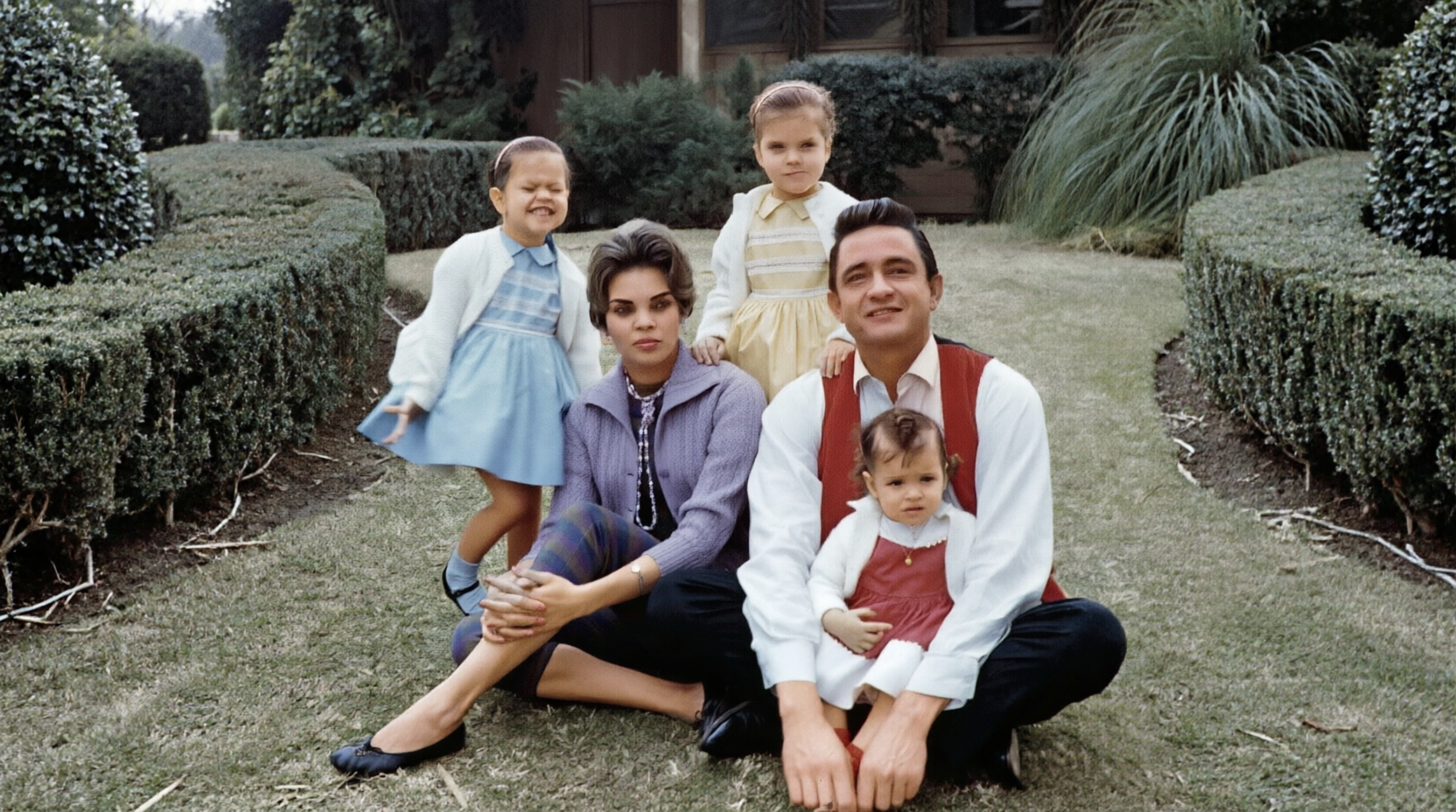
Even a decade after his death, the legend of Johnny Cash casts a long and undeniable shadow over American music. From his early recordings at Sun Records to his iconic live performances at Folsom and San Quentin prisons, from the timeless anthems “I Walk the Line” and “Ring of Fire” to the irreverent humor of “A Boy Named Sue,” Cash’s influence is vast and enduring. His life has been chronicled in his own autobiographies, Man in Black and Cash, as well as dramatized on the big screen in the Joaquin Phoenix–starring biopic. For longtime fans, much of Cash’s story is familiar: the tragic death of his older brother Jack, his battle with amphetamine addiction, and the remarkable creative resurgence later in life after years of wandering through personal and professional darkness. These moments are distilled in the three-disc 2000 box set Love, God, Murder, which captures the singer’s recurring themes of sin, redemption, and perseverance.
See Where Johnny Cash Ranks on Our List of the 100 Greatest Singers
Yet for those who believe they know the full story, a closer look reveals a life more complicated and nuanced than ever imagined. When former Los Angeles Times critic Robert Hilburn first approached Cash’s longtime manager, Lou Robin, about writing a comprehensive biography, Robin reportedly said that 80 percent of Cash’s story had never been told. Hilburn’s new book, Johnny Cash: The Life, published this week, explores the towering highs and devastating lows of Cash’s life in extraordinary detail. Readers may think they know the Man in Black, but Hilburn’s meticulous research uncovers warts-and-all revelations, deepening our understanding of the singer as a man of profound contradictions.
Here are just a few insights from Cash’s lesser-known truths:
- He empathized with monsters.
As a child, Cash was captivated by the original Frankenstein movie. Unlike most viewers who saw the monster as purely terrifying, Cash identified with him as a figure of sympathy—a being composed of flawed parts but striving to do good. This empathy for outsiders and the marginalized would later echo throughout his music and advocacy. - He had to confront and overcome his own bigotry.
Cash, despite his later reputation as a civil-rights advocate, including for Native Americans, was not immune to the prejudices of his upbringing in rural Arkansas. A notorious incident involved name-calling toward a Black soldier walking with a white woman, which Cash later attributed to the ingrained biases of his environment. Yet he also demonstrated openness and growth: he drew inspiration from African-American colleagues, such as the Air Force musician whose flashy style inspired the rock & roll classic “Blue Suede Shoes.” - He had a playful, irreverent side.
Cash’s humor often bordered on the absurd. He and his first wife, Vivian, named their first daughter Rosanne after Cash’s private nicknames for her mother’s breasts: “Rose” and “Anne.” - He was clever in hiding his true intentions.
Cash’s first Number One hit, “I Walk the Line,” is often interpreted as a straightforward pledge of loyalty to his young wife. But for Cash, it also served as a subtle vehicle to inject spiritual themes into his music, cleverly circumventing Sun Records founder Sam Phillips, who was uninterested in recording religious songs. - He was surprisingly practical.
Though “Man in Black” has been celebrated as a socially conscious anthem, Cash initially wore black simply because it was practical on tour—it hid stains and wear. Fellow performers teased him relentlessly, dubbing him “the Undertaker,” long before the name became part of his mystique. - His legendary marriage to June Carter had a rocky start.
While later celebrated as one of country music’s great love stories, Cash’s romance with June began amid scandal. At the time, he was still married to Vivian, and some friends saw June as a manipulator—Hilburn likens her role in their early affair to that of “an early country equivalent of Yoko Ono in John Lennon’s world.” - He occasionally bent the truth about his struggles.
Cash famously recounted a near-death experience in a Tennessee cave, claiming divine intervention led him to quit pills. Hilburn’s research reveals inconsistencies: the cave would have been underwater on the date Cash cited, and he continued to use drugs afterward. Yet the story reflects Cash’s tendency to frame his personal battles in dramatic, moralized terms. - He almost incited a riot.
During his second major prison performance at San Quentin in 1969, Cash introduced two new versions of a song named for the facility. The bitter lyrics, voiced from the perspective of inmates, nearly sparked an insurrection. Producer Bob Johnston recalled Cash’s awareness of the danger: “All he had to say was, ‘Let’s go!’ and there would have been a full-scale riot.” - Some legendary anecdotes were exaggerated.
The oft-repeated tale of Kris Kristofferson landing a helicopter on Cash’s property, beer in hand, to hand over the demo for “Sunday Mornin’ Comin’ Down” is largely mythical. Kristofferson himself confirms: no beer, wrong song, and Cash never even came outside. - He feared his music would be forgotten.
Before collaborating with Rick Rubin on the stark, haunting American albums that would reignite his career in the 1990s, Cash was in deep despair, convinced that no one would care about his music after his death. “Rick made me think I might have a legacy after all,” he admitted to Hilburn, reflecting the renewed sense of purpose Rubin’s partnership inspired.
Johnny Cash: The Life reminds us that the Man in Black was far more than a persona—he was a deeply human figure, a man of contradictions, brilliance, flaws, and enduring empathy, whose story continues to resonate long after the final note has faded.