Elizabeth Montgomery’s Legend
Herbie J. Pilato, the author of multiple books about the popular Emmy-nominated actress Elizabeth Montgomery, reminisces about some of her most famous eerie roles in a special Halloween offering.
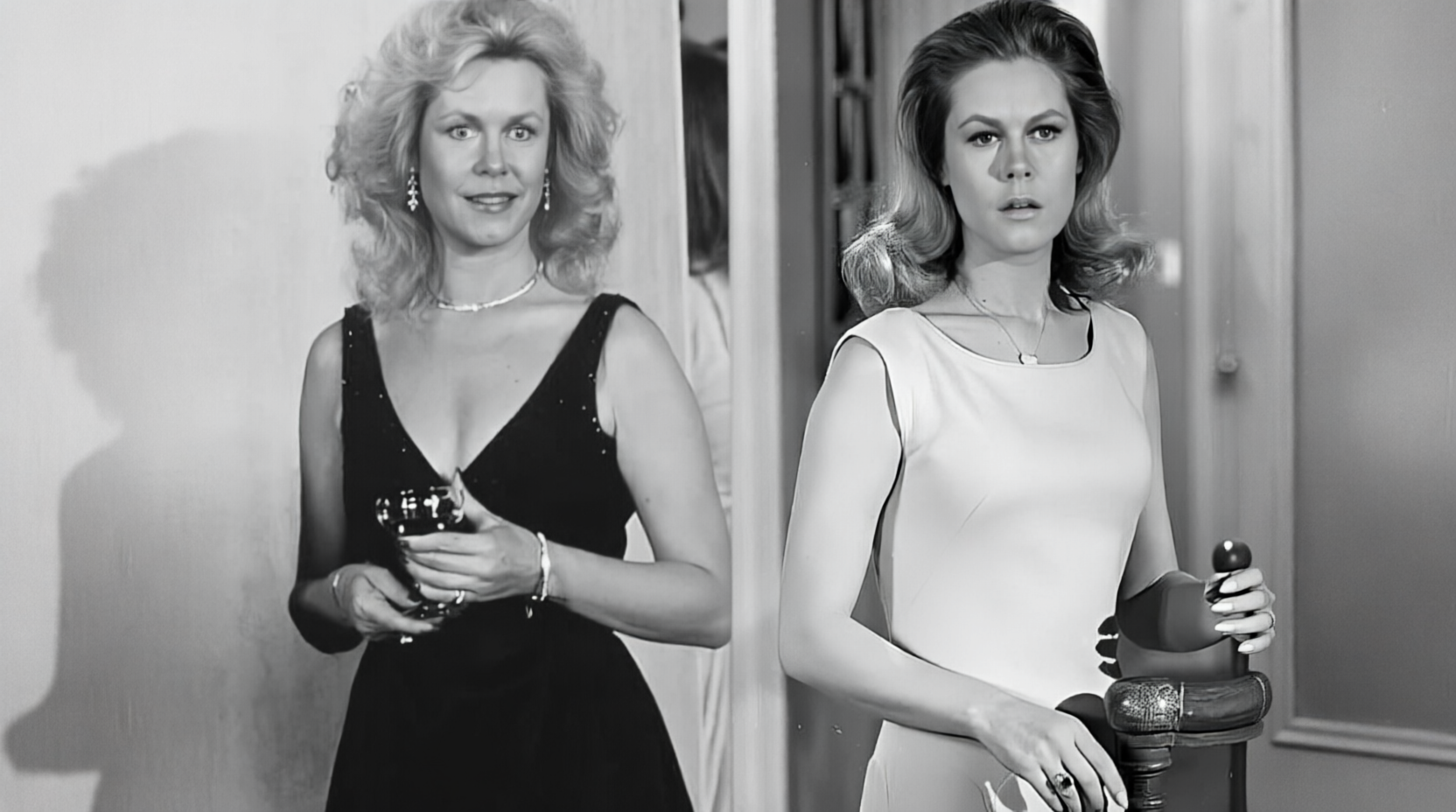
Exclusive to the Television Academy
It has been more than two decades since television icon Elizabeth Montgomery succumbed to colorectal cancer on May 5, 1995, at the age of just 62. Yet her legacy continues to enchant audiences worldwide, most famously through her role as Samantha Stephens, the endearingly mischievous “witch with a twitch,” on the ABC-TV hit series Bewitched (1964–1972), which celebrated its 50th anniversary just last year.
While Samantha remains her most enduring character, Montgomery’s career spanned far beyond the whimsical suburbs of television’s 1960s fantasy landscape. Over the course of more than 200 screen roles, she showcased remarkable versatility, moving seamlessly between stage, television, and film. Feature film appearances such as The Court-Martial of Billy Mitchell (1955), Who’s Been Sleeping in My Bed? (1963), and Johnny Cool (1963)—directed by her third husband and future Bewitched producer William Asher—highlighted her early screen presence, while her later work in TV movies cemented her reputation as a fearless dramatic performer.
Montgomery’s Emmy-nominated performances in groundbreaking television dramas such as A Case of Rape (1974) and The Legend of Lizzie Borden (1975) demonstrated her determination to escape the shadow of Samantha Stephens. These roles—often dark, intense, and socially challenging—allowed her to confront controversial issues of the era, from sexual assault to historical true-crime narratives, showcasing an emotional depth that surprised and impressed audiences and critics alike. This year marks the 40th anniversary of The Legend of Lizzie Borden, in which Montgomery’s transformation into the titular character remains iconic.
Her connection to television history ran deep. Elizabeth grew up immersed in the entertainment world, as the daughter of legendary film and television actor Robert Montgomery. She and her second husband, the troubled actor Gig Young, were acquainted with husband-and-wife actors William Daniels and Bonnie Bartlett through early appearances on Robert Montgomery Presents (1950–1957), the anthology series her father hosted. Daniels, celebrated for roles in St. Elsewhere, Boy Meets World, and as the voice of K.I.T.T. in Knight Rider, co-starred with Montgomery in A Case of Rape. Bartlett worked with both Montgomery and Daniels on The Legend of Lizzie Borden, directed by Paul Wendkos, who later guided Montgomery through Act of Violence (1979), a television film in which she played a fiercely independent news reporter targeted by a street gang for her liberal views.
Lin Bolen Wendkos, widow of Paul Wendkos, reflected on Montgomery’s career choices post-Bewitched:
“Elizabeth took dramatic departures because she earned the opportunity through her iconic portrayal of Samantha. She wanted to give the audience—and herself—more of the talent she had been holding back. Paul always allowed actors to find their moments, and Elizabeth thrived in that environment. She became the characters she played, fully and completely.”
Bonnie Bartlett similarly praised Montgomery’s professionalism and vivacity:
“Elizabeth was an extraordinary actress. She could have done almost anything. Every detail mattered to her, but she approached her work cheerfully, with a great attitude. She genuinely enjoyed acting, and it showed. Paul Wendkos adored working with her, and their collaboration on Lizzie Borden remains one of his favorites.”
Acclaimed actor Ronny Cox, Montgomery’s co-star in A Case of Rape, noted that she was determined not to be typecast as Samantha:
“Elizabeth didn’t want to walk around for the rest of her life being Samantha.”
Her fourth and final husband, Robert Foxworth, echoed this sentiment, saying that Montgomery was “thrilled” to surprise fans and critics alike with roles that challenged expectations, proving her versatility and depth. Her success in these dramatic parts represented, in many ways, one of her greatest personal and professional triumphs.
However, her relationship with her father, Robert Montgomery, remained complicated. He was reportedly less than pleased with her portrayal of Lizzie Borden, perhaps sensing parallels with familial tension—Montgomery’s father had divorced her mother, actress Elizabeth Allen, for heiress Elizabeth “Buffy” Harkness, and his conservative Republican views clashed with Montgomery’s liberal outlook. Despite this, Elizabeth’s commitment to her craft and her desire to assert her independence as an artist remained steadfast, often propelling her into roles that explored complex, morally ambiguous characters.
Elizabeth’s career was also marked by a remarkable engagement with social issues. A Case of Rape was groundbreaking in its unflinching depiction of sexual assault at a time when such topics were rarely addressed on television. Similarly, in Act of Violence, her portrayal of a principled journalist standing up to violent oppression demonstrated her commitment to stories with cultural resonance.
Beyond her professional achievements, Montgomery’s personal charm and charisma left a lasting impression on colleagues and fans. She was admired not only for her skill but for her warmth, humor, and dedication, qualities that made her a beloved figure on and off-screen.
Author Herbie J Pilato, known for his definitive works on Montgomery, including Twitch Upon a Star: The Bewitched Life and Career of Elizabeth Montgomery and The Essential Elizabeth Montgomery: A Guide to Her Magical Performances, highlighted her remarkable career through extensive interviews, providing insight into both her artistic ambitions and her personal life. Pilato is also the founder and Executive Director of the Classic TV Preservation Society, a nonprofit dedicated to celebrating the enduring influence of classic television.
Elizabeth Montgomery remains an enduring icon: a woman who captivated audiences with magic, yet refused to be confined by it, continually challenging herself and the medium she loved. Her legacy is not only Samantha Stephens but the myriad of complex, courageous characters she brought to life, inspiring generations of performers and viewers alike.

