PART 5: THE INHERITANCE THEY COULDN’T STEAL
I stood frozen in my kitchen, holding the phone against my ear while William Bennett repeated the words that would change our family forever.
“The loan agreement identifies Evelyn Brooks as the borrower, and Claire Brooks as the person who certified her identity.”
For several seconds, I couldn’t speak.
My sister hadn’t simply tried to steal Grandma’s land.
She had used my name to make it look as though I helped her.
And now a stranger was demanding nearly nine hundred thousand dollars against the house where Grandma had spent forty-seven years of her life.
“William,” I whispered, “tell me they can’t take her home.”
“Not simply because someone claims they have a lien,” he replied. “But we need to move immediately.”
Across the room, Grandma Evelyn was carefully watering the little plant Grandpa had given her before he died.
She looked peaceful.
That nearly broke me.
“Grandma,” I said.
She turned.
One look at my face and she set the watering can down.
“What did they do now?”
I told her everything.
The loan.
The signatures.
The demand letter.
The possibility that Andrea and Todd had tried to use her home as collateral.
Grandma listened without interrupting.
When I finished, she slowly sat down at the kitchen table.
For one terrible moment, I thought she might collapse.
Instead, she reached for the framed photograph of Grandpa beside the window.
“He built this house with his own hands,” she whispered.
I knelt beside her.
“We’re going to fight this.”
She looked at me.
“No, Claire.”
My heart dropped.
Then she straightened her shoulders.
“We’re going to finish it.”
The next morning, William arranged an emergency meeting with Rebecca Collins and a financial fraud investigator.
They reviewed the loan agreement, the suspicious medical assessment, the real estate contract, and the documents bearing our names.
Rebecca placed two signatures side by side.
One belonged to Grandma.
The other appeared on the loan agreement.
“Look at the second letter in her first name,” Rebecca said.
I leaned closer.
The difference was small.
But unmistakable.
Grandma always connected the letters in Evelyn.
The loan document didn’t.
Then Rebecca turned to the identification certification supposedly signed by me.
“Claire, where were you on March fourteenth?”
I frowned.
“At work. Why?”
“Because this document claims you appeared before a notary at eleven thirty that morning.”
I opened my phone and searched my calendar.
March fourteenth.
Then I remembered.
“That’s impossible.”
Rebecca looked up.
“Why?”
“That was the day I attended a three-day training conference in Chicago.”
I found my airline confirmation, hotel receipt, and photographs from the conference.
William leaned back.
“Then we have a strong basis to challenge the document.”
For the first time in days, I felt hope.
But Rebecca wasn’t finished.
“The notary’s commission number also doesn’t match the name printed here.”
I stared at her.
“So the entire document could be fake?”
“That’s what the evidence is beginning to indicate.”
Grandma folded her hands.
“Then I want every person responsible held accountable.”
By Friday afternoon, the situation had changed dramatically.
The county records showed no valid mortgage or lien recorded against Grandma’s home from Richard Vale’s loan.
The lender’s attorney had been formally notified that the signatures and claimed collateral authorization were disputed.
The property sale remained suspended.
And the questionable documents had been referred to investigators.
But the biggest development came from Melissa.
She called William’s office herself.
Crying.
Terrified.
And finally ready to tell the truth.
Andrea had promised her twenty-five thousand dollars to witness paperwork.
Todd had told her Grandma had already agreed to everything.
But Melissa admitted she had never seen Grandma sign the contract.
Then she revealed something nobody expected.
“Andrea told me she needed the money before Thanksgiving,” Melissa confessed.
Rebecca frowned.
“Why?”
“Because Todd owed Richard Vale money from another business deal.”
“How much?”
“Almost six hundred thousand dollars.”
My stomach twisted.
So that’s why they had been desperate.
The land sale wasn’t simply about becoming wealthy.
It was about escaping debts they had already created.
And they had planned to make Grandma pay the price.
When William called to share Melissa’s statement, Grandma didn’t look surprised.
She only asked one question.
“Did Andrea ever intend to tell me?”
William hesitated.
“According to Melissa, Andrea planned to tell you the property had been sold to cover your future medical expenses.”
Grandma closed her eyes.
“She was going to make me grateful for being robbed.”
I had never heard anything sadder.
Three days later, Andrea and Todd returned from Florida.
They didn’t call first.
At seven fifteen in the evening, their car pulled into my driveway.
I saw Andrea through the window.
Her expensive sunglasses were pushed onto her head, and her face was pale.
Todd followed her carrying a thick folder.
Grandma was sitting at the dining table, finishing her tea.
“Don’t answer,” I whispered.
But she stood.
“Claire, open the door.”
I hesitated.
“Grandma…”
“I’ve spent eighty-two years learning how to speak for myself. I’m not going to stop now.”
I opened it.
Andrea immediately stepped forward.
“Grandma, thank God. We need to talk.”
Todd raised the folder.
“We have documents proving this whole thing was a misunderstanding.”
Grandma didn’t move.
“Then you can give them to William.”
Andrea’s face tightened.
“Why are you acting like this?”
Grandma looked directly at her.
“Because you left me on a porch and laughed.”
Andrea flinched.
“Grandma, that wasn’t what happened.”
“Yes, it was.”
“You don’t understand the pressure we’ve been under!”
Grandma nodded slowly.
“Then explain why you used my name to borrow money.”
Todd stepped forward.
“Nobody stole anything. We were trying to protect the family’s assets.”
I almost laughed.
“By using forged documents?”
“Claire, stay out of this!” Andrea snapped.
Grandma’s voice cut through the room.
“Do not speak to her like that.”
Andrea went silent.
Grandma continued.
“Claire brought me into her home when you abandoned me. She helped me contact my attorney. She never asked for my house, my land, or my money.”
Andrea’s eyes filled with tears.
“And now you’re giving her everything?”
Grandma stared at her.
“Is that all you came here to ask?”
Andrea’s silence answered the question.
Then Todd made the mistake that ended everything.
“Mrs. Brooks, with all due respect, Claire manipulated you into changing your estate. We can have those documents challenged.”
Grandma stepped closer.
“Then challenge them.”
Todd blinked.
“What?”
“Challenge every document I’ve signed voluntarily. Bring your lawyers. Bring your accusations. Bring whatever story you think will frighten me.”
Her voice remained steady.
“But remember something, Todd. I know exactly what I own. I know exactly what I signed. And I know what I never authorized.”
Todd’s face reddened.
“You don’t understand how serious this is!”
“Oh, I understand perfectly.”
Grandma pointed toward the driveway.
“You and Andrea treated me like a bank account that happened to breathe.”
Andrea burst into tears.
“Grandma, please! We’re family!”
Grandma looked at her for a long moment.
Then she said the words I will never forget.
“Family doesn’t mean you have permission to destroy someone who trusts you.”
Andrea reached for her hand.
Grandma gently stepped away.
“I loved you before you ever learned what money was, Andrea. I still love you. But loving you doesn’t mean I will protect you from the consequences of your choices.”
For once, Andrea had no answer.
I asked them to leave.
Todd started arguing, but Grandma had already turned away.
As their car disappeared down the street, she sat beside me on the couch.
And finally, she cried.
Not loudly.
Not dramatically.
Just a quiet, exhausted sadness.
I held her hand until she was ready to speak.
“I kept thinking that if I gave them enough,” she whispered, “they would eventually love me without expecting anything.”
I leaned against her shoulder.
“Grandma, you never had to buy anyone’s love.”
She squeezed my fingers.
“I know that now.”
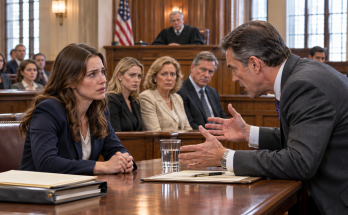
Over the following months, the investigation uncovered more than Andrea and Todd had expected.
Records and statements supported allegations that the medical assessment had been fabricated, signatures had been forged, and funds had been obtained through false representations.
Andrea and Todd faced criminal charges related to the fraudulent documents and financial transactions.
Melissa cooperated with investigators and faced consequences for falsely witnessing paperwork.
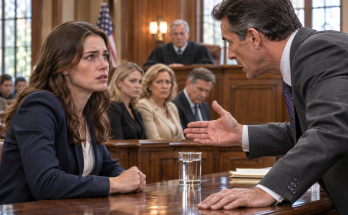
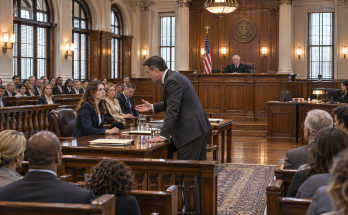
The court proceedings were difficult.
There were lawyers.
There were hearings.
There were days when Grandma came home exhausted and said she never wanted to hear another word about money.
But she never withdrew her complaint.
Eventually, the fraudulent loan documents were rejected, and Richard Vale’s claimed interest in Grandma’s home was defeated.
The proposed land sale was canceled.
Grandma’s property remained hers.
Andrea and Todd were ordered to repay money connected to the scheme, and their criminal cases ended with convictions and court-imposed penalties.
The financial recovery was incomplete.
But Grandma hadn’t lost her house.
She hadn’t lost Grandpa’s land.
And most importantly, she hadn’t lost the right to make her own decisions.
One afternoon, six months after that terrible airport call, Grandma asked me to drive her to the old property.
When we arrived, Daniel Harris was waiting beside the farmhouse.
He had finally learned the full story about his father and Grandpa.
The two families had once shared more than land.
They had shared a promise.
Daniel shook Grandma’s hand.
“My father talked about your husband until the day he died,” he said. “He always said Arthur Brooks was the kind of man who kept his word even when nobody was watching.”
Grandma smiled through tears.
“That sounds like my Arthur.”
Then she handed Daniel a copy of a newly executed legal document.
William had helped Grandma establish a protected arrangement for the farmhouse and surrounding acreage, honoring Grandpa’s promise and ensuring Daniel’s family could continue using the property under clearly defined terms.
Daniel read the document twice.
Then he looked up.
“Mrs. Brooks, I don’t know what to say.”
Grandma touched his arm.
“Say you’ll take care of the place.”
His eyes filled with tears.
“I will.”
As for the remaining land, Grandma made another decision.
She established a charitable trust to support older adults facing financial exploitation, helping them access legal assistance and resources to protect their independence.
She called it The Arthur and Evelyn Brooks Foundation.
I asked why she hadn’t simply sold the land and enjoyed the money.
She laughed.
“Claire, I’m eighty-two years old. I already have the things that matter.”
“What things?”
She looked toward the farmhouse.
“My memories. My freedom. And a granddaughter who answered the phone when I needed her.”
I hugged her.
For the first time in months, everything felt peaceful.
But the most powerful moment came that Christmas.
Grandma hosted dinner at my house.
There were twelve guests.
Daniel and his wife came.
William stopped by with his family.
Even the pharmacist who had helped Grandma after that airport abandonment received an invitation.
We laughed.
We ate.
We told stories about Grandpa.
And nobody asked Grandma for a single dollar.
After dessert, she stood beside the Christmas tree holding a small envelope.
“Claire, I have something for you.”
I shook my head.
“Grandma, you’ve already done too much.”
She smiled.
“Open it.”
Inside was a handwritten letter.
Not a check.
Not a property deed.
Just a letter.
It read:
“My dearest Claire,
When your sister left me on your porch, I thought the worst thing had happened. I thought my own family had decided I was no longer worth their time.
But that day taught me something important.
I wasn’t abandoned by everyone.
I was brought to the one person who still saw me as a human being instead of an inheritance.
You didn’t ask what I owned.
You asked whether I had my medication.
You didn’t ask what I could give you.
You asked whether I was hungry.
And when I told you I needed my attorney, you didn’t try to change my mind.
You handed me my coat.
Your grandfather would have loved the woman you’ve become.
And I hope you always remember this: The greatest inheritance anyone can leave is not money or land. It is the courage to do what is right when doing what is wrong would be easier.
With all my love,
Grandma.”
By the time I finished reading, tears were running down my face.
Grandma opened her arms.
I hugged her so tightly she laughed.
“Careful, sweetheart. I’m still made of bones.”
Everyone laughed.
Then she leaned close and whispered something only I could hear.
“Do you know what your sister never understood?”
I shook my head.
“She thought that getting rid of me meant getting everything I owned.”
Grandma smiled.
“But the day she left me on your porch was the day I finally got my life back.”
Years later, I would still remember that moment.
Not the lawyers.
Not the forged signatures.
Not the millions of dollars Andrea had tried to take.
I would remember Grandma standing beneath the Christmas lights, surrounded by people who wanted nothing from her except her company.
Andrea had boarded that plane believing she was leaving behind a burden.
She had no idea she was leaving behind a woman who would reclaim her future.
And she had no idea that the granddaughter she tried to frame would become the person who helped Grandma protect everything Grandpa had worked for.
Because in the end, Andrea lost the fortune she tried to steal.
Grandma kept her home, her dignity, and her freedom.
And I received something no inheritance could ever buy: the privilege of being loved by a woman who finally knew her own worth.
THE END.