“There won’t be anything left,” Trump warns Iran following a meeting of the national security team.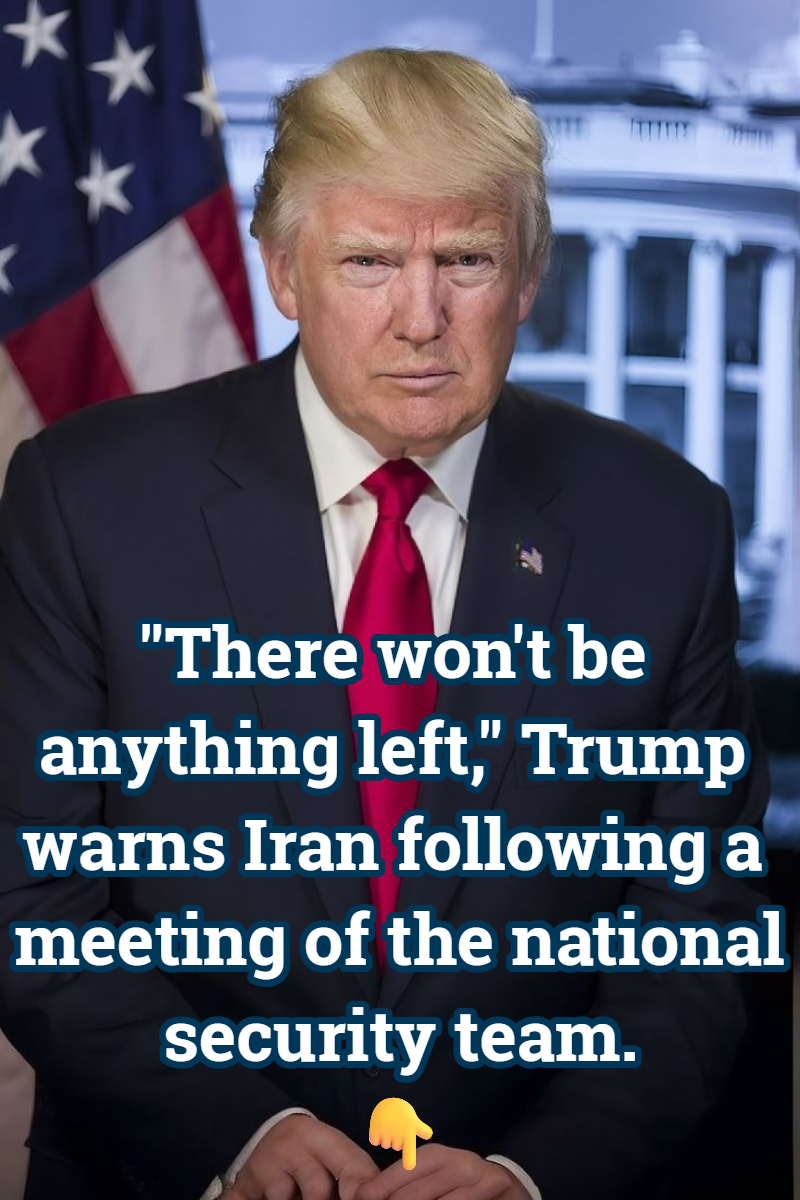
President Donald Trump convened a high-level national security meeting over the weekend with some of the most senior figures in his administration to evaluate the rapidly evolving conflict involving Iran and to determine the next phase of the United States’ strategy in the region. According to a source familiar with the discussions, Trump is expected to reconvene with his national security advisers again early this week as tensions continue to escalate and diplomatic efforts remain uncertain.
The closed-door meeting reportedly focused on a range of issues connected to the ongoing Iran crisis, including military options, diplomatic negotiations, regional security concerns, and the economic consequences stemming from instability in the Middle East. Officials discussed how the administration should proceed amid growing frustration within the White House over Tehran’s approach to negotiations and the broader implications of the conflict for global energy markets.
Just one day after the weekend discussions, Trump publicly intensified his rhetoric toward Iran. In a strongly worded social media message posted Sunday, the president warned Iranian leaders that time was running out for them to cooperate with American demands and diplomatic proposals. “For Iran, the Clock is Ticking, and they better get moving, FAST, or there won’t be anything left of them. TIME IS OF THE ESSENCE! President DJT,” Trump wrote, signaling increasing impatience and a potentially more aggressive posture from Washington.
Sources familiar with the administration’s thinking say Trump has become increasingly frustrated with the pace and tone of Tehran’s diplomatic engagement. The president is also said to be deeply concerned about the ongoing closure of the Strait of Hormuz, one of the world’s most strategically important oil shipping routes. Continued disruption in the area has contributed to volatility in global energy prices and heightened fears of a wider economic impact. The White House did not immediately respond to requests for additional comment regarding the president’s statements or the details of the national security discussions.
Meanwhile, Iranian officials indicated Monday that diplomatic communication between Tehran and Washington remains active, though indirect. Iran’s Foreign Ministry announced that it had formally responded to American criticism of a previous Iranian proposal aimed at ending the conflict. Trump had earlier dismissed Iran’s 14-point peace framework, which was delivered more than a week ago, calling the proposal “totally unacceptable” and insufficient to address US concerns.
Iranian Foreign Ministry spokesman Esmaeil Baghaei stated Monday that Tehran had received “a set of corrective points and considerations” from Pakistan, which has been serving as an intermediary between the two sides. According to Baghaei, Iran subsequently communicated its revised positions back to the United States through the Pakistani channel. “Therefore, the process continues through Pakistan,” he said, according to Iran’s state-run IRNA news agency, though he declined to provide specific details about the contents of the exchanges.
On the American side, several of the administration’s top national security officials attended Saturday’s strategic session with Trump at the president’s golf club in Virginia. Those present reportedly included Vice President JD Vance, Secretary of State Marco Rubio, CIA Director John Ratcliffe, and special envoy Steve Witkoff. The meeting took place only hours after Trump returned to Washington following a major diplomatic visit to China, where he met with Chinese leader Xi Jinping.
The China trip carried particular significance because Beijing maintains close economic and political ties with Iran and remains one of Tehran’s most important international partners. According to administration officials who spoke to CNN, Trump and his advisers deliberately postponed making major decisions regarding Iran until after discussions with Xi had concluded. Officials wanted to assess China’s position and determine whether Beijing could play a constructive role in influencing Tehran before committing to a definitive strategy.
However, in recent days, Trump has reportedly become more open to the possibility of resuming large-scale military operations against Iran if diplomatic efforts continue to stall. Although the president has repeatedly expressed a preference for achieving a negotiated settlement rather than entering another prolonged Middle Eastern conflict, officials say military options are now being considered more seriously than before as a means of increasing pressure on Tehran and forcing concessions.
According to sources familiar with internal Pentagon planning, the US Department of Defense has already developed a range of potential military scenarios should Trump authorize additional action. These plans reportedly include targeted strikes against Iranian energy facilities, infrastructure sites, and other strategically significant assets intended to weaken Iran’s operational capabilities and increase economic pressure on the government.
The news outlet Axios was the first to report details of Saturday’s national security meeting.
Separately, Trump also held a phone conversation Sunday with Israeli Prime Minister Benjamin Netanyahu, according to both a spokesperson for the Israeli government and a US official familiar with the matter. Israel remains one of Washington’s closest allies in the region and has consistently advocated for a tougher stance toward Iran, particularly regarding Tehran’s military activities and regional influence.
Despite mounting international pressure and the threat of expanded military action, there are few indications that Iranian leaders are prepared to retreat from their current position. Iranian state-affiliated media reported Sunday that Pakistan’s Interior Minister Mohsin Naqvi met with several senior Iranian officials, including Iranian President Masoud Pezeshkian. Pakistan has emerged as the principal intermediary in the ongoing US-Iran negotiations and continues to shuttle messages between the two governments in hopes of preventing further escalation.
During those meetings, Iranian officials reportedly argued that the United States’ military and political presence in the Middle East has been a major source of instability throughout the region. According to the Iran-linked Tasnim news agency, President Pezeshkian accused both the United States and Israel of attempting to create division among Islamic nations through policies designed to foster mistrust and regional fragmentation. He stated that Iran, by contrast, seeks “sincere, stable relations based on good neighborliness” with other Islamic countries in the region.
The situation remains highly volatile as diplomatic negotiations continue alongside growing military preparations. With both Washington and Tehran signaling determination while leaving communication channels open through intermediaries, the coming days may prove critical in determining whether the conflict moves toward a negotiated settlement or a broader confrontation with potentially global consequences.