She said it aloud once.
Then again.
Then a third time.
Not because she was uncertain.
Because she had waited thirty-five years to hear it.
The judge signed the order.
Mara cried.
Not dramatically.
Not loudly.
Just quietly, with both hands covering her mouth.
Hannah stood beside her.
And when Mara stepped away from the bench, Hannah hugged her first.
I watched from the back of the courtroom.
The woman who had helped expose my lies.
The woman who had once helped destroy my marriage.
The woman who had unknowingly become family.
Life had a strange sense of humor.
Outside, rain fell across the courthouse steps.
Mara turned toward me.
“So now what?”
I looked at her.
“Now you figure out who you are when revenge isn’t your full-time job.”
She laughed.
“That’s rich coming from you.”
“Fair.”
“Who are you now?”
The question stayed with me all day.
Because for the first time in my life, I didn’t have an answer.
Not CEO.
Not heir.
Not husband.
Not victim.
Not even Daniel Whitman.
Just a man trying to become someone better than the version he’d spent forty years building.
Three weeks later, Whitman Capital held an emergency restructuring vote.
I resigned.
The board fought me.
Investors panicked.
News outlets speculated.
Financial commentators called it irrational.
My father said nothing during the meeting.
He waited until everyone else left.
Then he sat across from me in the boardroom where generations of Whitmans had made decisions affecting thousands of lives.
“You built this company to inherit,” he said.
“No.”
I slid my resignation across the table.
“I built it because I thought if I became valuable enough, nobody would notice how empty I was.”
His eyes lowered.
For once, he understood.
“I don’t deserve sympathy,” he said.
“No.”
“I don’t deserve forgiveness.”
“No.”
He nodded.
“I know.”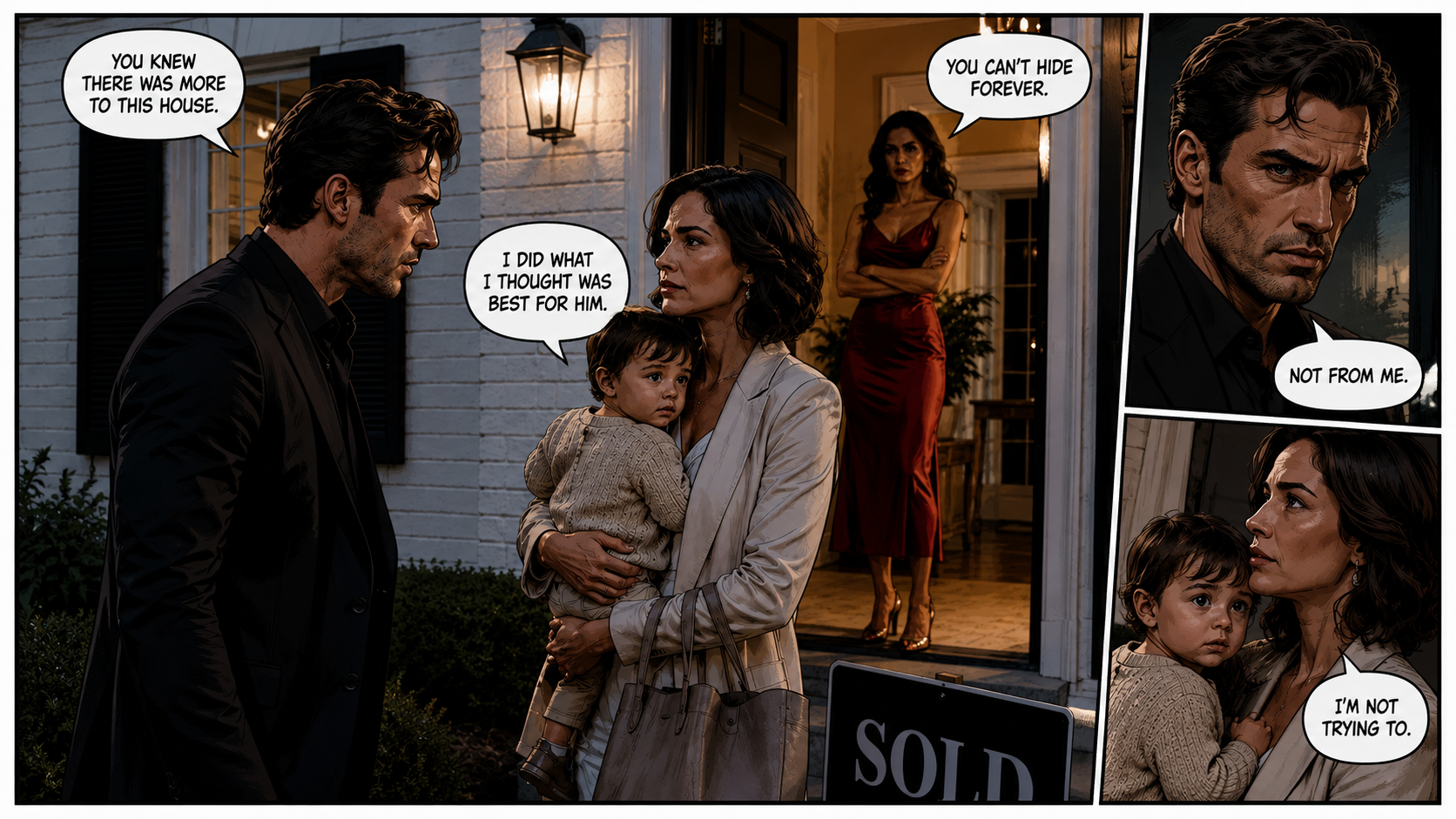
The silence between us felt different now.
Not comfortable.
Not hostile.
Honest.
“I failed your mother.”
“Yes.”
“I failed Ethan.”
“Yes.”
“I failed Mara.”
“Yes.”
He looked out the window.
“And I failed you.”
That answer took longer.
Because part of me wanted to say yes immediately.
Part of me wanted to blame him for everything.
The pressure.
The expectations.
The distance.
The coldness.
The impossible standards.
But adulthood has an unpleasant habit.
Eventually it makes you responsible for your own choices.
“You failed me,” I said.
“Then I became responsible for myself.”
His eyes filled.
Not completely.
My father never cried the way other people did.
But enough.
“That’s fair.”
It was the closest thing to peace we’d ever had.
Six months after the chapel, the divorce hearing arrived.
I sat across from Hannah for the first time without attorneys speaking for us.
Without detectives.
Without evidence folders.
Without scandals.
Just us.
The judge reviewed agreements.
Custody.
Assets.
Property.
Support.
Schedules.
Signatures.
The legal end of a marriage.
When it was over, everyone left except Hannah and me.
We sat alone in silence.
The same woman.
The same man.
Two completely different people.
Finally she spoke.
“You know what hurt most?”
I swallowed.
“No.”
“It wasn’t Olivia.”
The answer surprised me.
“It wasn’t?”
She shook her head.
“No.”
Her eyes found mine.
“It was realizing you stopped letting me know you.”
That landed harder than any accusation.
“You shared meetings.
Deals.
Trips.
Schedules.
Investments.”
She looked down.
“But not yourself.”
I couldn’t argue.
Because she was right.
“I loved you,” she whispered.
“I know.”
“No.”
Her voice broke.
“You don’t.”
Tears appeared.
For both of us.
“I loved the man who sat beside me eating takeout on the apartment floor before the money.”
I closed my eyes.
“I remember.”
“I loved the man who painted Noah’s nursery with me.”
I remembered that too.
Paint on my hands.
Music playing.
Her laughing because I got more paint on myself than the wall.
“I loved the man who cried when Noah was born.”
A tear escaped before I could stop it.
Because I had cried.
For one perfect moment.
Before I returned to work.
Before I returned to lies.
Before I returned to becoming someone I barely recognized.
“Hannah,” I said quietly.
She raised her eyes.
“I am sorry.”
Not strategic.
Not legal.
Not useful.
Just true.
For a long moment she stared at me.
Then she nodded.
“Thank you.”
That was all.
No dramatic reconciliation.
No sudden forgiveness.
No miracle.
Just truth.
And sometimes truth is more valuable than happy endings.
One year later.
Noah turned two.
The birthday party took place beside a lake.
Nothing extravagant.
No magazines.
No photographers.
No celebrity chefs.
Just family.
Real family.
The kind built by choice instead of blood.
Mara arrived first carrying a giant stuffed giraffe.
Ethan arrived second.
Escorted by a caseworker.
Still serving supervised release.
Still healing.
Still awkward.
Noah immediately stole his sunglasses.
That helped.
My father came next.
Older.
Quieter.
Humbler.
Retirement suited him.
For the first time in my life, he seemed interested in people more than power.
Then Hannah arrived.
The afternoon sunlight caught her hair as she walked toward the picnic tables.
For a second, my chest tightened exactly the way it had years earlier.
Some feelings never completely leave.
They simply learn better manners.
Noah ran toward her.
“Mama!”
She lifted him.
Laughing.
Beautiful.
Strong.
Alive.
I watched them together.
And for the first time, I understood something.
Love is not possession.
It is not control.
It is not entitlement.
It is not permanence.
Love is responsibility.
Love is presence.
Love is showing up.
Every day.
Even when nobody is watching.
Especially then.
Later that evening, after the guests left and Noah fell asleep inside the cottage, Hannah found me sitting alone on the dock.
The water reflected the sunset in streaks of gold.
She sat beside me.
Neither of us spoke immediately.
The silence felt familiar now.
Comfortable.
“Good party,” she said.
“Yeah.”
“Mara almost cried when Noah hugged Ethan.”
“I noticed.”
She smiled.
“So did Ethan.”
We watched the water.
Then she said something unexpected.
“You’ve changed.”
I laughed softly.
“I hope so.”
“No.”
She looked directly at me.
“I mean really changed.”
The words mattered more than they should have.
Because Hannah had known every version of me.
The ambitious one.
The arrogant one.
The selfish one.
The broken one.
If she believed I had changed, perhaps I actually had.
“Thank you,” I said.
She nodded.
Then she stood.
For a moment I thought she was leaving.
Instead she hesitated.
“Daniel?”
“Yeah?”
A small smile appeared.
The first truly warm smile she’d given me in years.
“Would you like to have dinner sometime?”
My heart stopped.
Not because it guaranteed anything.
It didn’t.
Not because it erased the past.
It couldn’t.
But because hope had returned.
And hope is powerful precisely because it arrives after you’ve learned to live without it.
I stood.
Slowly.
Carefully.
As if sudden movement might scare the moment away.
“I’d like that.”
She smiled again.
Then walked back toward the cottage.
Toward Noah.
Toward the light glowing through the windows.
Toward the future.
I remained on the dock for a long time after she disappeared inside.
Watching the lake.
Watching the sunset.
Thinking about a sold sign beneath a maple tree.
An empty nursery.
A shattered marriage.
A dead grandfather who wasn’t dead.
A lost brother.
A forgotten sister.
A mother whose voice survived inside a wall.
And a bill no billionaire could ever pay.
Because in the end, Hannah’s note had been right.
Everything else had been borrowed.
The house.
The company.
The money.
The status.
The power.
The reputation.
All borrowed.
The only things that truly belonged to me were the things I had nearly lost.
My son.
My family.
My chance to become better.
And this time, I intended to keep them.
THE END.