By the time four hundred years had passed, nobody knew where the original Rose Hernandez was buried.
Time had erased records.
Storms had changed landscapes.
Cities had expanded.
Roads had been rebuilt.
Entire generations had come and gone.
The exact location disappeared into history.
At first, people were saddened by that.
Then eventually they understood something.
They had been looking in the wrong place.
Because Rose had never truly been buried there.
She had been buried inside thousands of hearts.
And those were still very much alive.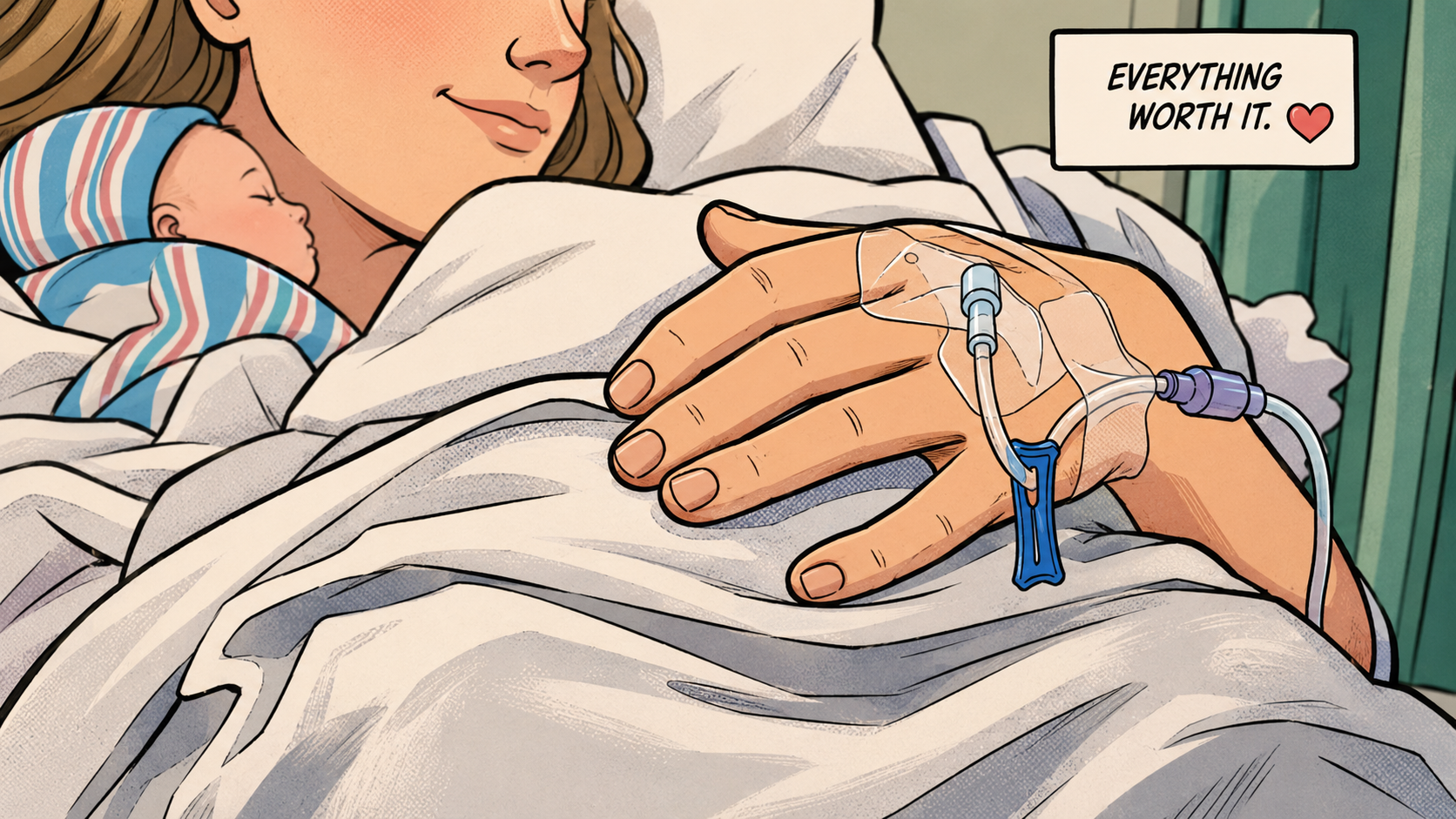
THE GIRL WITH THE QUESTION
Four hundred and twelve years after Rose’s birth, a little girl visited the memorial garden.
The garden was different now.
Larger.
Protected.
Historic.
The original plaque had been preserved behind glass.
The letters had become priceless artifacts.
The voice recording remained one of the most treasured family possessions in existence.
The little girl stood before the display.
She listened to Rose’s thirty-seven-second message.
Then listened again.
And again.
And again.
Finally she turned toward her grandmother.
“Was she scared?”
The grandmother smiled softly.
“Very.”
The child looked surprised.
“Then why did she keep going?”
The grandmother thought about all the generations that question had crossed.
Then answered:
“Because courage isn’t when you’re not scared.”
The child waited.
“It’s when you’re scared and keep going anyway.”
The little girl stared at the recording device.
At the voice of a woman who had lived centuries earlier.
Then nodded slowly.
As if she understood.
Perhaps she did.
THE FAMILY WITHOUT AN ENDING
By now the family had become enormous.
Millions of descendants.
Spread across continents.
Across languages.
Across cultures.
Across oceans.
Many no longer shared the same surname.
Many no longer spoke the same language.
Many no longer lived anywhere near one another.
Yet every year they still participated in the same tradition.
They told the story.
Not because they had to.
Because they wanted to.
Parents told children.
Children told grandchildren.
And every version changed slightly.
Some details became larger.
Some became smaller.
Some evolved.
Some simplified.
But one part never changed.
Rose never stopped loving her children.
That sentence survived every generation.
Every translation.
Every retelling.
Every century.
THE OLD HISTORIAN
One day the official family historian—an elderly woman nearly a hundred years old—was interviewed.
The interviewer asked:
“Why do you think this story survived when so many others disappeared?”
The historian smiled.
Because she had spent her entire life thinking about exactly that.
Then she answered:
“Most stories survive because people remember them.”
The interviewer nodded.
“And this one?”
The historian looked toward the memorial garden.
“This story survived because people needed it.”
The interviewer frowned.
“What do you mean?”
The historian’s eyes filled with tears.
“Every generation eventually faces loss.”
She paused.
“Every generation eventually searches for someone.”
Another pause.
“Every generation eventually wonders if love matters.”
The interviewer became quiet.
The historian smiled.
“And Rose answers all three questions.”
THE LAST CANDLE
Five hundred years after Rose’s birth, descendants organized the largest remembrance gathering in family history.
Nobody expected how many would come.
Tens of thousands arrived.
Some traveled for days.
Others crossed oceans.
Many brought children.
Many brought photographs.
Many brought stories handed down for generations.
As night fell, candles appeared.
One candle.
Then ten.
Then a hundred.
Then a thousand.
Then thousands more.
The entire hillside glowed.
A sea of light stretching farther than anyone could see.
An elderly speaker approached the microphone.
The crowd became silent.
He looked across the endless lights.
Then said:
“Five hundred years ago, one frightened woman thought she was alone.”
The crowd listened.
“Tonight, I hope she can see she never was.”
Many people cried.
Many embraced.
Many simply stood there quietly.
Overwhelmed.
Because the scale of what Rose created was finally visible.
Not wealth.
Not power.
Not fame.
Family.
THE FINAL FINAL FINAL PAGE
And eventually, after enough years had passed, after enough generations had lived, after enough stories had been told, something remarkable happened.
Nobody argued anymore about whether Rose’s story was true.
Because by then it no longer mattered.
The facts had become history.
The love had become legacy.
The legacy had become identity.
And identity had become family.
One evening, as the sun set over the memorial garden, a small boy sat beneath one of the descendant trees that had grown from the original Reunion Tree.
His grandfather sat beside him.
The boy looked toward the horizon.
Then asked:
“Grandpa?”
“Yes?”
“Will people still remember Rose when I’m old?”
The old man smiled.
The same smile countless generations before him had worn.
Then he pointed toward the families laughing nearby.
Toward children running through the grass.
Toward parents carrying babies.
Toward grandparents telling stories.
Toward life itself.
And he answered:
“As long as people love their children…”
He paused.
“…someone will remember Rose.”
The boy smiled.
Satisfied.
The sun disappeared.
The evening grew quiet.
And somewhere in the hearts of everyone gathered there, the story continued.
Not because it was written.
Not because it was recorded.
Not because it was preserved.
But because it was lived.
Again.
And again.
And again.
Forever.
Time continued.
As it always does.
The memorial garden remained.
The descendant trees grew taller.
Children became parents.
Parents became grandparents.
Grandparents became photographs on walls.
Generations passed like seasons.
And slowly, almost without anyone noticing, the story stopped being something that had happened.
It became something that had always been.
A piece of family history.
A piece of identity.
A piece of home.
The way some families inherit land.
Or jewelry.
Or old houses.
The Hernandez family inherited a story.
And that story carried a lesson.
Love is not measured by how long you hold someone.
Love is measured by how long you keep reaching for them after they’re gone.
THE LAST VISITOR
One autumn afternoon, many centuries after Rose first began searching for her children, a woman visited the garden alone.
She wasn’t a direct descendant.
She wasn’t a historian.
She wasn’t a journalist.
She was simply someone who had heard the story.
Her own son had disappeared years earlier.
Not through crime.
Not through adoption.
Through distance.
Arguments.
Pride.
Silence.
The kinds of things that separate families every day.
She sat beneath the largest tree.
The newest generation’s Reunion Tree.
And read the plaque.
Then she cried.
Not because of Rose.
Because of herself.
Because for years she had convinced herself it was too late.
Too much damage.
Too much distance.
Too much pain.
But sitting there, surrounded by the story of a woman who waited half a century for her child, she realized something.
As long as people are alive…
hope is alive.
That evening she called her son.
The first conversation lasted only four minutes.
The second lasted twenty.
The third lasted an hour.
A year later they visited the garden together.
And just like that, Rose’s story changed another life.
Long after her own had ended.
THE FINAL FAMILY GATHERING
On the thousandth anniversary of Rose Hernandez’s birth, descendants gathered once more.
Nobody could count them all.
There were too many.
Thousands.
Perhaps tens of thousands.
Families arrived from every corner of the world.
Some spoke different languages.
Some carried different surnames.
Some looked nothing alike.
Yet all of them shared something invisible.
A thread.
A connection.
A story.
As sunset approached, everyone gathered in the center of the garden.
A young girl was chosen to speak.
She couldn’t have been older than ten.
She stood before the crowd.
Nervous.
Excited.
Holding a copy of Rose’s oldest surviving letter.
The same letter preserved for generations.
The crowd became silent.
The little girl looked down at the paper.
Then back at the families.
And instead of reading from the letter, she asked a question.
“If Rose were standing here right now, what would she see?”
Nobody answered.
The little girl smiled.
Then answered her own question.
“She would see that nobody is missing anymore.”
Silence filled the garden.
Deep.
Beautiful.
Complete.
Because everyone understood.
For most of her life, Rose had searched for what was missing.
But now?
Nothing was missing.
Not Edward.
Not Sarah.
Not Linda.
Not the generations that followed.
Not the memories.
Not the love.
Everything she fought for had survived.
THE VERY LAST WORDS
As darkness settled across the garden, the final speaker approached.
An elderly woman.
The oldest living descendant.
She looked toward the stars.
Then toward the countless families gathered below.
And she said:
“People often ask why this story lasted so long.”
She smiled softly.
“They think it’s a story about loss.”
She shook her head.
“It isn’t.”
“They think it’s a story about secrets.”
Again she shook her head.
“It isn’t.”
“They think it’s a story about crime, justice, or revenge.”
A final shake of her head.
“No.”
Tears filled her eyes.
“This is a story about what happened after all those things.”
The crowd listened.
“It’s a story about finding each other.”
She pointed toward the families.
“It’s a story about forgiveness.”
She pointed toward the trees.
“It’s a story about hope.”
She placed her hand over her heart.
“But most of all…”
Her voice trembled.
“It’s a story about a mother who never stopped loving her children.”
The crowd stood.
Thousands upon thousands of people.
Not applauding.
Not cheering.
Simply standing together.
United.
Present.
Home.
And in that moment, after centuries of waiting, searching, crying, healing, and growing…
Rose Hernandez’s journey was finally complete.
Not because the story ended.
But because it no longer needed to continue.
The children were found.
The family was together.
The love remained.
And that was enough.
THE END.