“Because your father just arrived at a notary office with a girl claiming to be you.” I felt the ballroom disappear. The music kept playing. The waiters passed by with trays of hors d’oeuvres. Lily laughed beneath a cloud of gold balloons. My dad raised his glass as if he were the proudest man in the world. And meanwhile, someone was trying to steal my mom’s house using my own face. “Where?” I asked. “A notary in Downtown L.A. I’m on my way there now. Don’t go into the ballroom, Diane. We need to catch them in the act.” I looked at the envelope in my hands. “No. First, they’re going to see me.” I hung up. I walked toward the stage. My dad saw me when I was already ten feet away. His smile dropped instantly. Carol went white. Lily stopped posing for a photo. I walked up the steps without trembling. “Good evening,” I said into the microphone. The band stopped playing. Everyone turned around. My dad approached quickly. “Get down from there, Diane.” “Why? Don’t you want to show off your other daughter too?” A murmur rippled through the hall. I pulled out my test result and held it up. “98.7th percentile. I did get in. I lied to see what my father would do when he thought he could no longer use me.” Carol clenched her jaw. My dad tried to snatch the paper from me, but I stepped back. “And it worked. He kicked me out of the house. Just as he planned.” Lily’s face changed. “Dad?” He turned to her. “Don’t listen to this nonsense.” Then I played the audio. Carol’s voice came through the small Bluetooth speaker I had hidden in my purse. “Diane just turned eighteen, Arthur. You can finally take the house her mother left her.” The entire ballroom froze. Then my dad’s voice played: “When she fails the exam, I’ll kick her out. She’ll realize that she’s worth nothing without me.” Someone gasped, “Oh, no.” Carol tried to step forward, but Aunt Susan appeared by my side like a brick wall. “Don’t even think about it.” My dad lowered his voice. “Diane, turn that off. You’re making a fool of yourself.” “No. Making a fool of yourself is sending a stranger to sign for me while you toast to Lily.” Lily dropped her glass. It shattered on the floor. “What?” My dad looked at me with pure hatred. The mask was entirely gone. “You don’t know what you’re talking about.” “Yes, I do. And so does Mr. Sanders.” At that moment, a man in a gray suit rushed into the ballroom, holding his cell phone. It was my mom’s lawyer. Behind him were two police officers and a woman from the District Attorney’s office. The silence turned into fear. “Arthur Reynolds,” the lawyer said, “we need you to come with us.” My dad tried to laugh. “This is a family party.” “No,” I said. “This was a family trap.” Carol grabbed Lily’s hand. “Let’s go.” But Lily pulled away. “Did you sell her mom’s house?” Nobody answered. The answer was written all over their faces. I stepped down from the stage. The crowd parted as if I were on fire. Outside, Beverly Hills kept shining with its expensive restaurants, black SUVs, and clean sidewalks. But inside that hall, the lie smelled like cold sweat. We went to the notary office. The fake Diane was still there. She was a girl my age, with her hair dyed like mine and a fake ID on the desk. When she saw me walk in, she burst into tears. “They paid me,” she said. “I didn’t know.” Carol yelled: “Shut up!” The notary was pale. On the desk lay a folder with the supposed transfer of rights for the Pasadena house. That house my mom had left protected. That house near tree-lined streets, bougainvilleas, street food carts, and the weekend farmers’ market where colors, fresh produce, crafts, and Sunday noise all mixed together. The house where my mom taught me how to ride a bike. The house they wanted to turn into a plane ticket for Lily. The DA investigator reviewed the documents. Mr. Sanders handed over the will, my real ID, and the recording. He explained that a property transfer deed had to be formalized before a notary and then registered in the County Recorder’s Office; it could not be done with a fake identity and a forged signature. My dad was no longer speaking. Carol was. “That house belongs to the family. She’s just a child.” “I’m eighteen,” I said. “And I have a longer memory than you have shame.” My voice trembled at the end. I hated that it trembled. But I didn’t stay quiet. Lily was sitting on a chair in the hallway. She was still wearing her massive, sequined party dress. She looked like an abandoned princess in a public office. She looked at me. “Did I know?” The question wasn’t for me. It was for herself. Carol turned around furiously. “I did it all for you.” Lily cried. “Don’t use me to steal.” That sentence hit Carol harder than any insult. My dad was arrested that night for attempted fraud and use of a forged document. Carol also gave a statement. I don’t know how much of what she said was the truth and how much was just to save herself. I didn’t feel victorious. I felt nauseous. At three in the morning, Aunt Susan took me to get pancakes at a 24-hour diner near Hollywood Boulevard. The city was cold. Taxis passed by like yellow fish. I held the crumpled envelope against my chest. “Your mom would be proud,” she said. I shook my head. “My mom would be furious.” Susan gave a sad smile. “That too.” The next morning, we went to Pasadena. I couldn’t wait any longer. The house was closed, dusty, with peeling paint and the bougainvilleas invading the entrance as if they had been protecting it. On the corner, a woman was selling fresh pastries and coffee. Further away, you could hear street musicians and kids running toward the park. I put the key in. I went inside. It smelled like old wood, dampness, and the past. In the living room, my mom’s bookcase was still there. Her novels. Her mugs. A dried potted plant by the window. I touched the wall as if I were touching her hand. And then I cried. Not for my dad. For her. For everything she did to leave me a safe haven and for how close they came to taking it away. Aunt Susan let me cry on the floor. Then she pulled my mom’s letter from her purse. “I think you’re ready to read this now.” The envelope had my name written in her handwriting. “Diane.” I opened it carefully.
Daughter: If you’re reading this, it means you’re of legal age and the house is yours. I’m not leaving it to you because it’s worth money. I’m leaving it to you because a woman needs a place where no one can kick her out. Your father can be charming when he wants to be. He can also be cruel when he doesn’t get his way. Don’t confuse blood with love. Don’t confuse a roof with a home. Study. Leave. Come back. Do whatever you want with this house. But never sign it away out of fear. Mom.
I read the last line three times. Never sign it away out of fear. I hugged the letter to my chest. That day I understood that my mom hadn’t just left me a property. She left me a way out.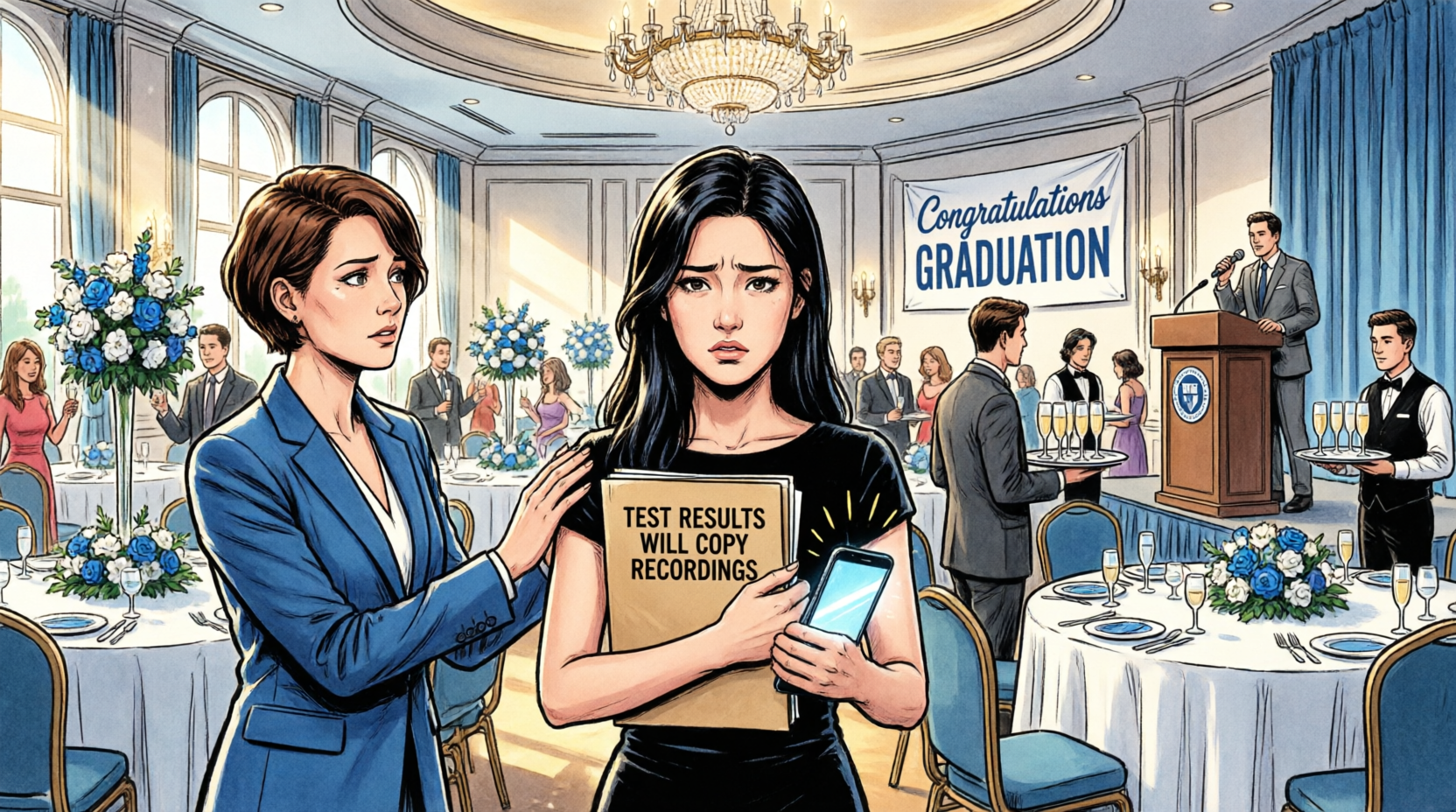 The investigation continued for months. There were statements, subpoenas, lawyers, and venomous messages from relatives saying that “a father makes mistakes” and “you don’t turn on your family.” I blocked almost all of them. My dad was released on bail with a restraining order, keeping him away from me and the house. Carol disappeared from social media for a while. Then she came back posting motivational quotes and photos of expensive coffee, as if cynicism could be covered with makeup. Lily texted me a week later. “Can I see you?” I thought about ignoring her. She hadn’t planned the whole thing. But she had lived off my losses without ever questioning where so much privilege came from. We met in Old Pasadena, by the fountains. There were couples eating ice cream, balloon vendors, tourists walking toward the art museums, and the smell of fresh coffee wafting from a cafe. Lily arrived without makeup. She looked younger. “I didn’t know about the notary office,” she said. “But you did know they treated me badly.” She lowered her head. “Yes.” I was glad she didn’t lie. “Why didn’t you ever say anything?” Lily wiped her tears. “Because if you were the burden, I was the promise. And I was afraid of losing that.” It hurt. Because I understood her. I didn’t justify it. But I understood. “I can’t be your safe haven,” I told her. “I’m not asking you to be.” She pulled a small box out of her backpack. Inside was my mom’s ring. The one Carol sometimes wore “because it matched her outfit.” I felt my heart stop. “I took it from her drawer before I left.” “You left?” She nodded. “I’m staying with my grandma. I don’t want Canada. I don’t want the party. I don’t want anything bought with your house.” I took the ring. My hands shook. “Thank you.” “Don’t forgive me yet,” she said. “Just… let me learn how not to be like them.” I didn’t answer. But I didn’t leave. We sat there watching people walk by. Pasadena did that: it mixed pain and life on the very same bench. A little girl ran by with a popsicle. A man was selling cotton candy. A couple kissed as if stolen inheritances and fathers capable of selling out their daughters didn’t exist. The day of university enrollment, I went alone. I didn’t mind. On the UCLA campus, the sun fell over the brick buildings, the massive trees, and the pathways filled with students carrying binders. I saw Powell Library and felt something inside me open up. It wasn’t just getting into a school. It was stepping into a life that no one else had authorized for me. When I handed over my documents, the woman at the counter told me: “Congratulations on your acceptance.” That word broke me. Acceptance. Not a burden. Not a nuisance. Not a bargaining chip. Accepted. I walked out with my confirmation receipt in hand and bought a breakfast burrito from a cart outside the Westwood station. The vendor asked if I wanted the spicy salsa. I laughed to myself, because in Los Angeles, even street food can be a fierce debate. “Extra spicy,” I said. “Today I do.”
That night, I slept in the Pasadena house for the first time. I didn’t have a bed yet. I put an air mattress in the living room. Aunt Susan brought me blankets, a pot, two plates, and a basil plant. “So it smells like a home,” she said. Before going to sleep, I hung the picture of my mom on the wall. “I did it,” I whispered. I didn’t expect an answer. But for the first time in years, the silence didn’t scare me. Weeks later, my dad called me from an unknown number. I answered because I was with Mr. Sanders and he put the call on speaker. “Diane,” he said. His voice sounded older. “You can’t destroy me like this.” I looked out the window. The bougainvilleas swayed in the wind. “I didn’t destroy you. I recorded you.” Silence. “I am your father.” “No. You’re the man who waited for me to be desperate so you could rob me.” He breathed heavily. “Your mother filled your head with nonsense.” “My mother left me a house so you couldn’t leave me out on the street.” I hung up. I didn’t tremble. That was my first real triumph. Not the police report. Not the house. Not the test score. It was hanging up without feeling like I owed him obedience. Over time, the house started to breathe again. I painted the walls white. I cleaned the old tiles. I put up yellow curtains. In the patio, I planted lavender, mint, and a new bougainvillea. On Sundays, I went to the local farmers’ market for fresh fruit and cheap flowers. I walked among artisan stalls and tourists looking for landmarks, carrying bags like someone carrying a future. Aunt Susan would come over for lunch. Lily sometimes did too. At first, she would sit rigidly, without touching anything. Then she started washing the dishes without me having to ask. One day she brought pumpkin bread even though it was weeks away from November. “I was craving it,” she said. I didn’t ask questions. We sat on the patio eating it with hot chocolate. She looked at the house. “Your mom had good taste.” “Yeah.” “Do you think she would have hated me?” I thought of my mom. Her laugh. The way she defended even the stray cats. “No. But she would have scolded you.” Lily smiled through tears. “I deserve it.” “Yeah.” And then I passed her another slice of bread. Because setting boundaries doesn’t mean turning into stone. It means deciding who can sit at your table without stealing your chair. A year later, I received a notification: the house was fully protected under my name, free of any liens or pending legal processes. The attempted fraudulent transfer had been annulled. The criminal case was still moving forward—slowly, like almost everything in the justice system—but it was active. That same day, I went to campus and sat on the grass among students talking about exams, scholarships, protests, crushes, and tacos.
I opened my phone. I still had the screenshot of my test results saved. 98.7th percentile. I looked at it one last time and then moved it to an archived folder. I no longer needed to look at it to believe I was capable. In the afternoon, I went back home. At the door, I found an envelope with no return address. Inside was a single piece of paper. It was from my dad. “I’m sorry. I didn’t know how to be a father.” I read it twice. I didn’t cry. I didn’t run to call him. I didn’t tear it up. I put it in a box along with the other legal papers from the case. Because some apologies arrive late not to heal, but simply to prove that the wound existed. That night, I made coffee. I opened the windows. The house smelled like rain, wet earth, and flowers. I sat in the patio where my mom had taken that photo of me when I was six. The same bougainvillea, or maybe its granddaughter, draped over the wall like a pink flame. I pulled out her letter. I re-read the last line. Never sign it away out of fear. I smiled. I didn’t sign. I didn’t beg. I didn’t go back. And in the end, the trap my father set to break me ended up teaching me something no one could ever take away: A house can be inherited. But a home is defended. And that night, for the first time, I closed my own door without feeling like I was running away. I closed it knowing I was home.
PART 3 — THE HOUSE MY MOTHER LEFT ME
The letter stayed in the box for almost six months. Not because I was afraid of it. Because I wasn’t. At least that was what I kept telling myself. Every morning, I walked past the wooden cabinet in the hallway where I had stored all the documents from the case. The forged transfer papers. The police reports. Court notices. Copies of statements. The recording. My mother’s letter. And my father’s apology. All of it sat inside that cabinet like a museum dedicated to everything I had survived. I rarely opened it. I preferred painting walls. Studying. Working part-time. Living. Sometimes survival becomes so familiar that peace feels suspicious. That first year at university passed faster than I expected. I met people who had never heard my father’s name. People who looked at me and saw only Diane. Not burden. Not inheritance. Not victim. Just Diane. The feeling was strange. Beautiful. Terrifying. One afternoon after class, I sat beneath a large tree near campus reading notes for an economics exam when my phone vibrated. The number was unfamiliar. Normally I ignored unknown numbers. This time I answered. “Hello?” For several seconds, nobody spoke. Then came a voice. A voice I recognized instantly. “Diane.” My stomach tightened.
Dad.
I nearly hung up.
But something stopped me.
Maybe curiosity.
Maybe anger.
Maybe the simple desire to finally understand.
“What do you want?”
His breathing crackled through the speaker.
“I need to talk to you.”
“We already talked.”
“No.”
His voice sounded different.
Smaller.
“We never really did.”
I stared at the students walking across campus.
Some were laughing.
Some were carrying books.
Some were planning futures.
Meanwhile my past was calling me from an unknown number.
“I’m busy.”
“Diane, please.”
The word shocked me.
Please.
I couldn’t remember him ever saying it to me.
Not once.
Not when Mom died.
Not when I was sick.
Not when I cried.
Not when I left.
Only now.
When everything was gone.
I almost laughed.
Instead I asked:
“Why now?”
Silence.
Then:
“Because I have cancer.”
The world stopped.
Not dramatically.
Not like in movies.
There was no music.
No thunder.
No cinematic moment.
Just silence.
Pure silence.
I closed my eyes.
“What?”
“The doctors found it three months ago.”
I said nothing.
“Diane?”
I swallowed.
“What kind?”
He told me.
I listened.
When he finished speaking, I still didn’t know what to feel.
Anger?
Pity?
Satisfaction?
Guilt for feeling satisfaction?
All of it collided inside me.
Finally I spoke.
“What does that have to do with me?”
Another long silence.
“Everything.”
“No.”
I stood.
“No, Dad. It has nothing to do with me.”
Then I ended the call.
That night I couldn’t sleep.
The house felt different.
The shadows felt heavier.
The wind outside seemed louder.
Around midnight I found myself sitting in the kitchen drinking tea.
Across from me sat Aunt Susan.
She listened quietly while I explained the conversation.
When I finished, she stirred her tea.
“You don’t owe him forgiveness.”
“I know.”
“You don’t owe him a relationship.”
“I know.”
“You don’t owe him comfort.”
“I know.”
Susan looked directly at me.
“Then why do you look miserable?”
Because that was the question.
Because despite everything he had done, part of me still remembered being six years old.
Part of me still remembered waiting near windows.
Waiting for him to come home.
Waiting for approval.
Waiting for love.
Waiting for a father.
The child inside us doesn’t disappear.
It just grows older.
And sometimes it still hopes.
Weeks passed.
Then months.
Court proceedings continued.
Witnesses testified.
Evidence accumulated.
The fake signer accepted a plea agreement after cooperating with investigators.
Documents surfaced.
Emails surfaced.
Bank transfers surfaced.
Things became worse.
Much worse.
It turned out the house wasn’t the only thing.
Investigators discovered multiple attempts to manipulate financial records connected to other properties.
Different victims.
Different schemes.
The case expanded.
New charges appeared.
New headlines followed.
One evening Lily came over carrying groceries.
By then things between us had changed.
Not completely.
Not magically.
But honestly.
Which was better.
We cooked dinner together.
Halfway through chopping vegetables she suddenly asked:
“Do you think evil people know they’re evil?”
I laughed softly.
“That’s a terrifying question.”
“I’m serious.”
She leaned against the counter.
“Mom always believed she was helping me.”
I paused.
“I think most people are heroes in their own stories.”
Lily nodded slowly.
“Even when they’re destroying someone else’s.”
“Especially then.”
She looked down.
“Do you think she’ll ever change?”
I thought carefully before answering.
“No.”
The honesty hurt.
But it was true.
Some people change because they regret hurting others.
Some people only regret consequences.
There is a difference.
Months later the trial finally began.
I hated every minute of it.
Television cameras appeared outside.
Reporters appeared.
People whispered.
People stared.
People judged.
Strangers debated my life online.
Some called me brave.
Others called me ungrateful.
It amazed me how easily people chose sides when they had never lived the story.
Inside the courtroom, reality felt much smaller.
Much uglier.
No dramatic speeches.
No cinematic surprises.
Just facts.
Documents.
Evidence.
Truth.
And consequences.
I testified for nearly four hours.
The defense attorney tried everything.
He questioned my memory.
My motives.
My recording.
My relationship with my father.
At one point he asked:
“Isn’t it true that you were angry because your father favored your stepsister?”
The question hung in the room.
Everyone watched me.
Waiting.
I looked toward the jury.
Then toward my father.
For the first time in years, I truly saw him.
Not as a giant.
Not as a monster.
Not as a father.
Just a man.
A deeply flawed man.
A selfish man.
A frightened man.
A man who had spent years confusing control with love.
“No.”
My voice was calm.
“I wasn’t angry because he loved someone else.”
The courtroom became silent.
“I was angry because he stopped loving me.”
Nobody moved.
Nobody spoke.
Even the attorney looked stunned.
Because that was the truth.
Not the property.
Not the fraud.
Not the money.
The real wound had always been simpler.
A daughter wanting her father.
And a father choosing something else.
The verdict arrived three weeks later.
Guilty.
Not on every charge.
But enough.
Enough to matter.
Enough to close a chapter.
Enough to make the years of fear feel seen.
When the judge finished speaking, I expected relief.
Instead I felt exhaustion.
Profound exhaustion.
Because justice doesn’t erase pain.
It simply acknowledges it.
Outside the courthouse, reporters waited.
Microphones waited.
Questions waited.
I ignored them all.
I walked directly toward the parking lot.
Toward Aunt Susan.
Toward Lily.
Toward home.
Toward life.
The following spring, something unexpected happened.
I fell in love.
Not dramatically.
Not instantly.
Slowly.
Like sunlight entering a room.
His name was Noah.
He knew almost nothing about my past when we met.
And somehow that became one of the things I loved most.
He liked books.
Bad jokes.
Street tacos.
Old movies.
He treated kindness like a habit instead of a performance.
The first time he visited the house, he spent twenty minutes admiring the bougainvilleas.
Not the property value.
Not the neighborhood.
The flowers.
I remember standing there thinking:
Mom would have liked him.
The realization nearly made me cry.
Years passed.
Not many.
But enough.
Enough for the house to stop feeling like a battlefield.
Enough for memories to soften.
Enough for scars to become part of me rather than all of me.
One summer afternoon, while cleaning the attic, I discovered another box.
Old photographs.
Old receipts.
Old letters.
At the bottom was something unexpected.
A sealed envelope.
My father’s handwriting.
Addressed to my mother.
Never mailed.
Never opened.
My hands trembled.
I sat on the attic floor.
Then carefully unfolded the pages.
The letter was old.
Very old.
Written years before she died.
Before Carol.
Before the fraud.
Before everything.
I read every word.
And for the first time, I understood something.
My father had loved her.
Truly.
Deeply.
Once.
Not enough.
Not forever.
But once.
The discovery didn’t excuse anything.
It didn’t change what happened.
But it reminded me of something important.
People are rarely born villains.
They become themselves one choice at a time.
Good choices.
Bad choices.
Selfish choices.
Cowardly choices.
Until eventually the person they became is unrecognizable from the person they once were.
I sat in the attic until sunset.
Then I carried the letter downstairs.
Outside, the bougainvilleas moved gently in the wind.
Inside, my mother’s picture hung on the wall.
I stood before it.
Smiling.
Older now.
Stronger now.
Whole.
“You were right,” I whispered.
A woman needed a place where nobody could throw her out.
She had given me that place.
But she had also given me something far greater.
The chance to build a life that belonged to me.
Not my father.
Not Carol.
Not fear.
Mine.
Years later, when people asked about the house, they usually wanted to know its value.
Its size.
Its location.
Its history.
I always gave the same answer.
“The house itself isn’t the important part.”
They would look confused.
Then ask:
“What is?”
And I would smile.
Because I finally knew.
The important part wasn’t inheriting a home.
The important part was learning that my worth had never depended on someone else’s permission.
Not my father’s.
Not society’s.
Not anyone’s.
The exam score faded.
The court case ended.
The headlines disappeared.
The anger softened.
The grief matured.
Life continued.
And one quiet evening, many years after everything happened, I locked the front door, turned off the lights, and looked around the home my mother had protected for me.
The walls were different.
The furniture was different.
I was different.
But one thing remained exactly the same.
Nobody could make me afraid enough to surrender myself again.
And that was the real inheritance.
Not the deed.
Not the property.
Not the money.
The courage.
The courage to stay.
The courage to leave.
The courage to choose.
And in the end, that inheritance became the one thing no one could ever steal.
PART 4 — THE WOMAN AT THE GARDEN GATE
Three years after the trial, I thought the story was over.
I was wrong.
The strange thing about family secrets is that they rarely stay buried.
Sometimes they wait.
Patiently.
Quietly.
Like roots beneath a house.
You don’t see them.
Then one day they crack the foundation.
It happened on a Saturday morning.
The Pasadena house had never looked better.
The bougainvilleas climbed higher than ever.
The lavender bushes had spread along the pathway.
The front porch had been repainted.
The old windows gleamed in the sunlight.
For the first time since Mom died, the house looked alive.
I was kneeling in the garden pulling weeds when I noticed a woman standing outside the gate.
She appeared to be in her late sixties.
Gray hair.
Blue coat.
Small purse.
She wasn’t selling anything.
Wasn’t asking for directions.
She was simply standing there.
Looking at the house.
Almost sadly.
I wiped my hands on my jeans.
“Can I help you?”
The woman looked startled.
As if she hadn’t expected anyone to speak.
Then her eyes met mine.
And something changed.
A strange expression crossed her face.
Shock.
Disbelief.
Recognition.
The kind of recognition that comes from seeing a ghost.
Her lips trembled.
“Oh my God.”
I frowned.
“Are you okay?”
The woman took a step closer.
Then another.
Tears suddenly filled her eyes.
“You look exactly like her.”
Every instinct in my body became alert.
“Like who?”
The woman swallowed.
“Your mother.”
My heart stopped.
For several seconds neither of us moved.
The world seemed to narrow around those two words.
Your mother.
The woman stared at me.
I stared back.
Finally she whispered:
“My name is Eleanor.”
I had never heard the name before.
Yet something about the way she said it made my stomach tighten.
“Eleanor who?”
She hesitated.
Then answered.
“Eleanor Bennett.”
Nothing.
The name meant absolutely nothing to me.
But when she saw my confusion, her face fell.
“Oh.”
A painful smile appeared.
“Then she never told you.”
“Told me what?”
The woman looked toward the house.
Toward the front door.
Toward the windows.
Toward the garden.
As though searching for courage.
Then she said something that changed everything.
“I am your mother’s sister.”
The garden became silent.
A bird landed on the fence.
A car passed in the distance.
The world kept moving.
But inside my head everything froze.
My mother had no sister.
At least that was what I had always believed.
No sister.
No brother.
No living relatives.
That was the story I grew up with.
The story everyone repeated.
The story my father repeated.
The story Aunt Susan repeated.
The story Mom herself had repeated.
Yet here stood a woman claiming otherwise.
I laughed.
Not because it was funny.
Because it felt impossible.
“My mother didn’t have a sister.”
Eleanor’s eyes filled with pain.
“That’s what she wanted people to believe.”
I stood slowly.
Every nerve in my body was screaming.
“What are you talking about?”
The woman reached into her purse.
She pulled out an old photograph.
The edges were worn.
The colors faded.
She handed it to me.
I looked down.
And immediately lost my breath.
The photograph showed two girls.
One looked about fifteen.
The other perhaps seventeen.
They stood beside a lake.
Laughing.
Holding hands.
The younger girl looked exactly like my mother.
Not similar.
Not close.
Exactly.
I stared at the photo.
Then at Eleanor.
Then back at the photo.
The older girl was clearly her.
“You could have gotten this anywhere.”
My voice sounded weak.
Eleanor nodded.
“I know.”
Then she reached into her purse again.
This time she handed me something smaller.
A silver bracelet.
Old.
Worn.
Tiny engraved flowers around the edges.
The moment I saw it, my knees nearly gave out.
I recognized it instantly.
Mom used to wear one exactly like it.
Every day.
When I was little, I would play with it while sitting in her lap.
One day it disappeared.
She never explained why.
Eleanor held up her wrist.
An identical bracelet rested there.
The pair.
The missing pair.
My mother’s.
And hers.
For a long time neither of us spoke.
Finally I opened the gate.
“Come inside.”
The woman cried before she even crossed the threshold.
Hours passed.
Coffee turned cold.
Questions multiplied.
Answers multiplied faster.
The story Eleanor told felt impossible.
And yet every detail fit.
Every detail explained things I had never understood.
Forty years earlier, my mother had run away from home.
Not because of rebellion.
Not because of drugs.
Not because of some dramatic romance.
Because their father was violent.
Dangerously violent.
The kind of violence families spend generations hiding.
The kind neighbors suspect but never discuss.
The kind children survive without ever truly escaping.
Eleanor stayed.
My mother left.
At eighteen.
Alone.
Terrified.
Determined.
For years they exchanged letters.
Then fewer letters.
Then almost none.
Eventually contact disappeared completely.
Life happened.
Distance happened.
Pain happened.
Until two sisters became strangers.
I listened for hours.
Sometimes crying.
Sometimes angry.
Sometimes unable to speak.
At sunset Eleanor pulled something from her purse.
A bundle of letters.
Dozens of them.
Yellowed with age.
Carefully preserved.
My mother’s handwriting.
My hands shook as I touched them.
“I kept every single one,” Eleanor whispered.
I looked at the first envelope.
The postmark was over thirty years old.
The address was handwritten.
The return name was my mother’s.
Young.
Hopeful.
Alive.
For a moment I couldn’t breathe.
Because suddenly she wasn’t just my mother anymore.
She was a young woman.
A scared young woman.
A brave young woman.
A woman who had once been eighteen.
A woman trying to survive.
Just like me.
That night Eleanor stayed for dinner.
Then breakfast.
Then another day.
Then another.
Not because she planned to.
Because neither of us seemed ready to say goodbye.
For the first time since Mom died, I felt connected to a piece of her history I had never known.
Not the tragedy.
Not the illness.
Not the inheritance.
Her life.
The real life.
The life before me.
The life before my father.
The life before everything.
One evening we sat on the porch watching the sunset.
The air smelled like lavender and cut grass.
Eleanor looked toward the horizon.
“Your mother used to talk about this house.”
I smiled.
“Really?”
“Constantly.”
The answer surprised me.
“Even before she owned it.”
I turned toward her.
“What do you mean?”
Eleanor laughed softly.
“The house was her dream.”
I stared.
“My dream?”
“No.”
She smiled.
“Your mother’s.”
I felt a chill.
Eleanor continued.
“When she was young, she used to walk through neighborhoods looking at homes.”
The woman pointed toward the garden.
“She always said one day she’d have a place where nobody could hurt her.”
I swallowed.
Because suddenly the letter made even more sense.
Never sign it away out of fear.
The house had never been about property.
It had always been about safety.
My mother had spent her entire life building the thing she never had as a child.
Security.
Stability.
Home.
And somehow, years after her death, she was still teaching me.
Still protecting me.
Still guiding me.
Weeks later, while organizing the attic, Eleanor discovered a hidden compartment beneath an old cabinet.
Inside was a small wooden box.
Neither of us had ever seen it before.
Neither of us knew it existed.
The lock had rusted shut.
Carefully, we opened it.
Inside lay photographs.
Letters.
Documents.
And one sealed envelope.
Across the front, written in my mother’s handwriting, were five simple words:
FOR DIANE — WHEN YOU ARE READY
I stared at it.
Heart pounding.
Hands trembling.
The room suddenly felt very small.
Eleanor looked at me.
I looked at her.
Neither of us spoke.
Because deep down we both knew.
Whatever was inside that envelope was about to reveal one final secret.
And for the first time in years, I realized my mother’s story might not be finished after all.
PART 5 — THE LETTER SHE NEVER MEANT ME TO FIND SO SOON
For three days, I didn’t open the envelope.
Three entire days.
It sat on the kitchen table.
Three words haunted every room of the house.
When you are ready.
Ready for what?
Ready to forgive?
Ready to understand?
Ready to learn something that would change everything?
I didn’t know.
And somehow that frightened me more than any courtroom ever had.
The envelope seemed ordinary.
Cream-colored.
Slightly yellowed by time.
My mother’s handwriting stretched across the front in neat blue ink.
FOR DIANE — WHEN YOU ARE READY.
The handwriting alone felt like a voice from another world.
A voice that had crossed years to reach me.
On the third night, rain began falling over Pasadena.
The sound tapped gently against the windows.
Eleanor sat in the living room reading one of Mom’s old novels.
Aunt Susan had stopped by earlier and stayed for dinner.
Neither woman pressured me.
Neither asked questions.
They simply waited.
Eventually I carried the envelope into the kitchen.
Both women immediately looked up.
I sat down.
The room felt unusually quiet.
Then I carefully broke the seal.
Inside was a handwritten letter.
And another envelope.
Smaller.
Heavier.
I unfolded the letter first.
My hands were trembling.
The first line immediately made my chest tighten.
My beautiful Diane,
If you are reading this, then something unexpected has happened.
I never intended for you to find this letter while you were still so young.
The second sentence stopped me.
I looked up.
Eleanor frowned.
“What is it?”
I shook my head.
Then continued reading.
I am writing this because there are truths that become dangerous if told too early.
Not because they are shameful.
But because they can change the way a child sees the world.
If you have found this letter before your thirtieth birthday, then life has probably forced you to grow up faster than I ever wanted.
A strange feeling settled over me.
As though my mother somehow knew.
As though she understood exactly what would happen after she was gone.
The next paragraph hit even harder.
The man you know as your father is legally your father.
He raised you.
He signed your school forms.
His name is on your birth certificate.
But there is something I never told you.
I stopped breathing.
The room disappeared.
The rain disappeared.
Everything disappeared.
I read the sentence again.
Then a third time.
Then a fourth.
Aunt Susan slowly lowered her book.
Eleanor sat frozen.
I looked up.
Neither woman knew what the letter said.
Not yet.
I looked back down.
My eyes continued scanning the page.
The truth was impossible.
Unbelievable.
Yet it sat there in my mother’s handwriting.
Permanent.
Unchangeable.
I felt sick.
My heart hammered violently.
The next several pages explained everything.
Or at least they tried to.
Years before I was born, my mother had been engaged to another man.
A man she described as kind.
Patient.
Brilliant.
The love of her life.
They had planned a future together.
A house.
Children.
Marriage.
Everything.
Then tragedy struck.
A car accident.
A rainy highway.
A phone call in the middle of the night.
Gone.
Just like that.
Gone.
Months later she met Arthur.
My father.
Or the man I believed was my father.
She was grieving.
Lonely.
Lost.
And Arthur had been charming.
Attentive.
Protective.
At first.
Very slowly, their relationship developed.
Then they married.
Then I was born.
For years she believed she had buried her first love forever.
Until one afternoon.
Six years after his supposed death.
Someone knocked on her apartment door.
And the dead man was standing outside.
I gasped.
Actually gasped.
The sound echoed through the kitchen.
Eleanor stared.
“Diane?”
I couldn’t answer.
The letter slipped slightly in my hands.
My mother explained that there had been a mistake after the accident.
A horrifying bureaucratic nightmare.
The man she loved had survived.
Severe injuries.
Months in rehabilitation.
Then overseas treatment.
Communication failures.
Legal confusion.
By the time he returned, years had passed.
She was married.
I existed.
Everything had changed.
My head spun.
The story sounded impossible.
Yet my mother’s handwriting continued steadily across the page.
She wrote that the reunion shattered both of them.
The feelings never disappeared.
Neither did the pain.
But she chose her family.
She chose me.
She chose stability.
She chose responsibility.
Even when it broke her heart.
Then came the sentence that made me grip the table.
Diane, there is a possibility Arthur is not your biological father.
The room went completely silent.
Rain struck the windows.
A clock ticked somewhere.
Nobody moved.
Nobody spoke.
I couldn’t feel my hands.
Couldn’t feel my legs.
Couldn’t think.
I simply stared.
Again.
And again.
And again.
The words refused to make sense.
My biological father.
Not Arthur?
How?
The letter answered immediately.
My mother explained that timelines had overlapped.
The period surrounding the accident.
The confusion.
The grief.
The uncertainty.
Years later she had privately questioned certain dates.
Certain medical records.
Certain memories.
She never pursued answers.
Never conducted tests.
Never investigated.
Because to her, family was more than blood.
But the doubt never entirely disappeared.
I looked up slowly.
Eleanor was pale.
“What happened?”
I handed her the letter.
She began reading.
Halfway through, tears appeared.
By the final page, she was crying openly.
Aunt Susan read next.
Her expression became one of complete disbelief.
“You never knew?”
I asked.
Susan shook her head.
“No.”
“Not even a little?”
“No.”
Eleanor wiped tears from her face.
“I knew about the man.”
My head snapped toward her.
“What?”
She nodded.
“Your mother told me once.”
The room became silent again.
“Once?”
“Only once.”
Her voice trembled.
“She never stopped loving him.”
The words hurt.
Not because they were bad.
Because they revealed how complicated my mother truly was.
Children imagine parents as complete people.
Then one day we discover they were human.
Flawed.
Confused.
Heartbroken.
Complicated.
Just like us.
The second envelope still sat unopened beside the letter.
I had almost forgotten about it.
My eyes fell upon it.
Smaller.
Thicker.
Heavier.
Slowly I opened it.
Inside was a photograph.
And an address.
The photograph showed my mother standing beside a man I had never seen before.
They looked young.
Happy.
Completely in love.
Written on the back were four words.
If you choose answers.
Nothing else.
Just that.
No explanation.
No instructions.
Only an address.
I stared at it.
The address belonged to a small coastal town several hours north.
A place I had never visited.
A place my mother had never mentioned.
A place that suddenly felt important.
Very important.
For the next week I carried the photograph everywhere.
Classes blurred together.
Conversations blurred together.
Nothing felt normal anymore.
Every time I looked in the mirror, questions appeared.
Who am I?
Who was my mother?
Who was this man?
And why had she hidden all of this?
One evening Noah sat beside me on the patio.
The sun was setting.
Orange light covered the garden.
I handed him the photograph.
He studied it quietly.
Then handed it back.
“Do you want to know?”
I looked toward the horizon.
The answer should have been simple.
But it wasn’t.
Because answers change things.
Sometimes permanently.
Sometimes painfully.
“I don’t know.”
Noah nodded.
“Then don’t decide tonight.”
I smiled faintly.
That was one reason I loved him.
He never tried to solve me.
He simply stayed.
Weeks passed.
Then one morning I woke up and realized something.
For years I had fought to protect my mother’s legacy.
The house.
The truth.
The future she wanted for me.
But perhaps honoring her also meant understanding her.
Understanding all of her.
Not only the parts she showed the world.
The decision came quietly.
Without drama.
Without tears.
Without fear.
I was going to visit the address.
I was going to learn the truth.
Whatever it turned out to be.
Three days later I packed a bag.
Filled the gas tank.
Locked the front door.
And stood for a moment beneath the bougainvilleas.
The same flowers from the photograph taken when I was six.
The same flowers that had watched everything.
The betrayal.
The court case.
The healing.
The rebuilding.
The survival.
Now they watched me leave again.
But this time I wasn’t running away.
I was searching.
Searching for a story that began long before I was born.
Searching for a man who might hold answers.
Searching for the final chapter of my mother’s life.
As the highway stretched ahead, I glanced one last time at the photograph resting on the passenger seat.
The smiling man beside my mother seemed almost alive.
Almost familiar.
And deep inside, a strange feeling whispered something I couldn’t explain.
The feeling wasn’t fear.
It wasn’t hope.
It was recognition.
As though somewhere beyond that long stretch of road, a truth had been waiting for me my entire life.
And for the first time, I was finally driving toward it………..👇