Why Your Position at the Table Affects How You Interact
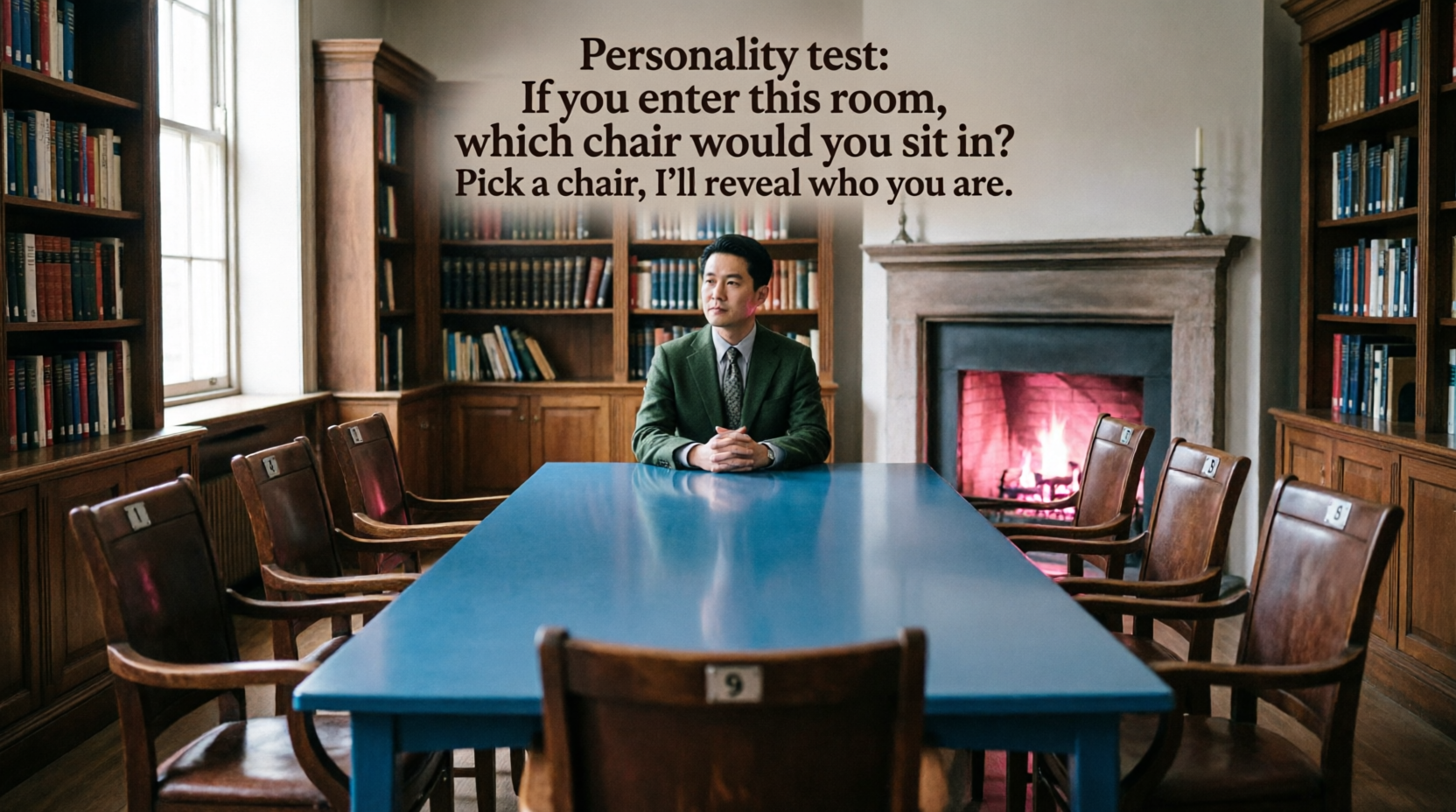
Have you ever thought about what your instincts quietly reveal about you? Sometimes, the smallest decisions—like choosing where to sit—can say more about your personality than you realize.
Imagine this: you walk into a room. There’s a long table, a fireplace glowing softly, and nine empty chairs. One person is already seated.
The question is simple: where do you sit?
Why This Exercise Matters
At first, it seems like a random choice. But instinctive decisions are rarely random.
The seat you feel drawn to can reflect how you approach people, how much space you need, and how you handle connection, comfort, or control. Most people don’t analyze their answer—they just feel it. And that instinct is exactly what makes the result meaningful.
Chairs 1–2: The Natural Engagers
If you choose a seat right next to the other person, it suggests openness.
You’re likely someone who enjoys interaction, doesn’t shy away from conversation, and feels at ease breaking the silence. You value connection and tend to lean into social situations rather than avoid them.
Chairs 3–4: The Thoughtful Balancers
Sitting close—but not too close—points to a balanced approach.
You’re approachable, but you also respect boundaries. You prefer to read the room before fully stepping in, and you tend to favor deeper, more meaningful exchanges over casual chatter.
Chairs 5–6: The Self-Reliant Minds
Choosing a seat further away often signals independence.
You’re comfortable in your own space and don’t rely on constant interaction. You connect with others when it feels right to you, not out of obligation, and you value freedom and personal boundaries.
Chairs 7–8: The Comfort-Oriented
Seats near the fireplace represent warmth and security.
If you picked one of these, you likely seek calm, stable environments. You appreciate peace, avoid unnecessary tension, and gravitate toward situations that feel emotionally safe and grounding.
Chair 9: The Direct Presence
Sitting directly across from the other person is a strong, intentional choice.
It suggests confidence and a willingness to engage head-on. You’re comfortable being seen, making eye contact, and taking initiative in social dynamics.
No Choice Is “Better”
What makes this exercise interesting is that there’s no right or wrong answer.
Each option reflects a different way of relating to the world. Your choice might even change depending on your mood, your past experiences, or how you imagine the situation.
What It Reveals
In everyday life, you make similar decisions without thinking—where you sit in a meeting, how close you stand to someone, or how you position yourself in a group.
These small, automatic choices quietly communicate your personality.
Final Thought
So… where would you sit?
And more importantly—why did that spot feel right?
Were you drawn to closeness, distance, comfort, or control?
Sometimes, self-awareness doesn’t come from big moments.
Sometimes, it starts with something as simple as a chair.