My brother took all of the money out of my account after stealing my ATM card. “Your work is finished, we got what we wanted, don’t look back at us now,” he said as he threw me out of the house after emptying my account. “It was a good,” the parents said, laughing.
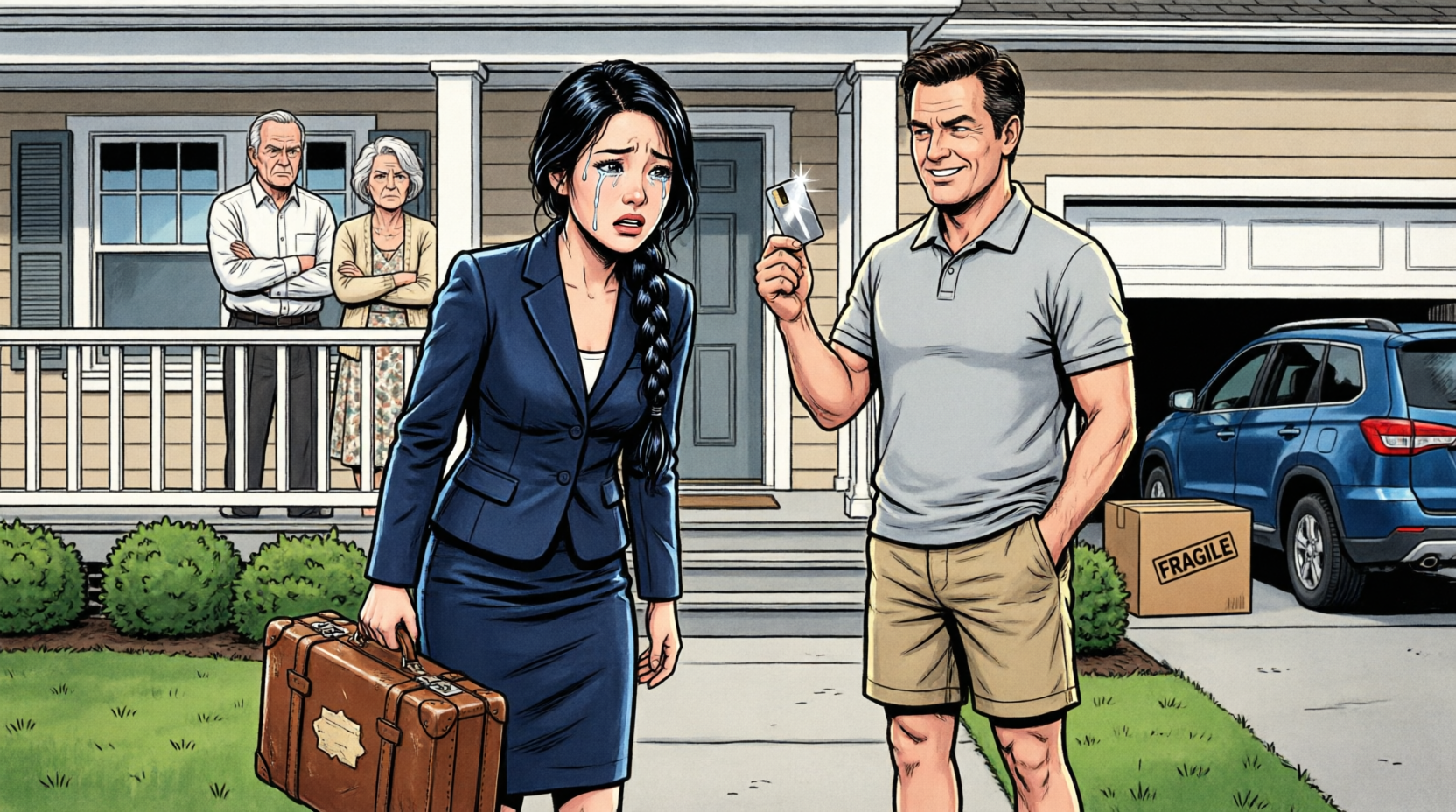
My brother took my ATM card on a Thursday.
That morning started like any other. I woke up in my parents’ house in Columbus, pulled on my blue scrub top, and rushed out the door for another long shift at the hospital. I worked as a respiratory therapist, and that week had been brutal—back-to-back shifts, barely any sleep, too many patients. By the time I got home after nine that night, I was exhausted. My only goal was to shower, eat something quick, and fall into bed.
Instead, I found my suitcase sitting by the front door.
At first, I thought my mom had just moved it while cleaning. Then I noticed it was fully packed. My clothes were folded inside. My charger was tucked into the side pocket. Even my toiletries were sealed in a plastic bag.
This wasn’t tidying.
It was eviction.
Voices drifted from the kitchen—laughter, relaxed, almost celebratory.
When I stepped in, my brother Jason was sitting at the table with my parents, drinking beer from one of Dad’s mugs like nothing was wrong. My mom saw me first and smiled too casually.
“Oh, you’re back.”
I didn’t smile. “Why is my suitcase by the door?”
Jason leaned back, completely at ease, like he’d been waiting for this moment.
“Your part’s done,” he said. “We got what we needed. No reason for you to stay.”
My stomach dropped. “What are you talking about?”
Dad chuckled under his breath. “Don’t play dumb.”
Then Jason reached into his pocket and tossed something onto the table.
My ATM card.
For a second, I couldn’t move.
“You took my card?”
“Relax,” he said. “I borrowed it.”
“And gave it back empty,” he added, almost proudly.
I stepped forward, but he covered the card with his hand before I could grab it.
“It’s family money anyway.”
“No,” I said, my voice shaking, “it isn’t.”
My mom let out a soft laugh, like I was overreacting. “You’ve been saving all that money while living here for free. This just balances things.”
The room felt colder all of a sudden.
“How much did you take?” I asked.
Jason shrugged. “All of it.”
My hands trembled as I pulled out my phone and opened my banking app.
Savings: $0.43
Checking: $12.11
I stared at the screen, trying to process it. Transaction after transaction—withdrawals from different ATMs, then a wire transfer.
Nearly $38,000 gone.
“That was for my graduate program,” I said quietly.
Jason stood up, towering over me. “Not anymore.”
“Give it back.”
“No.”
Dad crossed his arms. “You’ve been living here for almost two years. Food, utilities, everything adds up. We decided this evens things out.”
“You never asked me to pay rent,” I said.
Mom shrugged. “We shouldn’t have had to.”
I looked at all three of them, waiting—hoping—for even a flicker of guilt.
There was none.
Just relief.
Jason grabbed my suitcase, opened the front door, and shoved it outside. Cold air rushed in.
“You can leave now,” he said. “And don’t come back.”
Behind him, my parents laughed.
What they didn’t know—what none of them understood—was that the account they had emptied wasn’t just a normal savings account.
Most of that money was part of a restricted fund tied to a legal settlement after my aunt passed away. Every transaction was monitored.
And by the time Jason threw me out, the bank had already flagged the activity.
That night, I slept in my car behind a grocery store, parked under a flickering light. My suitcase sat in the back seat. I barely moved, my chest tight with everything I hadn’t processed yet.
At 11:17 p.m., my phone rang again from an unknown number.
I finally answered.
“Ms. Claire Bennett?” the woman asked.
“Yes.”
“This is Natalie from the bank’s fraud department. We’ve detected multiple unusual withdrawals today. Did you authorize transactions totaling over thirty-seven thousand dollars?”
“No,” I said immediately. “My brother took my card.”
Her tone shifted instantly. “Do you have the card now?”
“Yes.”
“We’re freezing the account. You’ll need to come in first thing tomorrow. This may involve law enforcement.”
I closed my eyes.
“I understand.”
The next morning, I went straight to the bank.
The manager sat me down in a private office and walked through everything—the withdrawals, the wire, the flags triggered by the account’s restrictions. When I explained where the money came from, her expression hardened.
“This isn’t just theft,” she said. “This could carry serious legal consequences.”
By noon, I had filed a police report.
By afternoon, I had called the attorney who handled my aunt’s estate.
And by evening, Jason finally called me.
“You went to the bank?” he snapped.
“You stole from me.”
“It was family money.”
“No,” I said. “It wasn’t.”
There was a pause.
Then a forced laugh. “You’re bluffing.”
I didn’t answer.
He hung up.
Two days later, the police showed up at my parents’ house.
That’s when everything started falling apart for them.
The wire transfer Jason made for a truck was stopped before it cleared. ATM footage showed him clearly withdrawing the cash—Dad even appeared in one of the clips, waiting in the car. Their messages made it worse. They had planned everything.
They thought I wouldn’t fight back.
They were wrong.
The case moved quickly after that.
Jason was charged. He eventually accepted a plea deal—probation, restitution, and a felony record that followed him everywhere. Dad ended up tied into the civil side of it, forced to help cover the financial damage. My mom stopped calling entirely once she realized guilt wouldn’t change anything.
Most of the money was recovered over time.
Not easily, but enough.
I moved into a small studio apartment near the hospital. It wasn’t much—creaky floors, dim lighting, one window facing a brick wall—but it was mine.
Six months later, I started my graduate program.
The first tuition payment came from the same fund my aunt had left me.
Exactly as it was meant to.
People sometimes ask if I ever made peace with my family.
I didn’t.
Because this wasn’t just about money.
They planned it. They took everything they could. They laughed while doing it. And when they thought I had nothing left, they pushed me out the door without hesitation.
They believed they had drained my account.
What they really drained was any place they still had in my life.