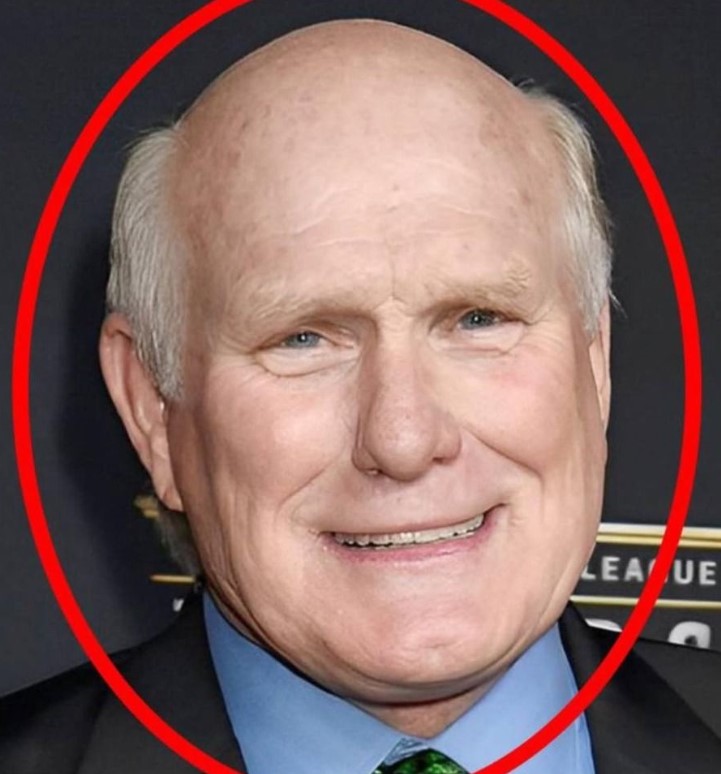
Terry Bradshaw Opens Up About His Private Battles With Two Forms of Cancer
A Different Kind of Challenge for a Football Legend
Terry Bradshaw has spent decades being recognized as one of football’s most familiar personalities. From his years as a championship quarterback and Hall of Famer to his long career as an NFL broadcaster, much of his life has unfolded in front of millions of people.
Behind that familiar public image, however, Bradshaw was quietly dealing with a challenge unlike anything he had encountered on a football field.
Over the course of a difficult year, he faced two separate cancer diagnoses: bladder cancer and Merkel cell carcinoma, a rare and aggressive type of skin cancer.
Bradshaw eventually revealed that he had gone through treatment for both illnesses and said he was cancer-free.
For many fans, the announcement came as a surprise because Bradshaw had continued appearing on television with the same humor, energy and confidence viewers had associated with him for years.
Keeping a Serious Health Battle Away From the Spotlight
Bradshaw chose not to make his health situation a major public story while he was undergoing treatment.
Instead, he continued working while privately managing medical appointments, procedures, recovery and the uncertainty that accompanied two separate cancer diagnoses.
Viewers watching him discuss football could not see what was happening away from the cameras.
Behind the scenes, Bradshaw was dealing with circumstances that required a very different kind of strength from the toughness that had once helped him compete at football’s highest level.
The experience was not measured in scores, victories or championships.
It involved waiting for medical results, undergoing treatment and learning to handle fear without allowing it to control his daily life.
Bladder Cancer Was the First Diagnosis
The first major health problem Bradshaw faced was bladder cancer.
The diagnosis required treatment as well as continuing medical monitoring.
For someone whose public identity had been shaped by physical strength and confidence, the experience created a different kind of vulnerability.
Cancer introduced questions that could not be answered through preparation, competition or determination alone.
There were treatments to complete and medical evaluations to await.
Bradshaw had to rely on the people caring for him while accepting that certain parts of the process remained beyond his control.
He later credited early detection and his medical team as important factors in helping him through the illness.
A Second Cancer Diagnosis Arrives
While Bradshaw was still dealing with the bladder cancer experience, another serious diagnosis followed.
Doctors discovered Merkel cell carcinoma on his neck.
The condition is a rare and aggressive form of skin cancer.
Facing a second cancer before the first experience had fully faded created another physical and emotional challenge.
Bradshaw underwent surgery and radiation as part of his treatment.
The combination of medical procedures, recovery and uncertainty placed significant demands on him.
The second diagnosis also meant that Bradshaw could not simply finish one treatment process and immediately return to normal life.
Instead, he had to begin confronting another potentially serious illness.
Merkel Cell Carcinoma Added Another Layer of Concern
Merkel cell carcinoma is different from more commonly recognized forms of skin cancer because of its rarity and aggressive nature.
In Bradshaw’s case, the cancer was found on his neck and required both surgery and radiation.
The discovery came at a time when he was already managing the consequences of bladder cancer.
That sequence made the experience especially difficult.
One diagnosis alone can bring significant uncertainty for a patient and family. Bradshaw was dealing with the reality of two distinct illnesses within the same period of his life.
The physical effects of treatment were only part of the burden.
There was also the mental strain created by waiting, recovering and wondering whether treatment had been successful.
The Public Continued Seeing the Familiar Terry Bradshaw
Despite everything happening privately, Bradshaw continued appearing professionally.
He remained energetic, humorous and recognizable to viewers.
That consistency made the eventual disclosure even more surprising.
Fans had watched him laugh, analyze football and interact with colleagues without realizing that medical treatments and recovery were taking place away from the television studio.
Bradshaw did not want his illness to become the defining story while he was still going through it.
He preferred to concentrate on treatment and recovery rather than public attention.
That decision allowed him to maintain a degree of normality during an unusually uncertain period.
The Hardest Moments Happened Away From the Cameras
Bradshaw’s football career had exposed him to pressure, injuries and enormous expectations.
Cancer created a different type of adversity.
The challenge could not be solved by studying an opponent or preparing a game plan.
There were moments of exhaustion and fear, along with the difficult waiting that often accompanies medical treatment.
Bradshaw acknowledged that the treatments were difficult.
The uncertainty surrounding them could be even harder.
He had to continue moving forward without always knowing exactly what the next test or medical appointment would reveal.
Family and Friends Became an Important Source of Strength
Bradshaw did not describe his recovery as something he accomplished alone.
He credited the support of family and friends with helping him through the most difficult periods.
That support provided stability when medical circumstances were changing quickly.
People close to him could not undergo the treatments for him, but they could remain beside him while he dealt with the emotional and physical strain.
The experience reinforced the importance of accepting help during circumstances that can make even highly independent people feel vulnerable.
Bradshaw also expressed gratitude for the medical professionals involved in his care.
Faith Helped Bradshaw Navigate the Uncertainty
Another important part of Bradshaw’s experience was his faith.
He described it as a source of clarity and steadiness when the future felt uncertain.
For Bradshaw, faith did not remove the difficult realities of cancer treatment.
It helped him remain grounded while dealing with circumstances he could not completely control.
The diagnoses forced him to confront questions that went far beyond football or professional success.
During those periods, Bradshaw relied on a combination of medical care, personal relationships and faith to keep moving forward.
Why Bradshaw Initially Kept the Diagnoses Private
Bradshaw’s decision to remain quiet about his health was deliberate.
He did not want sympathy while he was still actively fighting the illnesses.
He also did not want cancer to become the central subject surrounding his public appearances.
Instead, Bradshaw focused his attention on getting better.
He continued performing his professional responsibilities while dealing with recovery privately.
That choice reflected an approach he had used throughout much of his life: acknowledge adversity, deal with it directly and continue moving forward.
The Revelation Surprises Fans
When Bradshaw eventually discussed what he had experienced, many viewers were stunned.
The announcement revealed just how much had been happening behind the scenes while he continued appearing publicly.
Messages of encouragement quickly followed.
Fans from different generations expressed support for the former quarterback and broadcaster.
Many had watched Bradshaw during his playing career, while younger viewers knew him primarily through his television work.
The health revelation connected those audiences around a much more personal chapter of his life.
Athletes and Broadcasters Respond to His Story
Bradshaw also received encouragement from people within the sports and broadcasting communities.
The reaction focused not only on the fact that he had survived his illnesses but also on the straightforward way he discussed them.
He did not attempt to portray the experience as easy.
He acknowledged the difficult treatments, uncertainty and emotional burden involved.
At the same time, he did not present himself as someone defined entirely by illness.
That balance became one of the most widely admired aspects of his disclosure………..