PART 7: Summer arrived quietly. No dramatic storms. No unexpected phone calls. No court dates. No hospital corridors. Just ordinary days. And after everything our family had endured, ordinary felt like a gift. My parents settled into a comfortable routine. My father spent mornings tending the garden. My mother pretended to help while mostly supervising from a lawn chair and criticizing his planting techniques. They argued about tomatoes. They argued about watering schedules. They argued about absolutely everything. Which, oddly enough, was reassuring. Because healthy families don’t stop disagreeing. They simply learn how to disagree without leaving. One Sunday afternoon, while helping my father trim a stubborn hedge, I noticed him pause. It lasted only a second. A small hesitation. A brief loss of balance. But it was enough. “Are you okay?” He immediately waved me off. “I’m fine.” The answer came too quickly. The same way it always did. The same way it had my entire life. The same way fathers everywhere seem programmed to respond. I didn’t argue. Not then. But I paid attention. Over the next several weeks, I noticed other things. Small things. Easy things to miss. He became tired more often. His afternoon naps grew longer. Sometimes he forgot details in conversations. Nothing alarming. Nothing dramatic. Just enough to worry me. Eventually my mother noticed too. One evening she called me. Her voice was calm. Too calm. “Can you come by tomorrow?” My stomach tightened. “What’s wrong?”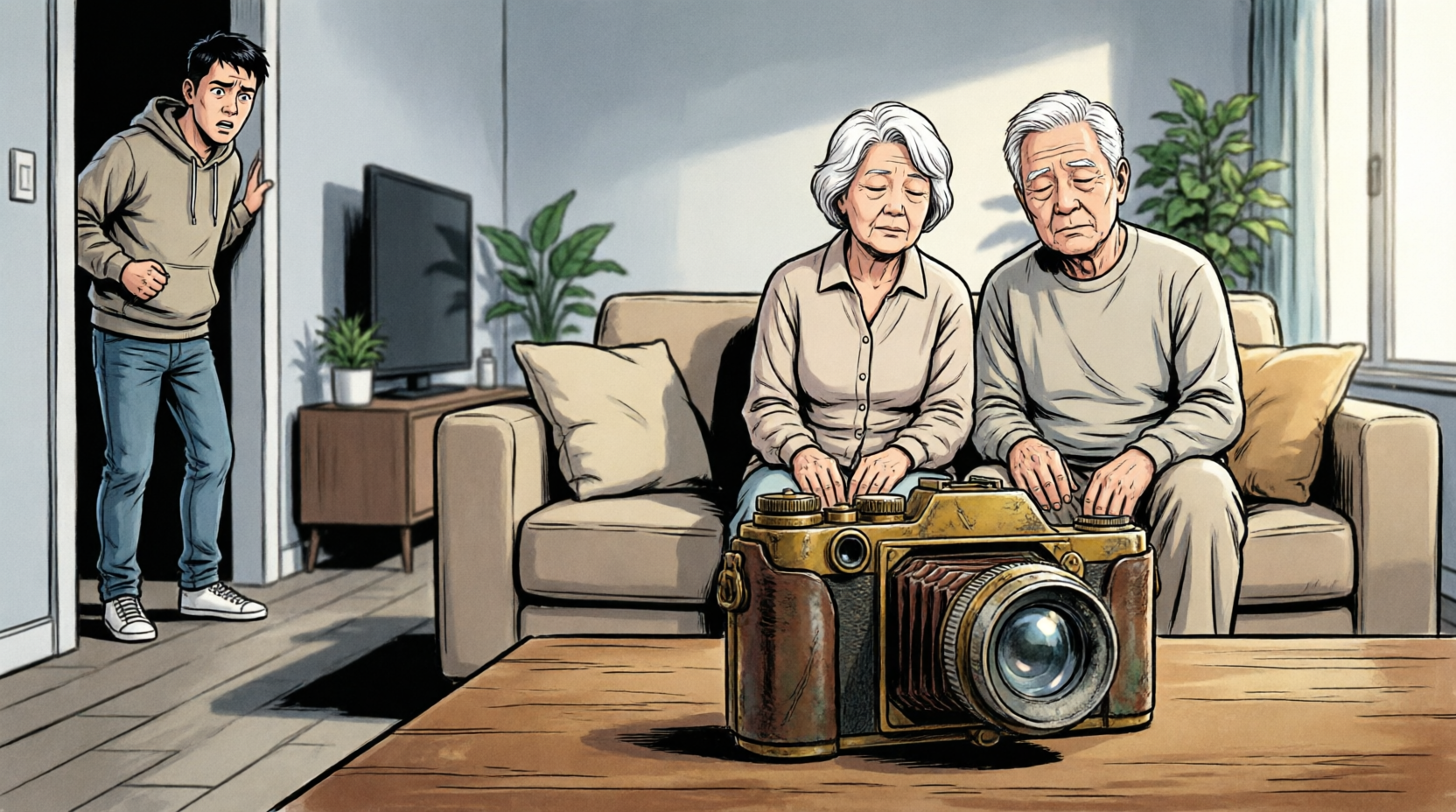 A pause. Then she answered. “I think your father is scared.” The next morning, Michael and I drove over immediately. We found my father sitting on the back porch. Coffee in hand. Watching the sunrise. For a long time nobody spoke. Then he surprised us. “I have another doctor’s appointment next week.” The words landed heavily. My mother sat beside him. He looked down at his hands. Hands that had built fences. Fixed roofs. Held grandchildren. Protected all of us for decades. “They found something.” The silence became absolute. I felt my heartbeat quicken. “What did they find?” He exhaled slowly. “Nothing serious.” Then he laughed. A sad laugh. “The problem is that’s exactly what everyone says before they tell you something serious.” Nobody corrected him. Because he wasn’t wrong. The appointment arrived. The longest week of our lives followed. And during that week, something unexpected happened. Our family gathered more often than usual. Not intentionally. Not because anyone planned it. We simply found reasons. Coffee visits. Lunches. Short conversations. Random excuses. Nobody wanted to say out loud what all of us were thinking. Fear has a way of making people seek each other out. Finally the day came. The appointment lasted nearly three hours. Three of the longest hours I can remember. When my parents finally emerged from the clinic, I immediately searched their faces. My mother was crying. My heart stopped. Then I noticed something else. She was smiling. Actually smiling. My father looked exhausted. But relieved. Deeply relieved. The specialist explained that several lingering symptoms were likely connected to complications from the poisoning recovery and age-related issues. Additional treatment would be needed. Monitoring would continue. But there was no devastating diagnosis waiting around the corner. No hidden catastrophe. No life-changing revelation. The danger we feared wasn’t there. I don’t think I fully appreciated how much tension we had all been carrying until that moment. Because the second we heard the news, it felt as though an enormous weight lifted from every shoulder. That evening, our family celebrated with takeout pizza. The least elegant meal imaginable.
The most delicious meal imaginable. Halfway through dinner, my father raised a paper cup. Everyone looked at him. He cleared his throat dramatically. Whenever he did that, it usually meant trouble. Or a speech. Sometimes both. “I’ve been thinking.” My mother groaned. “Oh no.” The room laughed. He pointed at her. “See? This is the support I get after forty-five years.” More laughter. Then his expression softened. “I’ve spent a lot of time looking backward.” Nobody interrupted. He continued. “At what happened.” “At what almost happened.” “At what could have happened.” His eyes moved around the table. Then he smiled. “But I think I’m done doing that.” The room became quiet. My father rarely spoke seriously. When he did, everyone listened. “I don’t know how much time any of us have.” “None of us do.” “But I know something now that I didn’t understand before.” He looked at me. Then Kara. Then my mother. “Life isn’t something we save for later.” The words settled over the room. Simple. Powerful. True. “We keep waiting for the perfect time.” “The perfect weekend.” “The perfect vacation.” “The perfect retirement.” “The perfect moment.” He shook his head. “But the perfect moment is usually just whoever is sitting at the table right now.” Nobody spoke. Several of us were crying already. Including me. Especially me. Because I remembered all those postponed visits. All those promises of soon. All those times I assumed there would always be another Sunday. My father raised his cup again. “To now.” The room lifted cups. Paper cups. Water glasses. Coffee mugs. Anything within reach. “To now.” The toast echoed around the room. And somehow it felt more meaningful than any formal speech I’d ever heard. Months passed. Autumn arrived. Then winter. The rhythm continued. Sunday dinners. Birthday celebrations. Holiday gatherings. Ordinary moments. Beautiful moments. The kind people rarely photograph because they assume they’ll never forget them. One snowy evening near Christmas, I arrived at my parents’ house early.
The lights from the tree glowed through the front window. The same window I had stared through on the worst day of my life. For a moment I stood outside. Looking. Remembering. The fear. The panic. The helplessness. Then I opened the door. Immediately I heard laughter. My mother’s voice. My father’s voice. Kara’s voice. Michael’s voice. The sound wrapped around me like warmth. And I realized something. The house no longer belonged to that terrible memory. For a long time I thought the worst day had permanently changed it. Marked it. Claimed it. But memories don’t own places forever. New memories eventually move in. They repaint the walls. They fill the empty rooms. They remind us that tragedy is part of a story. Not the entire story. That night, after dinner, after gifts, after dessert, my mother handed me a familiar container. The same old blue lid. The same chicken soup. I stared at it. Then laughed. “You know, one day this container is going to become a family heirloom.” My father nodded solemnly. “It already is.” My mother rolled her eyes. But she was smiling. The smile of someone surrounded by the people she loves. The smile of someone who almost lost everything and somehow found gratitude instead. As I hugged them goodbye, I noticed something. Not fear. Not sadness. Not regret. Peace. The kind that comes from understanding what truly matters. And as I drove home through the falling snow, carrying that ridiculous container of soup on the passenger seat beside me, I finally understood the lesson my parents had been teaching all along. Life is fragile. Pain is real. Trust can be broken. Hearts can be shattered. But love is stubborn. Love survives things that should destroy it. Love keeps showing up. Again. And again. And again. Just like Sunday. Just like family. Just like home.
PART 8: Years later, people would ask me about that night. The night I found my parents on the living-room floor. The night everything changed. Sometimes it happened at family gatherings. Sometimes over coffee with friends. Occasionally with people who had heard pieces of the story through someone else. They always asked the same question. “How did your family get through it?” For a long time, I never knew how to answer. Because there wasn’t one moment. There wasn’t one decision. There wasn’t one heroic act that magically fixed everything. Recovery happened in thousands of tiny moments. A phone call. A shared meal. A hug at the right time. A visit that wasn’t postponed. A conversation that wasn’t avoided. The truth was much simpler than people wanted it to be. We got through it together. And together is rarely dramatic. It is simply consistent. One spring morning, nearly five years after the poisoning, my father called me unexpectedly. “Can you come over?” My immediate reaction was panic. Old fears never disappear completely. They merely grow quieter. “I’m on my way.” His laugh came through the phone. “Relax.” “Nobody’s in the hospital.” I laughed nervously. “Then why do I need to come over?” “Because I asked.” That was all he said. Classic Dad. An hour later I arrived. My mother was in the kitchen. My father was in the garage. Both looked unusually excited. That should have been my first clue. “What are you two planning?” Neither answered. Instead, my father handed me a small key. I stared at it. “What is this?” He grinned. “Come outside.” The three of us walked toward the backyard. The same backyard where countless family barbecues had happened. The same backyard where Kara and I played as children. The same backyard where my father taught me how to ride a bicycle. Near the fence stood a small structure I had never seen before. Fresh paint. New windows. A tiny porch. I looked at it in confusion. “What is that?” My father folded his arms proudly. “Project.” My mother rolled her eyes. “Midlife crisis.” “Eighty-year-olds don’t have midlife crises.” “They do if they refuse to retire.” I looked between them. Then back at the building. “What is it?” For once, my father became serious. “A place for memories.” I frowned. “What does that mean?” Without speaking, he unlocked the door. Inside were shelves. Photographs. Old journals. Family recipes. Boxes of letters. Home videos. Albums. Scrapbooks. Documents. Memories. Decades of memories. Organized carefully. Protected carefully. Preserved carefully. I slowly walked through the room. Speechless. On one wall hung family photographs spanning nearly fifty years. On another were handwritten notes from relatives who had passed away. There were cassette tapes. Wedding invitations. Children’s drawings. Report cards. Holiday cards. Tiny pieces of life most people eventually lose. My mother touched one of the shelves.
“We realized something.”
I looked at her.
She smiled softly.
“One day we won’t be here.”
The words hit harder than I expected.
My father nodded.
“Not anytime soon.”
“Hopefully.”
“But eventually.”
The room fell quiet.
He continued.
“And we wanted to leave more than photographs.”
My eyes began filling with tears.
Because suddenly I understood.
This wasn’t a building.
It was a gift.
A love letter.
A legacy.
Over the following months, the family project expanded.
Every Sunday someone brought something new.
Old recipes.
Letters.
Stories.
Photographs.
Even recordings.
My father began interviewing relatives with a camera.
At first everyone laughed.
Then everyone participated.
Stories emerged that nobody had heard in decades.
Family history came alive.
Children listened.
Grandchildren asked questions.
Connections formed across generations.
One afternoon I discovered my mother sitting alone in the memory room.
She was reading an old notebook.
I sat beside her.
“What are you looking at?”
She smiled.
“My first journal.”
I laughed.
“How bad is it?”
She handed it to me.
The first page contained exactly three entries.
Day one of marriage.
Your father talks too much.
Day two.
Still talks too much.
Day three.
No improvement.
I laughed so hard I nearly fell off the chair.
A moment later my father walked in.
“What are you laughing at?”
My mother immediately hid the journal.
“Nothing.”
He narrowed his eyes suspiciously.
“That’s never good.”
The room filled with laughter.
Moments like that became common.
Simple.
Ordinary.
Perfect.
Then one Sunday evening, shortly before Christmas, something happened that none of us expected.
We found another envelope.
Hidden inside one of the old boxes.
My father’s handwriting.
Addressed to the family.
My mother looked confused.
“I’ve never seen this.”
Neither had anyone else.
Slowly, my father opened it.
Inside was a letter he had written shortly after recovering from the poisoning.
The room became silent.
He stared at the pages for a long time.
Then began reading aloud.
If you’re hearing this, then thankfully I survived long enough to become forgetful and hide important papers.
The room erupted with laughter.
Typical Dad.
Then his voice softened.
I almost died.
Your mother almost died.
For a while I thought fear would become the loudest thing in our family.
I was wrong.
He paused.
The room remained completely silent.
Love was louder.
Your mother was louder too, but love was a close second.
Even my mother laughed through tears.
He continued reading.
If I learned anything from that experience, it is this:
People often believe big moments define a life.
They don’t.
A life is defined by small moments repeated over time.
Sunday dinners.
Phone calls.
Checking on each other.
Showing up.
Forgiving.
Trying again.
Staying.
By now, nearly everyone in the room was crying.
Including my father.
Especially my father.
The final paragraph was short.
Very short.
But nobody ever forgot it.
When I am gone, do not spend too much time remembering how I died.
Remember how I lived.
Remember how your mother lived.
Remember the meals.
Remember the laughter.
Remember the ridiculous soup containers.
Remember that we loved you.
And remember to keep showing up for each other.
The room stayed silent long after he finished.
Nobody knew what to say.
Because some truths are too important to interrupt.
That night, after everyone left, I helped my parents lock up.
The memory room was quiet.
The shelves stood full.
The photographs glowed softly beneath warm lights.
Generations of stories surrounded us.
Before leaving, I turned around one last time.
My father stood beside my mother.
Their hands intertwined.
The same way they had been for decades.
The same way they remained after hardship.
After betrayal.
After recovery.
After everything.
And suddenly I realized something.
The greatest inheritance parents leave behind is not money.
Not property.
Not possessions.
It is the example they set.
The love they model.
The values they live.
The family they build.
As we walked back toward the house together, snow beginning to fall around us, my mother stopped at the door.
Then she handed me something.
I laughed immediately.
Of course.
The blue-lidded soup container.
Still alive.
Still refusing retirement.
Still part of the family.
My father pointed at it proudly.
“One day that thing belongs in the memory room.”
And for the first time in years, all three of us laughed so hard we couldn’t speak.
The sound echoed across the snowy yard.
Warm.
Alive.
Unbroken.
Exactly the way family should be.
PART 9
The memory room became something none of us expected.
What began as my father’s retirement project slowly transformed into the heart of our family.
At first, only relatives visited.
Then old friends started stopping by.
Neighbors.
Former coworkers.
People who had known my parents decades earlier.
Everyone seemed to have a story.
Everyone seemed to carry a memory.
And every visit added another piece to a puzzle none of us realized was still being assembled.
One Saturday morning, nearly seven years after the poisoning, Michael and I arrived to find three unfamiliar cars parked outside my parents’ house.
My father was standing on the porch, smiling like he had won the lottery.
“What is all this?”
He pointed inside.
“Visitors.”
That was not an answer.
Inside sat six people around the dining room table.
Three women.
Three men.
Most appeared to be in their forties or fifties.
I didn’t recognize any of them.
Neither did Kara.
My mother emerged from the kitchen carrying coffee.
“You’re finally here.”
“Who are they?”
My parents exchanged amused glances.
Then one of the women stood.
Tears immediately filled her eyes.
“You’re Emily?”
I nodded.
Confused.
She smiled.
“My name is Janet.”
The name meant nothing to me.
Seeing my confusion, she laughed softly.
“It wouldn’t.”
She turned toward my father.
“But your dad might remember.”
My father smiled.
“Oh, I remember.”
The woman wiped her eyes.
Then she told us a story.
Thirty-two years earlier, she had been a single mother.
Her husband had abandoned the family.
She was working two jobs.
Her electricity had been disconnected.
She had two young children and almost no food.
One evening there was a knock at her door.
Outside stood my parents.
Not because they knew her well.
Not because they were relatives.
Simply because someone told them she needed help.
My parents brought groceries.
Paid the utility bill.
And quietly left.
They never spoke about it again.
The room became silent.
Then another visitor shared a story.
Then another.
And another.
For hours we listened.
A man described how my father helped him rebuild after a house fire.
A woman described how my mother stayed beside her during chemotherapy appointments when family members lived too far away.
Someone else described receiving anonymous Christmas gifts for years before discovering who sent them.
The stories seemed endless.
I looked at Kara.
She looked at me.
Both of us had the same expression.
Astonishment.
Because we thought we knew our parents.
We didn’t.
Not completely.
Children rarely do.
We know the people who raised us.
But we often don’t know all the people they became when we weren’t watching.
Late that afternoon, after the visitors left, I found my father sitting alone in the backyard.
The sun was setting.
Golden light stretched across the grass.
For several minutes I simply sat beside him.
Finally I asked the question that had been bothering me all day.
“Why didn’t you ever tell us?”
He looked genuinely confused.
“Tell you what?”
“Any of it.”
“The people you helped.”
“The things you did.”
He shrugged.
As though the answer were obvious.
“Because it wasn’t important.”
I laughed.
“Apparently it was important to them.”
He smiled.
“That’s different.”
I shook my head.
“No.”
“It isn’t.”
For a moment neither of us spoke.
Then he surprised me.
“You know what I regret?”
The question caught me off guard.
“What?”
He stared toward the horizon.
“Not helping more.”
I actually laughed.
Of all the possible regrets.
Of all the possible answers.
That was his.
He smiled.
“I’m serious.”
“I spent years worrying about work.”
“About bills.”
“About retirement.”
“About things that seemed important.”
His expression softened.
“But when you get older, you realize most of it doesn’t matter.”
I listened carefully.
Because by then I had learned something.
When my father became philosophical, it was worth paying attention.
“The things you remember are people.”
“The people you loved.”
“The people you helped.”
“The people who helped you.”
He pointed toward the house.
“That’s the real wealth.”
I followed his gaze.
My mother was visible through the kitchen window.
Washing dishes.
Kara was helping.
Michael was drying plates.
They were laughing about something.
The scene looked wonderfully ordinary.
And somehow incredibly precious.
That Christmas, our family decided to start a new tradition.
Every year, instead of exchanging large gifts, each person would create something for the memory room.
A letter.
A story.
A photograph.
A recording.
Something meaningful.
Something personal.
The first year, Michael surprised everyone.
Quietly, over several months, he had interviewed each family member.
Then he edited the recordings into a short documentary.
Old photographs appeared on screen.
Voices filled the room.
Laughter.
Memories.
Stories.
Even clips of my parents teasing each other.
By the end, nobody had dry eyes.
Not even Michael.
Especially not Michael.
Afterward, my father stood and hugged him.
A long hug.
One of those rare moments men sometimes struggle to express with words.
“You gave us something we’ll keep forever.”
Michael swallowed hard.
“You already gave it to me.”
The room became quiet.
Because everyone understood exactly what he meant.
Years continued passing.
The memory room expanded.
Children grew.
Grandchildren arrived.
New photographs filled old shelves.
New stories joined older ones.
Life continued doing what life always does.
Changing.
Growing.
Moving forward.
Yet somehow the lessons remained the same.
Show up.
Stay connected.
Make the call.
Take the visit.
Don’t wait for someday.
Then came a Sunday none of us expected.
Not a tragedy.
Not an emergency.
Something far simpler.
My father forgot the soup.
For decades, Sunday usually ended with leftovers.
Especially soup.
Especially chicken soup.
But that afternoon we reached the driveway before realizing he had forgotten.
I laughed.
“Should we go back?”
My mother looked toward the house.
Then toward my father.
Then smiled mischievously.
“No.”
Everyone stared.
“No?”
She folded her arms proudly.
“Let him discover it himself.”
An hour later my phone rang.
My father.
His voice sounded offended.
Deeply offended.
“You people left without the soup.”
I nearly dropped the phone laughing.
“We thought you forgot.”
“I did forget.”
“Then what’s the problem?”
“The problem is now there’s too much soup.”
For several seconds neither of us could speak because we were laughing too hard.
Eventually he sighed dramatically.
“Fine.”
“Come get it tomorrow.”
The next afternoon I stopped by.
The house was quiet.
Peaceful.
Warm.
My father handed me the container.
The same blue lid.
The same old container.
Still surviving.
Still refusing to break.
Just like its owners.
As I prepared to leave, he placed a hand on my shoulder.
Not unusual.
But something about the moment felt important.
“Emily?”
“Yeah?”
His eyes softened.
“Thank you.”
I frowned.
“For what?”
“For showing up.”
The words hit me harder than he probably realized.
Because years earlier, before everything happened, I had always planned to visit.
Always intended to make more time.
Always believed there would be another opportunity.
Now I understood.
Showing up isn’t a grand gesture.
It’s a collection of small choices.
Repeated over years.
Repeated until they become a life.
I hugged him tightly.
Longer than usual.
Then I drove home carrying soup once again.
As the familiar container sat in the passenger seat beside me, I couldn’t help smiling.
Because somewhere along the way, the soup had stopped being soup.
It had become a reminder.
A symbol.
A promise.
A lesson passed quietly from one generation to the next.
And every time that blue lid snapped imperfectly into place, it seemed to say the same thing:
Call your family.
Visit while you can.
Love people while they’re here.
And never assume there will always be another Sunday.
PART 10 — THE LAST SUNDAY
Ten years passed.
Not quickly.
Not slowly.
The way meaningful years always pass.
One ordinary day at a time.
The memory room grew larger.
The shelves became fuller.
The photo albums multiplied.
Grandchildren’s drawings appeared beside old black-and-white photographs.
New stories joined old stories.
Life continued.
Exactly as my father always hoped it would.
The Sunday dinners never stopped.
Not completely.
Schedules changed.
Children grew older.
Jobs became demanding.
People moved farther away.
But somehow, no matter what happened, everyone found their way back.
Maybe not every week.
Maybe not every month.
But always eventually.
Always back to the table.
Always back to family.
And always back to the house that had somehow survived becoming both the site of our greatest fear and the center of our greatest love.
Then came one final Sunday.
None of us knew it would be the last.
Perhaps that was a gift.
My father woke up early that morning.
Made coffee.
Read the newspaper.
Complained about sports scores.
Argued with the television.
The usual.
My mother later told us he spent nearly twenty minutes trying to convince her that he was getting younger.
She informed him that aging backwards was not medically possible.
He informed her that she lacked imagination.
Some arguments never change.
Thankfully.
That afternoon everyone arrived.
Kara.
Michael.
The grandchildren.
Friends who had become family.
Family who had become friends.
The house filled with noise.
Laughter.
Conversation.
Life.
At one point I found my father sitting in his favorite chair watching everyone.
Not speaking.
Just watching.
A small smile rested on his face.
“You okay?”
He nodded.
“Better than okay.”
His eyes moved around the room.
“I was just thinking.”
I laughed.
“That’s usually dangerous.”
He smiled.
“Probably.”
Then he grew quiet again.
“I’ve had a good life.”
The words caught me off guard.
I immediately felt a strange ache in my chest.
Perhaps because of his age.
Perhaps because of the softness in his voice.
Perhaps because some part of me understood the importance of the moment before my mind did.
“You have.”
He nodded.
“I got more than I deserved.”
“No.”
“You earned it.”
He shook his head.
“Nobody earns this.”
His eyes settled on my mother.
She was laughing in the kitchen.
Completely unaware we were watching.
“I got lucky.”
For a moment neither of us spoke.
Then he looked at me.
“And so did you.”
Before I could answer, someone called him from the dining room.
Another story was needed.
Another joke.
Another memory.
And my father happily stood to deliver all three.
That evening lasted longer than usual.
Nobody seemed eager to leave.
The grandchildren played games.
The adults shared stories.
Photographs were passed around.
Someone found one of the earliest pictures from the memory room.
My parents were standing together beside a beat-up car.
Young.
Hopeful.
Completely unaware of the life waiting ahead.
The room spent nearly fifteen minutes laughing at my father’s haircut.
He insisted it had been fashionable.
Nobody believed him.
Around sunset, everyone gathered outside.
A family photograph.
One more picture.
Just one more.
The photographer counted down.
Three.
Two.
One.
The camera flashed.
None of us realized it would become the most treasured photograph we owned.
Later that night, after everyone left, my parents sat alone on the porch.
The same porch where my father had waved goodbye to me years earlier.
The same porch captured by the camera that helped save our family.
The same porch where countless conversations had taken place.
According to my mother, they sat there for nearly an hour.
Talking.
Laughing.
Remembering.
Eventually they went inside.
And sometime during the night, while sleeping peacefully beside the woman he loved for more than half a century, my father slipped away.
No pain.
No fear.
No struggle.
Just peace.
The kind of peace he spent his entire life helping others find.
The phone call came just after sunrise.
I knew before I answered.
Somehow I knew.
The drive to my parents’ house felt endless.
When I arrived, my mother met me at the door.
Tears filled her eyes.
Yet there was something else there too.
Love.
Gratitude.
Acceptance.
She hugged me tightly.
Neither of us spoke.
Words weren’t enough.
Nothing was.
The days that followed were difficult.
Heartbreaking.
Beautiful.
Thousands of people came.
Not hundreds.
Thousands.
Neighbors.
Friends.
Former coworkers.
People we had never met.
People whose lives had been touched by my father decades earlier.
The stories never stopped.
One person after another stood and shared memories.
Acts of kindness.
Moments of generosity.
Unexpected help.
Quiet compassion.
The evidence of a life well lived.
A week later, after the crowds faded and the flowers began disappearing, our family gathered in the memory room.
The room was silent.
Photographs lined every wall.
Memories surrounded us.
And for the first time, there was one more memory to add.
My mother stood before the shelves holding a framed photograph.
The photograph from the final Sunday.
The last family picture.
Slowly, she placed it in the center.
Then stepped back.
Nobody moved.
Nobody spoke.
Finally Kara wiped away tears.
“What do we do now?”
The question lingered in the room.
My mother looked around.
At the photographs.
At the letters.
At the stories.
At all of us.
Then she smiled.
A small smile.
The same one she had worn after surviving the hospital.
The same one she wore after every difficult chapter.
“We keep showing up.”
The room became silent again.
Because that was it.
That was the answer.
Not just to Kara’s question.
To everything.
We keep showing up.
For birthdays.
For holidays.
For Sunday dinners.
For grief.
For joy.
For each other.
Months later, the family gathered again.
Then again.
Then again.
The tradition continued.
Exactly as before.
The chair at the table remained empty.
But somehow my father was still present.
In the stories.
In the laughter.
In the lessons he left behind.
In the memory room.
In the garden.
In every bowl of chicken soup.
Especially the soup.
One afternoon, years later, my mother called me unexpectedly.
“Can you stop by?”
I smiled.
“Of course.”
When I arrived, she handed me something.
A familiar plastic container.
Blue lid.
Slightly warped.
Practically indestructible.
I laughed immediately.
“No way.”
She nodded.
“It’s yours now.”
I stared at it.
Suddenly unable to speak.
The famous container.
The one that had appeared in every chapter of our family’s story.
The one that survived almost as much as we did.
My mother smiled softly.
“Take good care of it.”
Tears filled my eyes.
“I will.”
That evening, after leaving her house, I placed the container on my kitchen counter.
Not in a cabinet.
Not hidden away.
Right where I could see it.
And every time I look at it now, I remember.
Not the hospital.
Not the courtroom.
Not the betrayal.
I remember my father laughing.
My mother making soup.
Sunday dinners.
Family photographs.
People staying.
People loving.
People showing up.
Because in the end, that was the true story.
Not a story about poison.
Not a story about crime.
Not even a story about survival.
It was a story about family.
About forgiveness.
About gratitude.
About ordinary moments that become priceless once we understand how fragile they are.
And if my father were here right now, he would probably interrupt this ending to tell one final joke.
Then he would remind all of us to call our parents.
Visit our grandparents.
Hug our children.
Make the trip.
Share the meal.
Stop waiting for “someday.”
Because someday is never guaranteed.
Today is.
And that is why, every Sunday, no matter how busy life becomes, I still make soup.
I still invite family.
I still set extra places at the table.
And before anyone leaves, I always say the same thing my father taught us years ago:
“See you next Sunday.”
Not because Sunday is special.
But because the people around the table are.
THE END