Three weeks after my appointment at Dr. Rhodes’s clinic, I thought the hardest part of my life was behind me.
I was wrong.
The hardest part was not escaping Derek.
The hardest part was learning who I was after the fear was gone.
Fear had occupied so much space inside me that when it disappeared, it left an emptiness I did not know how to fill.
Every morning in my tiny apartment above the bakery, I woke before sunrise.
The smell of fresh bread drifted through the floorboards.
The first few seconds after waking always felt peaceful.
Then reality arrived.
The court case.
The protection order.
My mother.
The years I could never get back.
I would sit on the edge of my bed and stare at the wall while trying to remember what normal people did with their lives.
One rainy Thursday evening, a knock came at my door.
I froze.
Not because I expected Derek.
The protection order made that unlikely.
Because fear does not disappear just because danger does.
It learns new shapes.
The knock came again.
Gentle.
Three taps.
Then silence.
I looked through the peephole.
An older woman stood outside holding a cardboard box.
Gray coat.
White hair.
Kind eyes.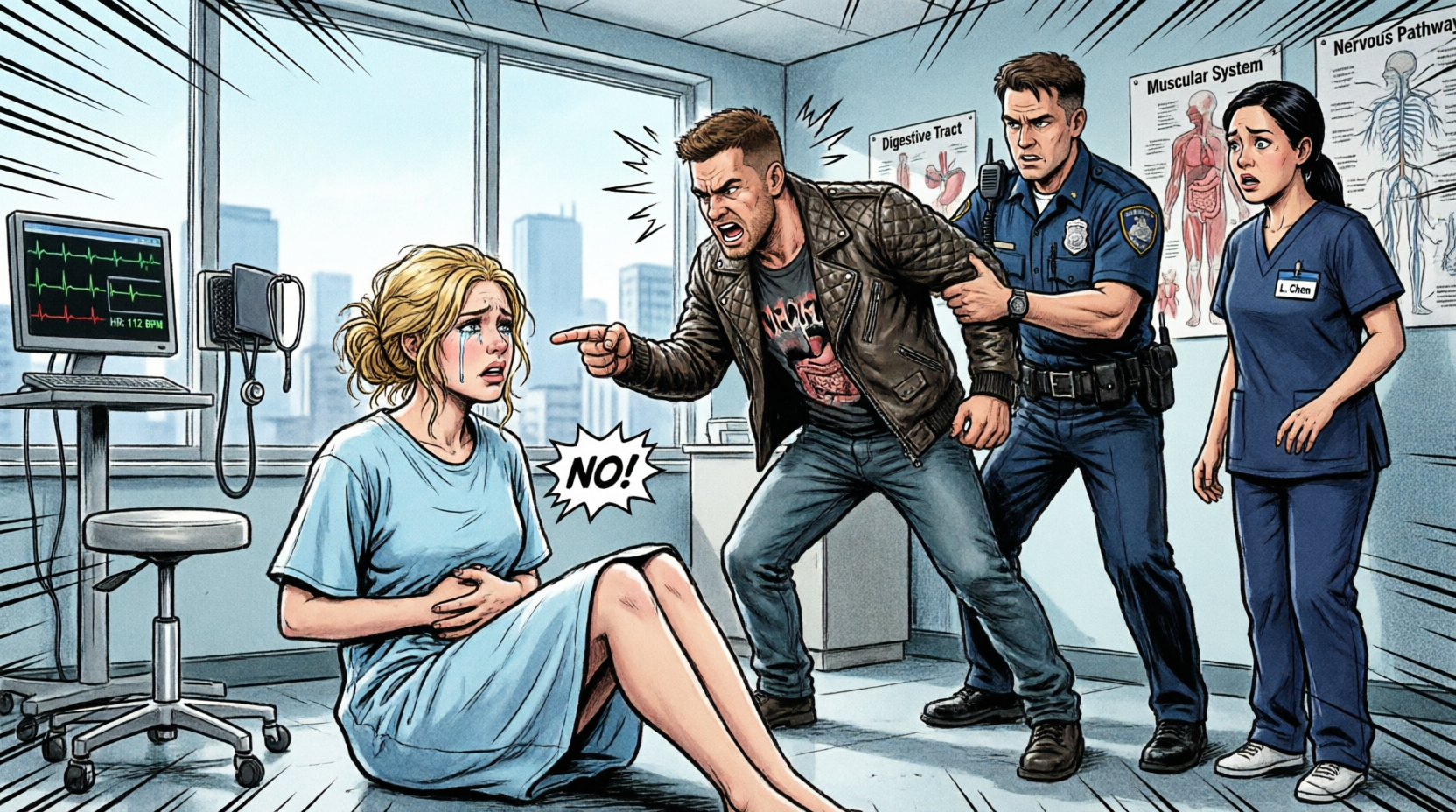
Someone familiar.
It took me a moment.
Then I recognized her.
Margaret Vance.
Derek’s aunt.
His father’s sister.
A woman I had not seen in nearly six years.
My stomach tightened.
Slowly, I opened the door.
“Madison.”
Her voice sounded exactly the same.
Soft.
Careful.
Like she was afraid of breaking something.
“What are you doing here?”
She looked down at the box.
“I think this belongs to you.”
I stared.
“What is it?”
She swallowed.
“Something Derek never wanted you to see.”
The words made my pulse quicken.
I stepped aside.
“Come in.”
Margaret entered slowly.
She looked around the apartment.
The secondhand couch.
The tiny kitchen.
The boxes still waiting to be unpacked.
Then she smiled.
“It feels peaceful here.”
The simple comment nearly made me cry.
Because peace had become the most valuable thing I owned.
She set the box on the table.
For several seconds neither of us spoke.
Finally she lifted the lid.
Inside were photographs.
Documents.
Old letters.
And a leather journal.
My breath caught.
The journal looked familiar.
Very familiar.
I had seen it once.
Years ago.
In my stepfather’s hands.
“Dennis’s journal,” I whispered.
Margaret nodded.
Dennis Vance.
My stepfather.
The only father figure I had ever known.
The man who married my mother when I was twelve.
The man who taught me how to drive.
The man who attended every school event.
The man who died from a heart attack three years earlier.
The man Derek constantly claimed had loved him more than anyone.
My hands trembled as I picked up the journal.
“I thought Derek inherited all of Dennis’s things.”
“He did.”
“Then how do you have this?”
Margaret’s expression darkened.
“Because Dennis gave it to me before he died.”
The room fell silent.
“What?”
“He knew.”
I stared.
“Knew what?”
Her eyes filled with sadness.
“He knew what Derek was becoming.”
A cold feeling moved through my chest.
Margaret opened her purse.
From inside she removed a folded envelope.
My name was written across the front.
Madison.
In Dennis’s handwriting.
The world seemed to tilt.
“No.”
Margaret nodded.
“He wrote that six months before his death.”
My fingers refused to move.
“He left me a letter?”
“Yes.”
“Why didn’t I get it?”
Pain crossed her face.
“Because Dennis asked me to deliver it only if something happened to him.”
I looked down.
“And?”
“And then he died.”
Her voice cracked.
“I came to the house two days later.”
I already knew what came next.
“Derek.”
She nodded.
“Derek threatened me.”
The room became very quiet.
“He told me if I interfered with his family again, I would regret it.”
My stomach turned.
Even after Dennis’s death.
Even then.
Derek had been controlling everything.
Margaret continued.
“I was scared.”
For the first time, I saw tears in her eyes.
“I convinced myself things would improve.”
She looked directly at me.
“They didn’t.”
I lowered my gaze.
No.
They definitely had not.
For several moments neither of us spoke.
Then I opened the envelope.
The paper inside had yellowed slightly with age.
Dennis’s handwriting filled both pages.
I started reading.
And halfway through the first paragraph, I began crying.
Because Dennis had seen everything.
Everything.
The isolation.
The manipulation.
The fear.
The control.
All of it.
He wrote about conversations he had overheard.
Arguments he had stopped.
The way Derek watched me.
The way I apologized constantly.
The way I seemed to shrink every year.
Then I reached one particular sentence.
And stopped breathing.
Madison, if you are reading this, it means I failed to protect you.
Tears blurred the page.
Margaret quietly looked away.
Giving me privacy.
Giving me dignity.
Giving me something I had rarely received in the Vance household.
The letter continued.
Dennis explained that he had confronted Derek repeatedly.
He had tried counseling.
Boundaries.
Warnings.
Threats.
Nothing worked.
Because Derek believed control was love.
Power was respect.
Fear was obedience.
Then came the final page.
The page that changed everything.
Dennis revealed something nobody had ever told me.
Something my mother had hidden for years.
Something Derek never wanted me to know.
My biological father had not abandoned me.
The room spun.
I read the sentence again.
And again.
And again.
Not abandoned.
Not left.
Not disappeared.
I looked up at Margaret.
“What is this?”
Her expression told me she already knew.
“The truth.”
I felt sick.
“My mother told me he walked away.”
Margaret nodded slowly.
“I know.”
“She said he didn’t want me.”
Tears formed in Margaret’s eyes.
“That wasn’t true.”
My hands shook violently now.
“What happened?”
Margaret took a deep breath.
Then she told me a story buried for twenty-three years.
A story of lies.
Fear.
Pride.
And heartbreak.
A story that would force me to question everything I thought I knew about my family.
And before the night ended, I would discover that the man I believed had abandoned me was still alive.
Still searching.
And only ninety miles away.
The room felt impossibly small.
Rain tapped softly against the apartment window.
The bakery downstairs had closed hours ago.
The city outside was quiet.
But inside me, everything was collapsing.
My biological father had not abandoned me.
The sentence repeated over and over in my mind.
Not abandoned.
Not left.
Not disappeared.
Not unwanted.
For twenty-three years, I had built my identity around a lie.
I looked at Margaret.
Then back at Dennis’s letter.
Then back at Margaret again.
“Tell me everything.”
She took a long breath.
Then she did.
Twenty-four years earlier, my mother had become pregnant during a difficult relationship with a man named Thomas Harper.
They were young.
Poor.
Stubborn.
Both terrified of becoming parents.
They argued constantly.
According to Margaret, the relationship eventually collapsed during the pregnancy.
But Thomas never left.
He never disappeared.
He never abandoned his daughter.
Instead, he fought.
For months.
He begged my mother to let him be involved.
He attended appointments.
Bought baby clothes.
Prepared a nursery in his small apartment.
He wanted to be a father.
Then one terrible argument changed everything.
My mother moved away.
Changed phone numbers.
Refused contact.
And eventually told everyone that Thomas had chosen not to be involved.
Including me.
Especially me.
When I was born, he wasn’t listed on the birth certificate.
Not because he didn’t want to be.
Because he wasn’t allowed to be.
My entire body felt numb.
“Why?”
Margaret’s eyes filled with sadness.
“Pride.”
I stared.
“That’s it?”
“Sometimes pride destroys more lives than cruelty.”
The sentence hit hard.
Because it felt true.
Very true.
My mother had spent years protecting appearances.
Protecting peace.
Protecting excuses.
And now I was discovering how much damage that protection had caused.
I looked down at the letter.
Dennis had written one final paragraph.
Madison,
If you ever learn the truth, please remember something.
People are complicated.
Some people hurt us because they enjoy power.
Others hurt us because they are afraid.
The damage feels the same.
But understanding the difference may help you heal.
I wiped my eyes.
Then looked at Margaret.
“Where is he?”
She hesitated.
Then answered.
“Cincinnati.”
Only ninety miles away.
Just as Dennis had written.
Ninety miles.
After twenty-three years.
I laughed.
Then cried.
Then laughed again.
Because ninety miles felt both impossibly far and heartbreakingly close.
The next morning, I called in sick to work.
Then I drove south.
The entire trip felt unreal.
The highway stretched endlessly ahead.
Clouds drifted across the sky.
My hands gripped the steering wheel so tightly my knuckles hurt.
What if he hated me?
What if he didn’t want to meet me?
What if Margaret was wrong?
What if I was making a terrible mistake?
By the time I reached Cincinnati, my stomach felt sick.
I parked outside a modest brick house.
Nothing fancy.
Small front yard.
Blue shutters.
Flowerpots on the porch.
A wind chime hanging beside the door.
Normal.
Painfully normal.
I sat in my car for almost twenty minutes.
Then I forced myself out.
Walked to the door.
And knocked.
Three times.
The footsteps inside froze.
Then came closer.
The door opened.
And everything stopped.
The man standing there had my eyes.
Not similar.
Not close.
Exactly.
The same shade.
The same shape.
The same expression of confusion.
For several seconds, neither of us spoke.
Then his face changed.
Slowly.
Like dawn breaking.
“No.”
The word came out as a whisper.
Tears instantly filled his eyes.
“No.”
I felt tears filling mine too.
“Thomas Harper?”
His hand covered his mouth.
“Oh my God.”
I started crying.
So did he.
And neither of us moved.
Twenty-three years.
Twenty-three years of stolen birthdays.
Missed Christmases.
Lost graduations.
Imaginary conversations.
Questions.
Pain.
Longing.
Twenty-three years standing between us.
Then he stepped forward.
Very carefully.
Like approaching something fragile.
“Madison?”
I nodded.
He broke.
Completely.
The man began sobbing.
Not politely.
Not quietly.
The kind of crying that comes from somewhere deep inside the soul.
The kind of crying that waits decades for permission.
“I’m sorry.”
The words poured out.
“I’m so sorry.”
I shook my head immediately.
“No.”
“But—”
“No.”
Because for the first time in my life, I knew the truth.
This wasn’t his fault.
He hadn’t abandoned me.
He had lost me.
There is a difference.
A huge difference.
Thomas pulled a handkerchief from his pocket.
Failed to stop crying.
Then laughed through tears.
“You look exactly like your grandmother.”
I laughed too.
Then we hugged.
And twenty-three years disappeared.
Not completely.
Nothing erases that much loss.
But for a moment, something broken started healing.
Inside his house, we talked for nine straight hours.
Nine hours.
Photographs covered the dining room table.
Every newspaper clipping he had saved.
Every legal document.
Every letter returned unopened.
Every birthday card he had written but never mailed.
Every attempt he made to find me.
There were dozens.
Then hundreds.
Year after year.
For more than two decades.
He had never stopped trying.
Not once.
Not ever.
At one point, he showed me a small box.
Inside were twenty-three birthday cards.
One for every year of my life.
I cried so hard I couldn’t speak.
He cried too.
Neither of us pretended to be strong anymore.
There was no point.
The truth was finally stronger than both of us.
Months passed.
Then a year.
Then another.
Slowly, my life changed.
Thomas became part of it.
Not instantly.
Relationships need time.
Especially after twenty-three lost years.
But he showed up.
Every time.
Every phone call.
Every holiday.
Every dinner.
Every difficult conversation.
He showed up.
And eventually, I stopped expecting him to disappear.
That may have been the greatest gift of all.
My mother eventually admitted everything.
Not immediately.
Not easily.
But eventually.
Therapy helped.
Time helped.
Consequences helped.
The truth helped most of all.
Our relationship never became perfect.
Some wounds leave scars forever.
But honesty finally entered the room.
And once honesty arrives, healing at least has a chance.
Five years later, I stood in a hospital conference room speaking to new patient advocates.
Dr. Rhodes sat in the front row.
Nurse Callie beside her.
Hannah.
Detective Ruiz.
Sophie.
My mother.
And Thomas.
All there.
All listening.
All part of the life I never imagined possible.
At the end of the presentation, someone asked a question.
A young nurse.
“What happened to Derek?”
The room became quiet.
I smiled gently.
The answer surprised even me.
“I don’t know.”
The nurse blinked.
“You don’t know?”
I shook my head.
“No.”
Because the truth was simple.
For years, Derek had been the center of every story.
Every fear.
Every decision.
Every breath.
Then one day, he wasn’t.
Healing didn’t happen when Derek was punished.
Healing happened when he stopped being the main character in my life.
The room fell silent.
Then Dr. Rhodes started clapping.
Soon everyone joined her.
I looked toward the back row.
Thomas was crying again.
My mother too.
Sophie was pretending not to.
Callie wasn’t even trying.
And for the first time in my life, I understood something important.
Freedom is not the day your abuser loses power.
Freedom is the day they stop occupying space inside your future.
That evening, after everyone left, I stood alone outside the hospital.
The sun was setting.
The sky glowed gold and orange.
My phone buzzed.
A message from Thomas.
Dinner Sunday?
I smiled.
Then typed back.
Wouldn’t miss it.
As I slipped the phone into my pocket, I thought about the terrified woman on the gynecologist’s office floor years earlier.
The woman who believed she was trapped.
The woman who believed she was alone.
The woman who believed nobody would ever hear her.
I wished I could go back and tell her one thing.
Just one.
You survive.
You tell the truth.
People believe you.
You build a life.
You find family.
You find peace.
And one day, the sound of handcuffs clicking shut becomes only a memory.
But the sound of your own laughter?
That stays.
Forever.
THE END.